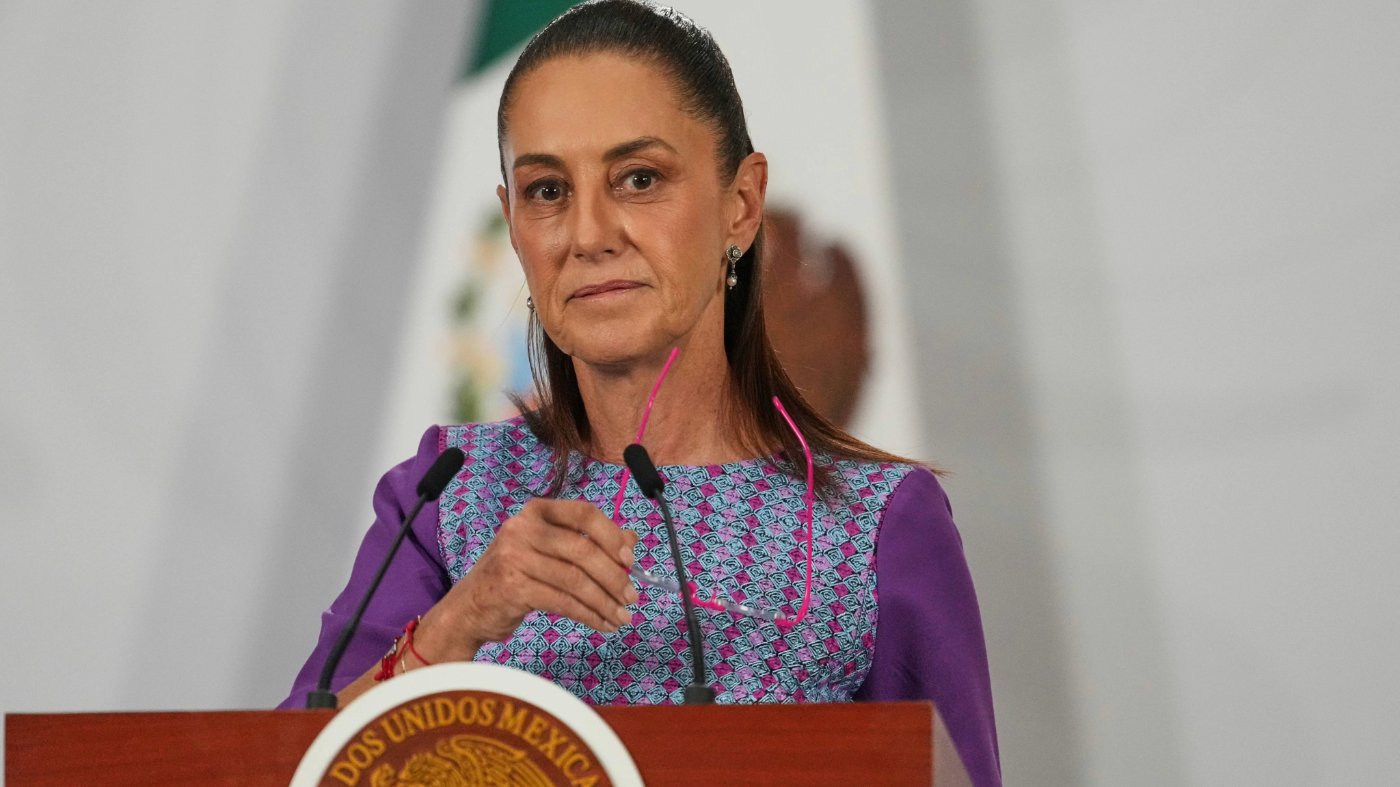
Mexican President Claudia Sheinbaum appears to be prioritizing her political party over justice, and drug cartels over her nation's relationship with the United States. The extradition of Sinaloa Governor Rubén Rocha Moya has shifted from a question of legal procedure to a defiant assertion of national sovereignty, with Sheinbaum's administration casting doubt on the evidence linking him to drug traffickers.
The U.S. Attorney's Office for the Southern District of New York and the Drug Enforcement Administration have indicted Rocha, Senator Enrique Inzunza, Culiacán Mayor Juan de Dios Gámez, and seven other current and former Mexican officials. They are accused of conspiring with the Sinaloa Cartel to import massive quantities of drugs into the U.S. in exchange for political support and bribes.
During President Trump's first term, former Mexican President Andrés Manuel López Obrador mocked the then-newcomer to the White House. In 2020, when the U.S. arrested former Mexican Defense Minister Salvador Cienfuegos on drug trafficking charges, López Obrador demanded his return for trial under Mexican jurisdiction. The result was predictable: within a year, Cienfuegos was free, benefiting from the government's 'hugs, not bullets' policy.
Those days are over. Sheinbaum is not López Obrador, and the Trump of 2026 is not the same as the Trump of 2020. The capture of Nicolás Maduro in Venezuela demonstrated Trump's unwavering commitment to fighting narco-governments through concrete actions. Under the new administration, Mexico has handed over, captured, or eliminated more than 90 suspected drug kingpins, including Nemesio Oseguera, alias 'El Mencho,' and Rafael Caro Quintero, wanted for the murder of DEA agent Enrique 'Kiki' Camarena.
Although Mexico attempts to downplay U.S. accusations against drug traffickers linked to the ruling Morena party, the new U.S. National Drug Control Strategy mentions on some 20 occasions that this is a matter of war. The strategy states that the U.S. will employ 'all available diplomatic, intelligence, military, and economic tools.' It also conditions assistance to Mexico on tangible results, including arresting, prosecuting, and extraditing leaders of designated foreign terrorist organizations and dismantling synthetic drug laboratories.
Given the gravity of the issue, Sheinbaum has sought to sell the idea that the cases against current and former Morena officials are merely political. The Mexican government not only refuses to hand over corrupt officials with suspected links to drug trafficking but also attacks those who cooperate with the U.S. The Mexican Attorney General's Office announced it intends to investigate 50 individuals who participated in an anti-drug operation supported by the CIA in Chihuahua last month.
Another grave error by the Mexican government has been delaying the handover of Audias Flores, also known as El Jardinero, a powerful drug lord from the Jalisco New Generation Cartel. Sheinbaum appears to be testing her strength against the U.S. This new bombshell reveals the modus operandi of today's Mexican government: high-ranking officials accused of making deals with drug cartels to win elections, intimidate opponents, or sell a false image of normality. As Trump put it, this constitutes an utterly intolerable alliance with drug trafficking networks.
As the Trump administration escalates pressure, including threats of strikes on Iran, the core issue is not Mexico's sovereignty or lack of evidence. Handing over these drug traffickers would expose the Morena Party itself and collapse the ecosystem sustaining the current government. That is why Sheinbaum defends these alleged narco-politicians and is willing to defy Trump. It is a matter of political survival, not national sovereignty.