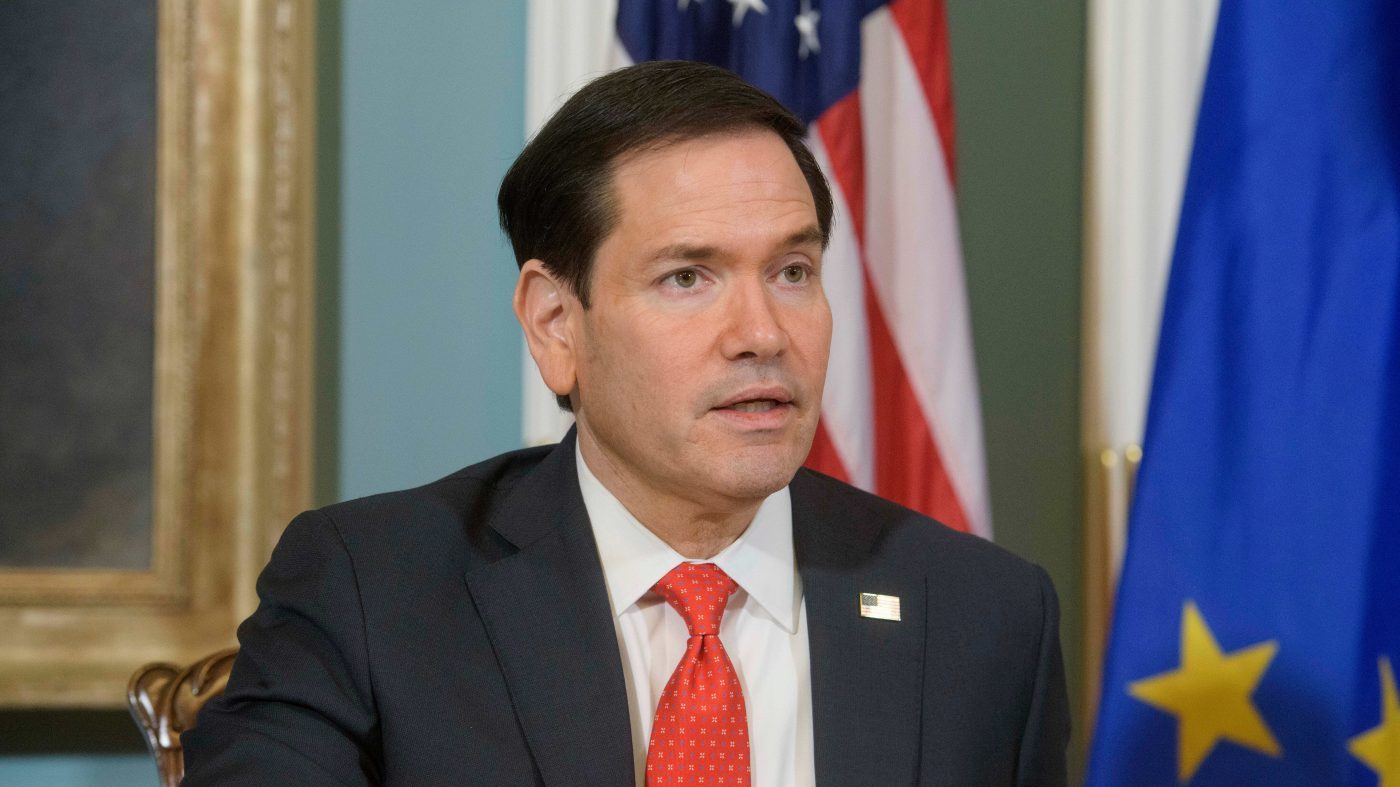
Secretary of State Marco Rubio on Monday rejected a reported Iranian proposal to end the two-month conflict by reopening the Strait of Hormuz while deferring nuclear negotiations, signaling the Trump administration's firm stance on Tehran's atomic ambitions.
Tehran offered to ease its grip on the strategic waterway in exchange for the U.S. lifting its naval blockade, according to two regional officials who spoke to The Associated Press. The proposal would have postponed discussions on Iran's nuclear program to a later date, a condition Rubio swiftly dismissed.
In a Fox News interview, Rubio argued that the nuclear issue is the root cause of the current hostilities. "The nuclear question is the reason why we're in this in the first place," he said. "There's no doubt in my mind that at some point in the future, if this radical clerical regime remain in charge in Iran, they will decide they want a nuclear weapon."
President Donald Trump also signaled dissatisfaction with the initial offer over the weekend. After canceling a planned U.S. delegation trip to Pakistan for indirect talks, Trump told reporters that the Iranians "gave us a paper that should have been better." He claimed that within ten minutes of the cancellation, they received a revised proposal that was "much better," as reported by Bloomberg.
The Trump administration launched strikes against Iran in late February, citing the regime's proximity to obtaining a nuclear weapon as an imminent threat. Iranian officials have defiantly denied these claims. Rubio emphasized the need for a robust agreement, stating, "We can't let them get away with it. They're very good negotiators. They're very experienced negotiators, and we have to ensure that any deal that is made, any agreement that is made, is one that definitely prevents them from sprinting towards a nuclear weapon at any point."
The Strait of Hormuz has been a flashpoint since Iran effectively halted shipping traffic at the start of the conflict, disrupting global oil supply and pushing crude prices over $100 per barrel. Trump has demanded the restoration of safe passage as a non-negotiable condition for peace, a red line Rubio reinforced on Monday.
Rubio criticized Iran for attempting to normalize a system of tolls on commercial vessels transiting the waterway. "They cannot normalize nor can we tolerate them trying to normalize a system in which the Iranians decide who gets to use an international waterway and how much you have to pay them to use it," he said. He added that details matter in negotiations, questioning whether Iran's offer means a return to the status quo or the creation of an unacceptable new system.
Trump has insisted he is not under pressure to strike a deal amid the fragile ceasefire. When asked about the next steps if no agreement is reached, Rubio deferred to the president. "That's the President's decision to make," he replied, highlighting the "extraordinary" sanctions already in place and the potential for more pressure. "I hope the rest of the world will join us in the crippling sanctions and other things that we are doing to pressure that regime into making concessions it does not want to make," Rubio added.
The diplomatic standoff unfolds as King Charles and Queen Camilla's US state visit proceeds despite the WHCA shooting, underscoring the complex international landscape. Meanwhile, the Supreme Court is set to rule on labor secretary's power to fine H-2A visa violators, a separate policy matter with implications for agricultural workers.