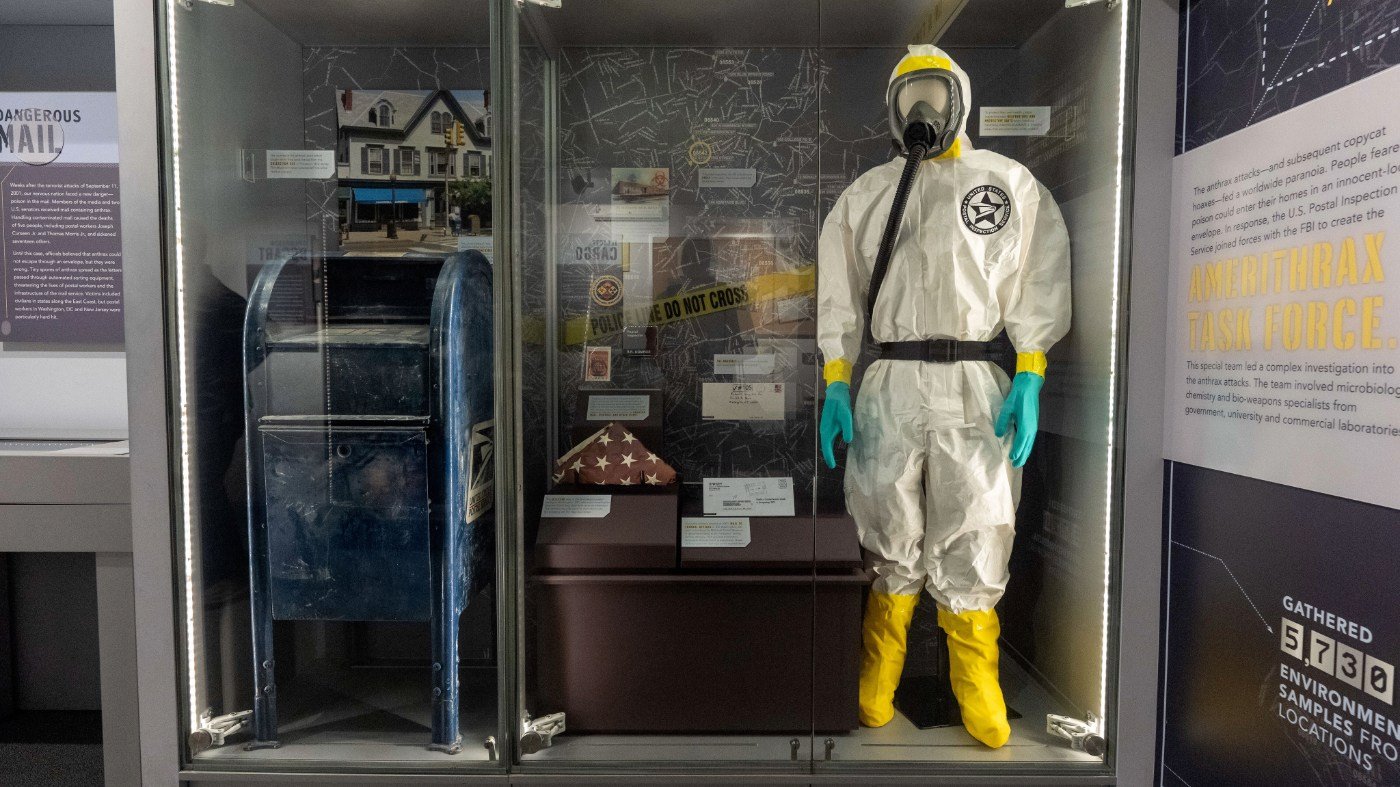
In the chaotic weeks following the September 11 attacks, five letters containing anthrax spores were mailed from a Princeton, New Jersey, mailbox, targeting media outlets like NBC News and the New York Post. The attacks killed five people and infected 17 others, but for those of us on the front lines of the response, the real lesson was about fear and government capacity.
As associate commissioner at New York City's Department of Health during the anthrax crisis, I fielded frantic calls from politicians and officials demanding Cipro, the antibiotic used to prevent anthrax infection. One aide to a senator barked, “The senator wants his Cipro. Now.” They believed they were entitled to it first, and that I was standing in their way. It got ugly fast.

That experience taught me that fear is a solvent. When people believe they or their children could die, convictions about masks, social distancing, and vaccine safety dissolve. Americans will not be divided over whether they want protection; they will be unanimous. But today, there is nobody to provide it.
COVID-19 should have united us, but it did the opposite. Instead of learning lessons and building back stronger, we spent six years blaming government institutions as those institutions crumbled. That is the perfect storm we have built. When the nation desperately needs help, it will be from a government that has lost the ability to provide it.
Annie Jacobsen’s new book, Biological War, lays out the threat in chilling detail: Soviet stockpiles of engineered pathogens designed to kill hundreds of millions, and the proliferation of bioweapons labs conducting risky “gain of function” research. The book is not alarmism but dispassionate reporting based on dozens of interviews with high-level experts. Its conclusion: the weapons to end civilization exist, are more available than ever, and the geopolitical environment has never been more conducive to their use.
The good news is that we don’t need a miracle to stop a pandemic—just epidemiologists doing their vital work: finding the sick and tracing contacts to break transmission chains. But the COVID crisis exposed major gaps in this capability. Over the past 18 months, we have shut down USAID and proposed cutting the CDC’s budget. We walked out of the World Health Organization in January, surrendering our seat at the table where global disease surveillance data is shared.
Here is what keeps me awake: no level of government could support the population at the speed and scale a major biological attack would demand—not just treating the sick, but feeding people who cannot leave their homes and rapidly dispensing preventive medications like oral antibiotics for anthrax or plague through local points of dispensing.
We have extraordinary scientific and logistical capabilities, but capabilities are not preparedness. Preparedness is capability organized for action, at speed, under pressure. That requires national coordination. FEMA, the agency charged with this, has been cut, second-guessed, and floated for relocation.
That is the agency Cameron Hamilton now inherits. His recent confirmation ends a long period of temporary leadership. He must be given the resources to build and the authority to act. That means a funded FEMA and a clear mission. It means public health and emergency management planning together before the event, not in the middle of one. And it means the new administrator putting his agency in the room where biological threats are tracked—not waiting to be invited after the outbreak has a name.
Call it civil defense, or whatever you want. We need a national effort—a sustained, funded, unglamorous program to rebuild stockpiles, strengthen disease surveillance, and refresh mass-prophylaxis plans.
Twenty-five years ago next week, a handful of envelopes sent people scrambling for protection. The next biological emergency will move faster, reach farther, and demand infinitely more from the institutions charged with protecting us. The threat is real. The system is blinking red. We need to be ready when the phones start ringing.