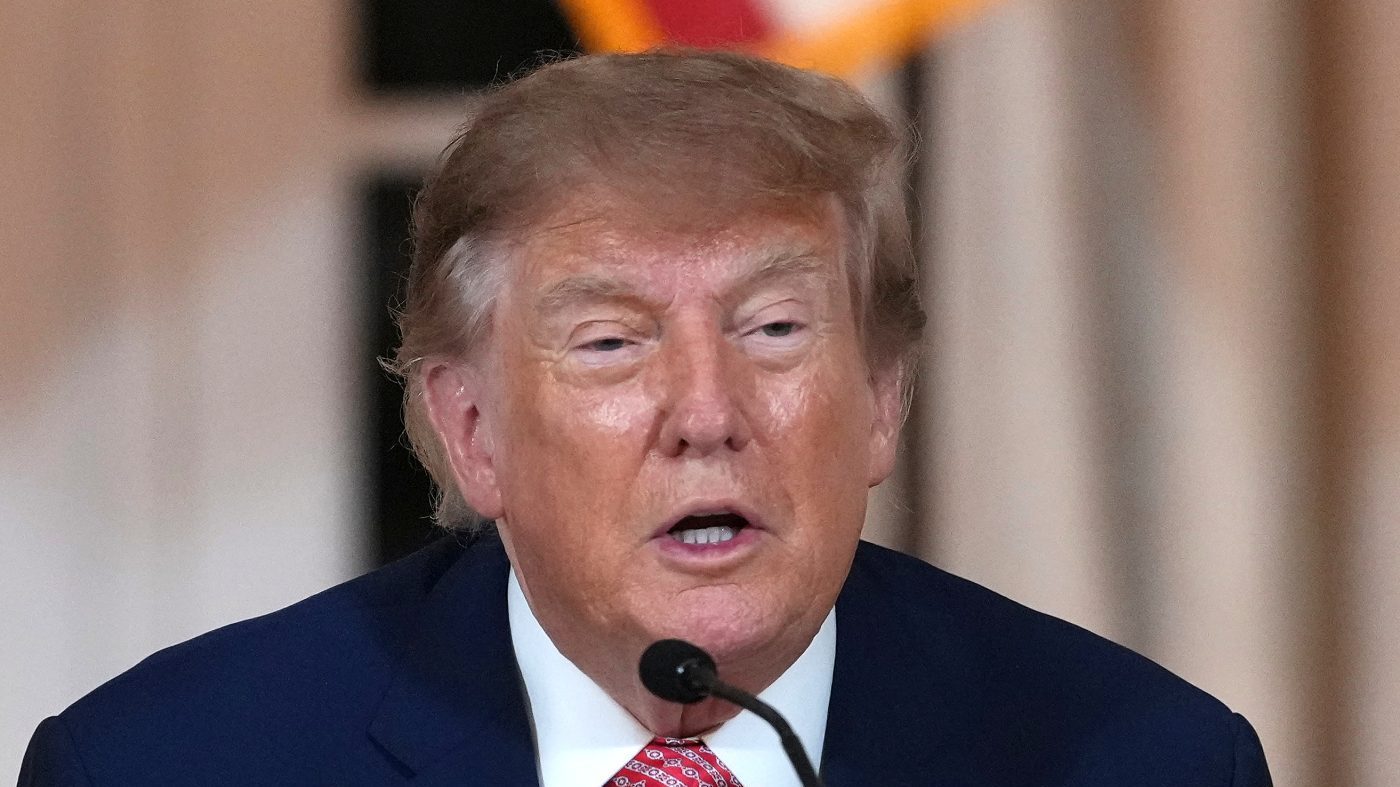
President Trump has appointed Bill Pulte, the director of the Federal Housing Finance Agency and chairman of Fannie Mae and Freddie Mac, as acting director of national intelligence, replacing Tulsi Gabbard. Pulte will retain his housing duties while overseeing the intelligence community — a setup critics say is dangerously ill-suited for a role designed to fuse threat data across the government.
The appointment, made in an acting capacity, bypasses Senate confirmation. Pulte brings no known experience in national security to a post created after 9/11 to ensure all intelligence dots are connected. With the World Cup arriving in the U.S. this summer, security experts warn that stadiums, transit lines, and fan zones will become targets for those seeking to do harm — and that the intelligence community must be at its sharpest to spot threats early.
Former Rep. Jane Harman (D-Calif.), who served as ranking member on the House Intelligence Committee when the Office of the Director of National Intelligence was created, called the move alarming. “It is therefore alarming that, weeks before the world arrives, the joint commander will be someone with no background in the work,” she wrote in a piece published by The World Signal.
Under Gabbard, the intelligence workforce was hollowed out. The director of the National Counterterrorism Center, a critical post within her office, resigned and has not been replaced. Intelligence functions at the Department of Homeland Security are also on life support, even as the threat picture widens. The Islamic State of Iraq and Syria (ISIS) continues to inspire lone-actor attacks across the West. Russian and Chinese cyber-intrusions into critical infrastructure are routine. Homegrown radicalization is accelerating, as seen in the recent attack on a San Diego mosque by two radicalized teenagers.
Harman noted that the Intelligence Reform and Terrorism Prevention Act of 2004, which created the DNI role, was based on the Pentagon’s successful Goldwater-Nichols reorganization. “We have not had an attack on the scale of 9/11 on U.S. soil since our bill became law in 2004. That record is no accident, and it is now at risk,” she said.
The administration’s move has fueled speculation that it may use the vacancy to sideline the 2004 law altogether. An acting director with no intelligence background and a full-time housing job is in no position to defend it, Harman warned. “Failure to integrate intelligence collection led to 9/11, and it would be no less catastrophic now.”
The acting designation is itself part of the problem, allowing Trump to bypass the Senate vetting that a post this sensitive demands. Congress should insist on a qualified permanent nominee and confirm that person on a bipartisan basis, Harman urged, noting that it failed to do so with Gabbard. The question now is whether lawmakers will rise to the occasion — or whether the administration’s loyalty tests will trump national security.