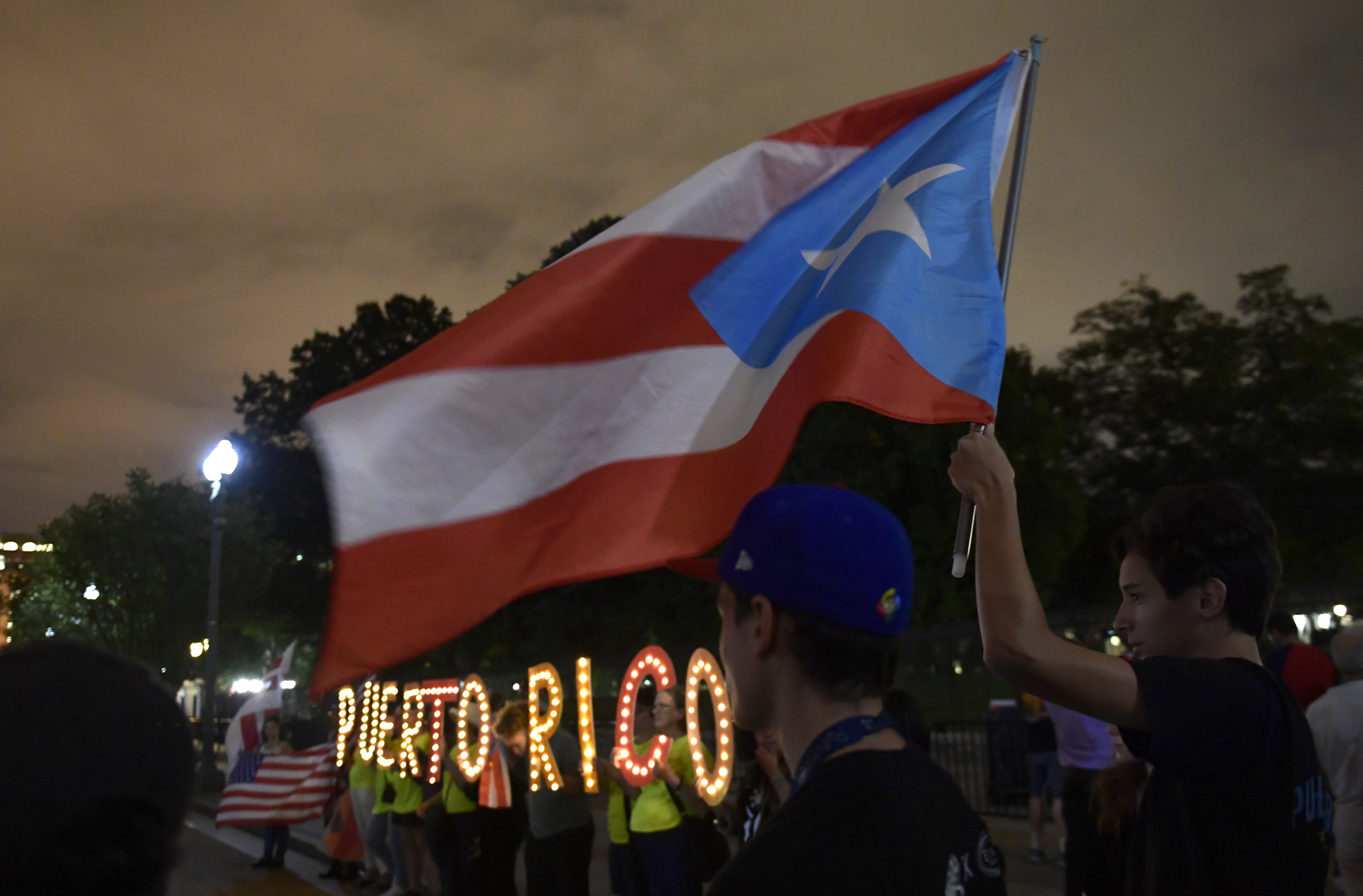
The ongoing debate over birthright citizenship in the United States has brought renewed attention to Puerto Rico's ambiguous constitutional status, which has persisted since 1898. The island remains a territory under full congressional authority—neither a state nor an independent nation—creating legal contradictions that are now central to national policy discussions.
The Fourteenth Amendment grants citizenship to anyone born "in the United States, and subject to the jurisdiction thereof," a principle that has defined American citizenship for over 150 years. However, Puerto Rico does not fit neatly into this framework. Most Puerto Ricans derive their citizenship from the Jones-Shafroth Act of 1917, a federal law, rather than directly from the Constitution. This distinction is not merely technical; it reveals a fundamental inconsistency in how the U.S. treats its territories.
As policymakers reconsider the scope of birthright citizenship, Puerto Rico exemplifies how territorial ambiguity can obscure constitutional lines. The island is considered part of the U.S. for certain purposes but lacks full participation in the constitutional framework. A recent poll shows 64% oppose ending birthright citizenship, even as the Supreme Court weighs related challenges.
Puerto Rico's political status is key to this discussion. If the island gains independence, U.S. citizenship would no longer automatically extend to those born there unless inherited from a U.S. citizen parent. Instead, Puerto Rican citizenship would be governed by local law and bilateral agreements with Washington. This would reduce the geographic scope of birthright citizenship under U.S. law.
The case for independence emphasizes the need for clear constitutional definitions and stable governance. Puerto Rico's legal status remains problematic: its residents are U.S. citizens but do not enjoy all constitutional rights—a contradiction stemming from the early-20th-century Insular Cases, decisions often criticized for their vagueness. A permanent solution, particularly independence, would end this uncertainty by establishing a definitive constitutional boundary.
Concerns about national security, often raised in discussions of Puerto Rican independence, are legitimate but manageable. Puerto Rico's strategic Caribbean position is vital for maritime routes and regional stability. However, the U.S. has historically maintained security partnerships with sovereign nations. As discussed in a recently leaked memo, an independent Puerto Rico could negotiate a bilateral defense agreement to ensure continued military access and intelligence cooperation, similar to alliances with other nations.
Migration concerns can also be addressed through negotiation. The U.S. has used compacts of free association with Pacific nations to manage mobility while respecting sovereignty. A similar framework for Puerto Rico could facilitate orderly migration and mutual economic goals.
Beyond policy, independence offers a clear resolution to Puerto Rico's political identity crisis. For over a century, Puerto Ricans have been U.S. citizens without full democratic representation, while resisting assimilation. Independence would allow a definitive choice, with transitional arrangements enabling current residents to retain U.S. citizenship while future generations define their identity within a sovereign Puerto Rican nation.
American policymakers must decide whether Puerto Rico's status can remain unresolved indefinitely. History shows the U.S. has often prioritized clarity over ambiguity, as seen in the independence of the Philippines. The birthright citizenship debate highlights these issues, but they are part of a larger structural challenge. The U.S. benefits from a consistent approach to territorial management that aligns constitutional principles with political realities.
As support for sovereignty grows, a carefully negotiated independence offers a viable path forward. It would clarify uncertainties, align constitutional practices with fundamental principles, and reshape the U.S.-Puerto Rico relationship into one of sovereign equality. In the end, that clarity may be the strongest argument of all.