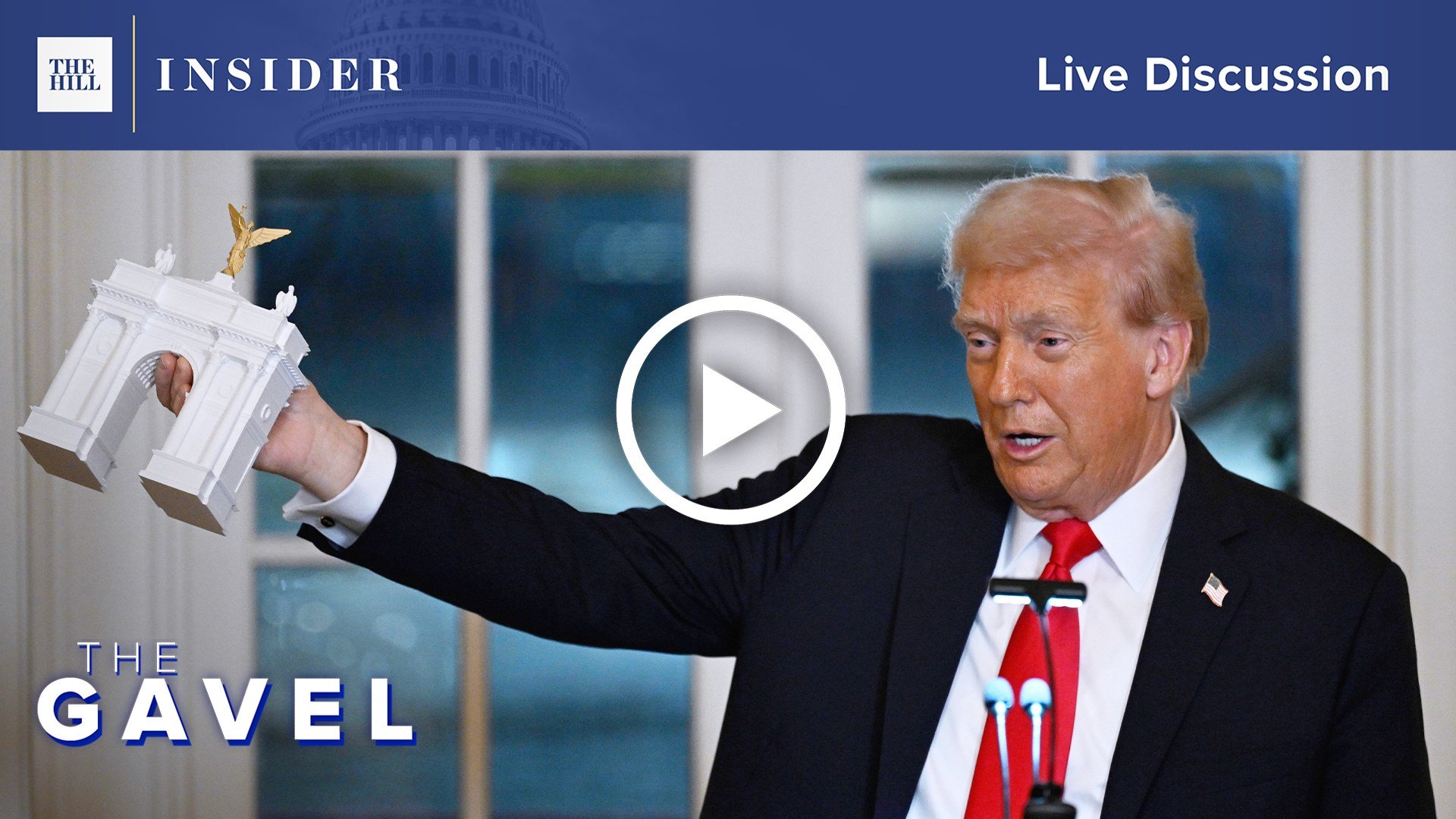
The legal landscape is heating up in the aftermath of Election Day, with multiple courtroom confrontations poised to shape the political fallout. On Wednesday, a federal judge could issue a ruling in a case challenging President Trump's controversial arch project, a dispute that has drawn sharp scrutiny from watchdog groups and constitutional scholars.
In a special session of The Gavel, legal affairs editor Zach Schonfeld and reporter Sophie Brams sit down with Nick Sansone, a senior attorney at Public Citizen who is leading the charge against the arch project. Sansone outlines the core legal arguments, the stakes involved, and what a ruling in favor of or against the project could mean for executive power and public land use.
The arch project, which has been a centerpiece of Trump's infrastructure agenda, has faced allegations that it bypasses environmental reviews and exceeds presidential authority. Sansone contends that the administration's approach "cuts corners in ways that undermine long-standing protections," and he warns that a win for the government could set a dangerous precedent. "If this stands, it opens the door to similar end-runs around Congress and the courts," he says.
Mississippi's Senate race heads to court
The show also turns to Mississippi, where the razor-thin Senate contest is on the verge of a legal challenge. With margins that could trigger an automatic recount, both campaigns are preparing for a protracted battle over ballot counting and alleged irregularities. Schonfeld and Brams explain the procedural hurdles and the potential for the race to become a template for post-election litigation nationwide.
Trump's election lawsuits in California and Alaska
Beyond Mississippi, the legal team for the Trump administration is pressing forward with election-related lawsuits in California and Alaska. These cases, which question voting procedures and certification timelines, have drawn criticism from voting rights advocates who see them as attempts to sow doubt in the electoral process. The panel dissects the legal theories behind the suits and their likelihood of success in courts that have often been skeptical of such challenges.
The discussion also touches on broader implications for the GOP as it grapples with a shifting political landscape. With the party facing an existential reckoning, the outcomes of these legal battles could influence how future elections are contested. Meanwhile, Democrats' recent congressional gains have emboldened them to push back against administration overreach, setting the stage for more confrontations in the judiciary.
As the legal wrangling continues, observers note that the courts are becoming an increasingly central arena for political conflict. "What we're seeing is a fundamental shift in how disputes over policy and elections are resolved," says Brams. "The judiciary is no longer a backstop; it's often the first line of defense—or offense."
The live Q&A session, which began at 3 p.m. EST, allowed viewers to pose questions to the panel, with many focusing on the potential impact of the arch ruling on other pending litigation. Sansone remained cautious, emphasizing that "the law will ultimately guide the outcome, but the political stakes are enormous."
For those following the intersection of courts and politics, this week's developments underscore a volatile period. With rulings expected soon in several high-profile cases, the legal battles are far from over.