Sixteen-year-old Riley Hein died in a side underride crash in 2015 when his car slid under a semitrailer, bypassing all safety features. His father, Eric Hein, a retired federal scientist, has since pressed federal regulators to mandate side underride guards—a safety measure the Department of Transportation has studied for decades without acting.
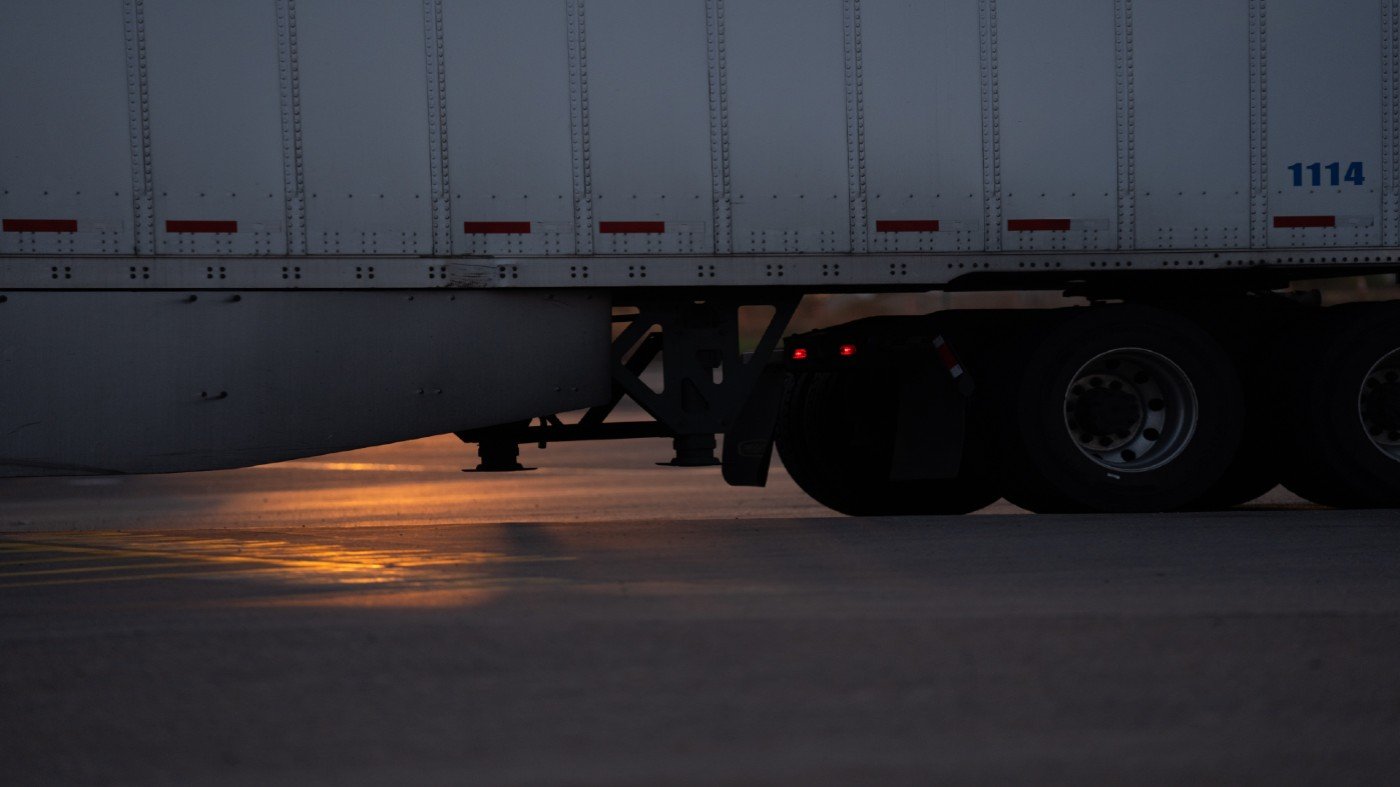
Side underride crashes occur when a passenger vehicle, pedestrian, cyclist, or motorcyclist goes under the side of a semitrailer. Because the impact hits the windshield, airbags and crumple zones often fail. The open gap between a trailer's front and rear wheels can also pull vulnerable road users into the path of the wheels. Rear underride guards have been required since 1998, but the side remains unregulated—a policy gap that continues to kill roughly 300 people and seriously injure 400 annually, at a societal cost of about $7.4 billion per year.

Economic Analysis Shows Clear Net Benefit
In a peer-reviewed cost-benefit analysis published in the Journal of Progress in Safety and Security, Eric Hein modeled side guard costs of $1,500, $2,500, and $4,500 per trailer, including weight and fuel effects. In every scenario, benefits exceeded costs, with net present value ranging from $137 million to $2.8 billion. The fuel penalty for a 500-pound guard is only about 28 gallons of diesel per year, and integrating guards with aerodynamic skirts can offset that entirely.
Hein also notes that litigation costs are mounting. Recent verdicts include an $81 million award in Utah involving a pedestrian and a $26.1 million judgment in Iowa. A single $30 million verdict could equip roughly 12,000 trailers with side guards at $2,500 each. These numbers underscore the economic rationale for action.
Decades of Inaction
The National Highway Traffic Safety Administration (NHTSA) has known about side underride risks since the 1960s. The Infrastructure Investment and Jobs Act of 2021 directed the agency to assess feasibility, benefits, and costs and determine whether performance requirements are warranted. NHTSA issued an advance notice of proposed rulemaking in April 2023, but its analysis excluded deaths of pedestrians, cyclists, and motorcyclists, and ignored crashes above 40 mph—even though government research shows guards are effective up to 50 mph. More than three years later, the rulemaking has not advanced.
The National Transportation Safety Board has urged action since the 1970s, and its Advisory Committee on Underride Protection recently concluded that “in the last 50 years no substantial progress has been made by [DOT] to prevent these horrific crash fatalities and injuries.” The trucking industry has long opposed side guards, claiming weight and cost issues, but the data no longer support that position.
Congressional Path Forward
Hein argues that Congress should include the Stop Underrides Act in the next surface transportation reauthorization, mandating side underride guards on new semitrailers. “The agency does not need perfect data to act,” he writes. “Federal safety regulation often proceeds under uncertainty when the risk is severe, the countermeasure is feasible, and the evidence supports action.”
For Hein, the issue is personal. “Riley should not have died this way. Neither should the next person,” he said. The question now is whether NHTSA will finally follow the data or continue to delay while preventable deaths mount. The economic case is clear; the political will remains uncertain.
— Reporting for The World Signal