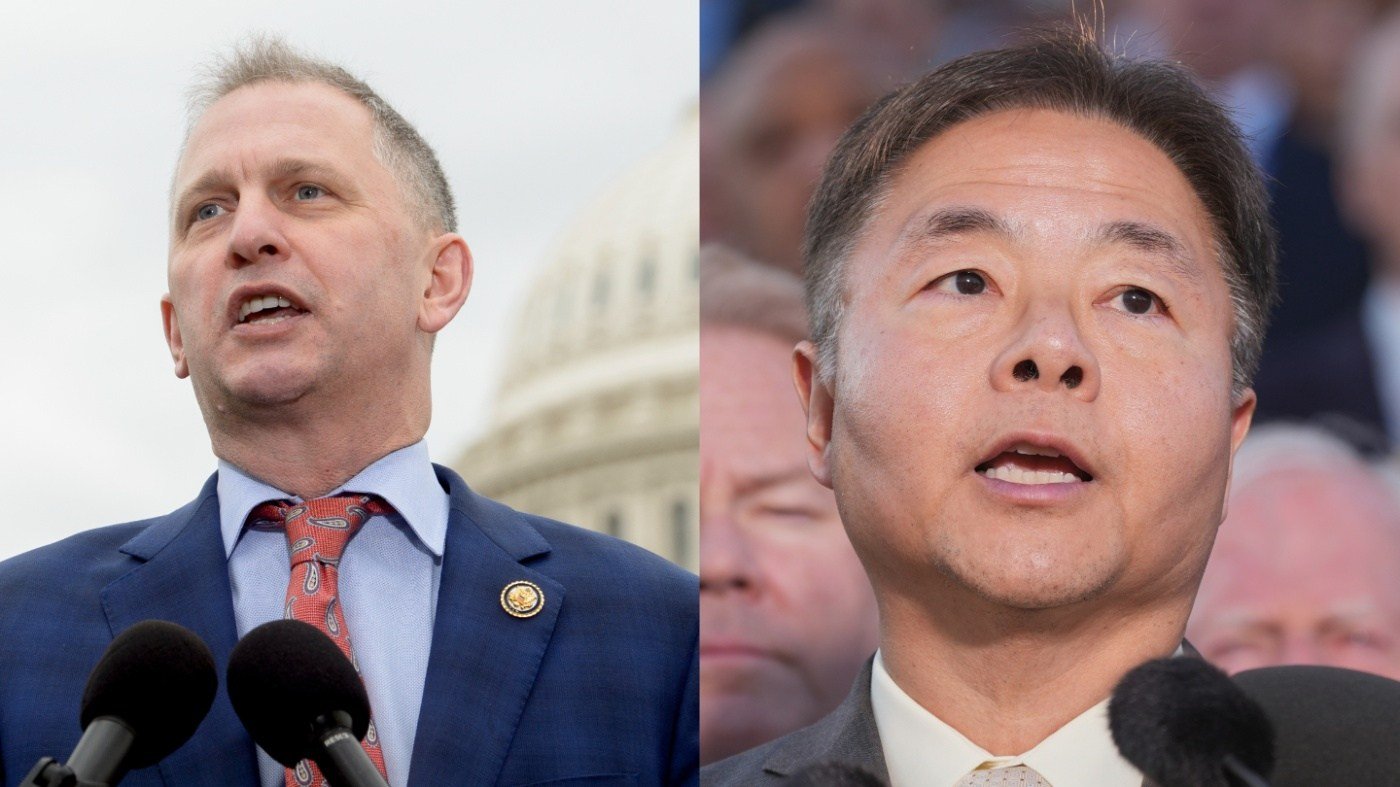
Democratic Representatives Sean Casten of Illinois and Ted Lieu of California have introduced legislation aimed at curbing insider trading in prediction markets, proposing a whistleblower reward program to encourage reporting of misconduct. The bill, named the Policing Insider Trading in Prediction Markets Act, would establish a mechanism at the Department of Justice where individuals with knowledge of such trading can come forward and potentially receive financial compensation if their information leads to successful enforcement actions.
Casten, who has been vocal about the integrity of these platforms, stressed the urgency of the issue. "Prediction markets have a serious insider trading problem," he said in a statement. "By encouraging whistleblowers to come forward and report wrongdoing, we can take an important step in cracking down on insider trading to restore accountability and public confidence in the U.S. rule of law."
The bill comes amid a series of high-profile incidents this year that have put the spotlight on the misuse of betting markets by those with privileged access. In August, a teleprompter operator for President Trump was placed on leave and investigated for allegedly placing bets on the content of the president's speeches before they were made public. Around the same time, a Republican congressional candidate in North Carolina was suspended from the platform Kalshi for betting on her own race, following the suspension of three other congressional candidates in April.
Beyond political figures, there have been troubling cases involving national security. A U.S. Army soldier was found to have bet on a U.S. operation in Venezuela, and nine accounts on Polymarket reportedly made $2.4 million on bets about military action in Iran. These incidents prompted House Oversight Committee Chair James Comer, a Republican from Kentucky, to announce an investigation into Kalshi and Polymarket in May.
Lieu referenced these examples in his remarks about the bill, emphasizing the need for legislative action. "Government insiders should not be able to profit from betting on U.S. military operations or the contents of a President's speech. They should not be able to use their positions of public trust to manipulate prediction markets," he said.
The bill faces an uphill battle in the current Republican-controlled House, where it would need bipartisan support to pass before the end of the year. However, with Democrats expected to take a sizable majority in the new Congress, the legislation could be reintroduced and potentially gain more traction. The political dynamics are reminiscent of the broader debate over the regulation of these markets, which have grown in popularity and influence.
Kalshi, one of the major platforms, recently announced it would remove the option to bet on Trump's comments, responding to an order from the Commodity Futures Trading Commission (CFTC). The company had previously acknowledged that such markets "present a heightened risk of manipulation." The new bill, if enacted, would add another layer of oversight to an industry that has largely operated in a regulatory gray area.
As the bill moves forward, it is likely to spark further discussion about the balance between innovation and accountability in financial markets. For now, Casten and Lieu are positioning themselves as champions of transparency, aiming to ensure that prediction markets are not exploited by those with insider knowledge.