Since its founding in 1949, NATO has been the most successful military alliance in history. But now, for the first time in 77 years, its cohesion is threatened not only by an external enemy but also from within. The Trump administration has made clear demands: European members must take on greater responsibility for their own defense, allowing the U.S. to focus on homeland security and the Pacific. The Pentagon is already planning to redeploy troops from Europe to reinforce these priorities.
There is even speculation that the next Supreme Allied Commander Europe could be a European, not an American. If that happens, the direct link to the U.S. nuclear umbrella and Article Five's collective defense guarantee could weaken. Meanwhile, European allies fear a Russian attack, possibly on the Baltics or Norway's Svalbard, using a fait accompli to test NATO's resolve. Russia's nuclear superiority remains its trump card, and its active measures—cyberattacks, sabotage, drone incursions—continue to divide the alliance.

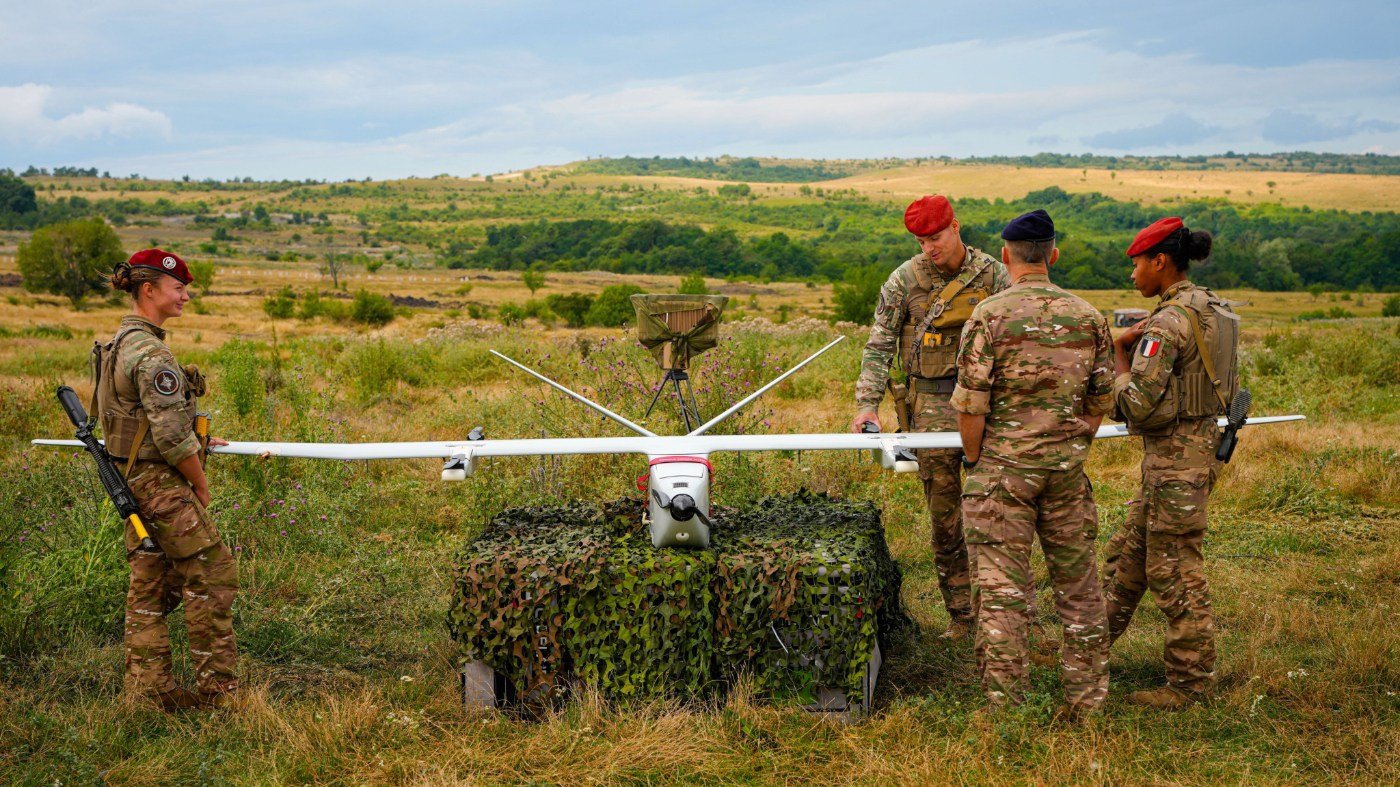
To address this dual challenge, a viable option exists: integrate unmanned air, land, and sea systems into NATO's defense. The wars in Ukraine and Iran have shown how cheap drones in large numbers can change the battlefield. Ukraine's ability to hold off a much larger Russian force for nearly five years is a testament to drone warfare. NATO must adopt a similar approach, but with a strategy that exploits the cost and operational asymmetries of unmanned systems.
Last week in Poland, NATO's Supreme Allied Commander, U.S. Air Force Gen. Alexus G. Grynkewich, outlined a theory of victory: “blunt, block, and break” any Russian attack. This echoes the “Porcupine Strategy” proposed by analysts, which makes aggression so costly that it becomes unthinkable. Central to this strategy is the deployment of tens of thousands of inexpensive unmanned vehicles across NATO's 32 member states.
Imagine how Russia would fare against 32 Ukraines. Unmanned vehicles would be stationed from the northern flank—UK, Greenland, Iceland, Norway, Sweden, Finland—to the Baltic, Mediterranean, and Black Seas, and across central Europe. They would serve as blunters, blockers, and breakers against any incursion.
Beyond deterrence, drones would reduce the need for U.S. manned forces in Europe, easing any redeployment to Asia. Operating across land, sea, and air, they offer a cost-effective way to prevent and disrupt Russian aggression. While lessons from Ukraine are unique, the combination of drones and artificial intelligence presents NATO with its most economically sound path forward.
The question is whether NATO will seize this opportunity. As the alliance navigates internal divisions and external threats, the drone revolution may be its best bet for maintaining relevance and security. For more on the challenges facing the alliance, see McConnell's warning on Trump's Russia strategy and recent Russian strikes on Kyiv.