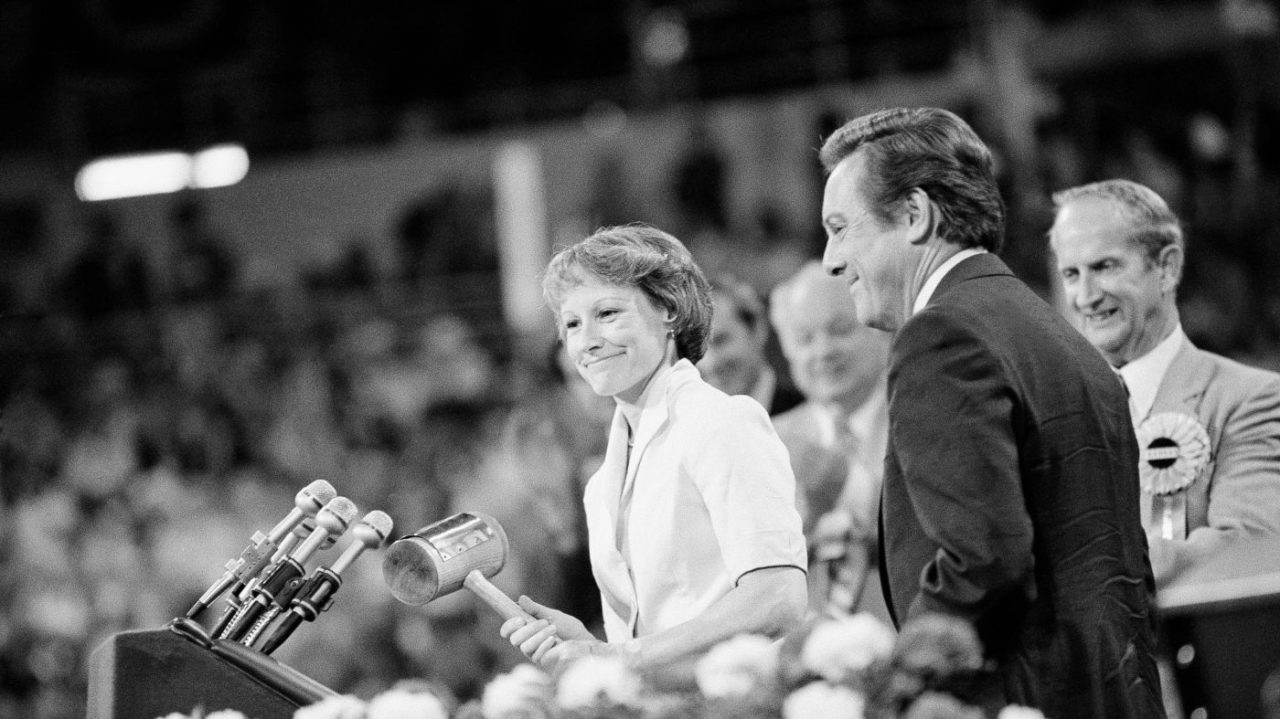
Nancy Kassebaum Baker, a Kansas Republican who made history as the first woman elected to the U.S. Senate without following a spouse into office, died Friday at her home in Topeka. She was 94. Her son, Bill Kassebaum, confirmed the death, citing natural causes.
Kassebaum Baker, the daughter of former Kansas Gov. Alf Landon, the 1936 Republican presidential nominee, served in the Senate from 1978 to 1997. She was a fixture of the chamber's dwindling moderate wing, often breaking with her party on key votes, including supporting an assault weapons ban championed by President Bill Clinton.
“She loved Kansas. She loved people from Kansas and representing Kansas for 18 years in the U.S. Senate,” Bill Kassebaum told the Associated Press. “She was an independent-minded Republican who was willing to stand up for what she thought was right, even if that meant going against the party.”
Her political rise was unconventional. In 1978, with nine candidates in the GOP primary, she won the nomination with less than 31% of the vote, then defeated Democrat Bill Roy in the general election with nearly 54%. Her modest, unpretentious style resonated with Kansans, who reelected her by overwhelming margins in 1984 and 1990.
In the Senate, she was known for bipartisan collaboration, notably co-authoring the 1996 Health Insurance Portability and Accountability Act (HIPAA) with liberal Sen. Ted Kennedy. She also chaired the Labor and Human Resources Committee, the only woman at the time to hold a committee chairmanship.
Kassebaum Baker's independence sometimes frustrated conservatives. Her vote for the assault weapons ban drew the angriest mail of her career, but she never lost her broad appeal. She retired in 1996, saying she wanted to return to her ranch in the Flint Hills and babysit her grandchildren.
She married former Sen. Howard Baker of Tennessee in December 1996, making them the first former senators to marry each other. Howard Baker, who later served as President Ronald Reagan's chief of staff, died in 2014.
After leaving office, Kassebaum Baker remained active in public service, serving on a bipartisan commission on campaign finance reform and a British commission on Africa. When President George W. Bush named her husband ambassador to Japan in 2001, she accompanied him for the four-year posting.
In her later years, she distanced herself from the Republican Party as it shifted rightward, endorsing Democrats in some races. Her son said she remained a beloved figure in Kansas, a state she represented with quiet determination.