The NAACP has launched a campaign called "Out of Bounds" that targets eight states—Alabama, Florida, Georgia, Louisiana, Mississippi, South Carolina, Tennessee, and Texas—where Black athletes generate nine-figure revenues for colleges while their communities face systematic voter suppression. The group is calling on Black athletes to reconsider playing for flagship programs in these states.
"Black athletes should not be asked to generate wealth, prestige, and power for state institutions while those same states strip political power from Black communities," said NAACP President Derrick Johnson. "It is a sprint to erase Black political power."
The Legal Landscape
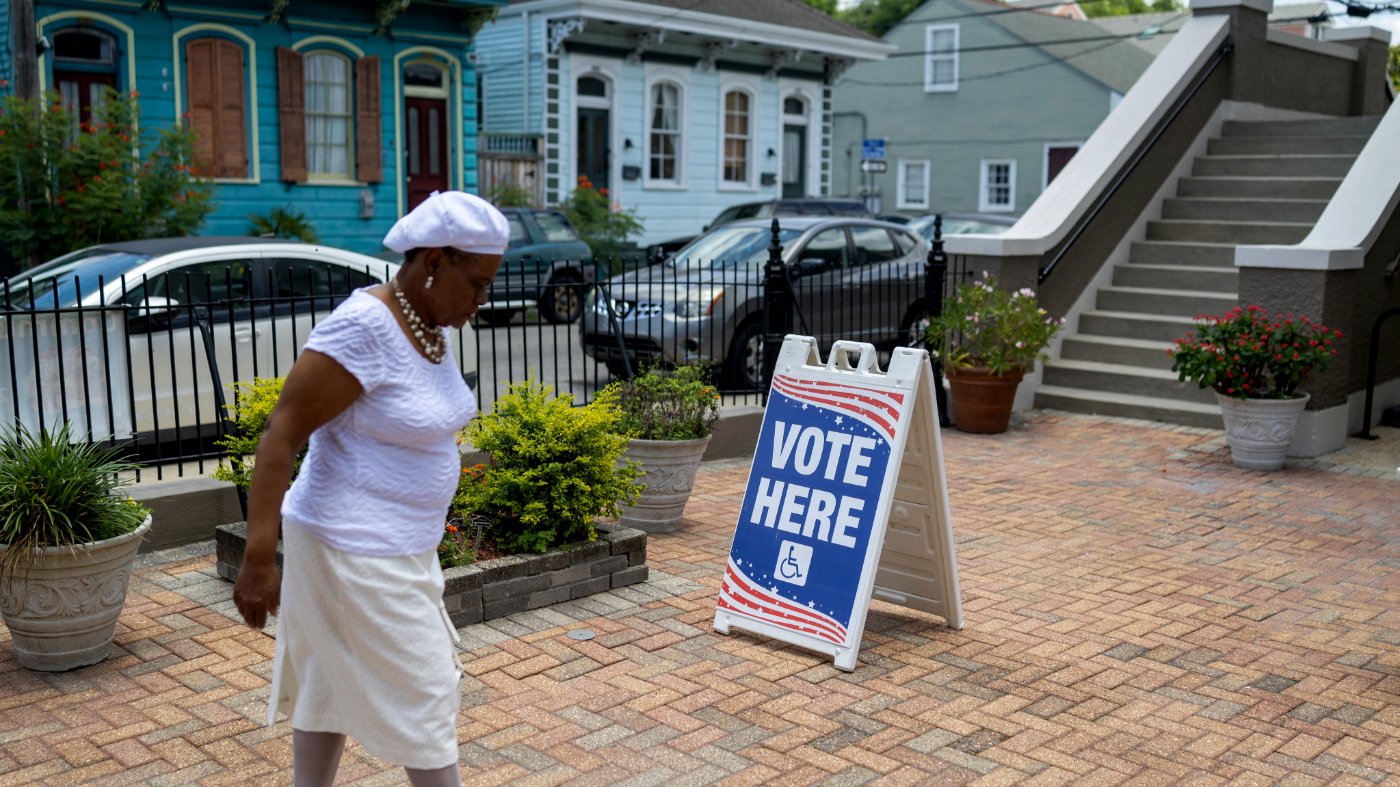
The Voting Rights Act has been effectively dismantled through a series of Supreme Court rulings. Shelby County v. Holder (2013) gutted Section 5, Brnovich v. Democratic National Committee (2021) narrowed Section 2, and Louisiana v. Callais (April 29) further weakened protections. Justice Elena Kagan wrote in dissent that the act is "all but a dead letter."
Florida passed a redistricting bill the same day as the Callais ruling, Tennessee eliminated its only majority-Black congressional district, and Alabama rushed to the Supreme Court to overturn a court-drawn map. Louisiana suspended its May 16 primary to allow the legislature to redraw maps. According to Berkeley Law professor Erwin Chemerinsky, this represents the largest decrease in Black representation in Congress and state legislatures since Reconstruction.
Political Strategy
Republican strategist Lee Atwater explained in a 1981 interview that after 1968, the party shifted from overt racism to coded language—"forced busing," "states' rights," "tax cuts"—that disproportionately harms Black communities without explicit racial appeals. That playbook remains central to modern Republican governance.
The states targeted by the NAACP have enacted restrictive voting laws: Georgia's SB 202 made it a misdemeanor to hand water to voters in line, Texas' SB 1 banned drive-through voting in Harris County, and Florida's SB 90 restricted mail-in ballot drop boxes. All these states are home to powerhouse college football programs that rely heavily on Black athletes.
Economic Leverage
Black athletes make up about 40% of SEC football rosters and nearly half of Division I men's basketball players. The House v. NCAA settlement allows up to $20.5 million per program in annual revenue-sharing for name, image, and likeness (NIL) deals, with top athletes earning seven figures. The transfer portal gives players unprecedented mobility.
"The Black rider in 1955 had to walk. The Black athlete in 2026 just has to sign somewhere else," the article notes, drawing a parallel to the Montgomery bus boycott.
The Congressional Black Caucus sent letters to NCAA and conference commissioners on Monday, vowing to oppose the SCORE Act—which would partially shield the NCAA from NIL liability—unless they take a stand against redistricting that dilutes Black voting power.
A New Economic Model
The article proposes a strategy: Black-led NIL collectives, funded by donors like Roc Nation, the Divine Nine, and Black church networks, could direct deals only to states that respect voting rights—such as Maryland, Illinois, Michigan, Oregon, New Jersey, or California. This would pressure states like Alabama and Florida to reconsider their policies or lose top recruits.
Critics may argue athletes shouldn't be political, but history shows otherwise. Muhammad Ali, Tommie Smith, John Carlos, and Colin Kaepernick were all criticized for mixing sports and politics but were later vindicated. The core argument is that a Black worker in 2026 has the right to choose an employer based on whether the state taxing their labor respects their vote.
The article concludes by invoking Reconstruction: it didn't end because Black men stopped voting but because they lost the economic autonomy that underpins political power. The current generation of athletes has the leverage to change that—if they choose to use it.