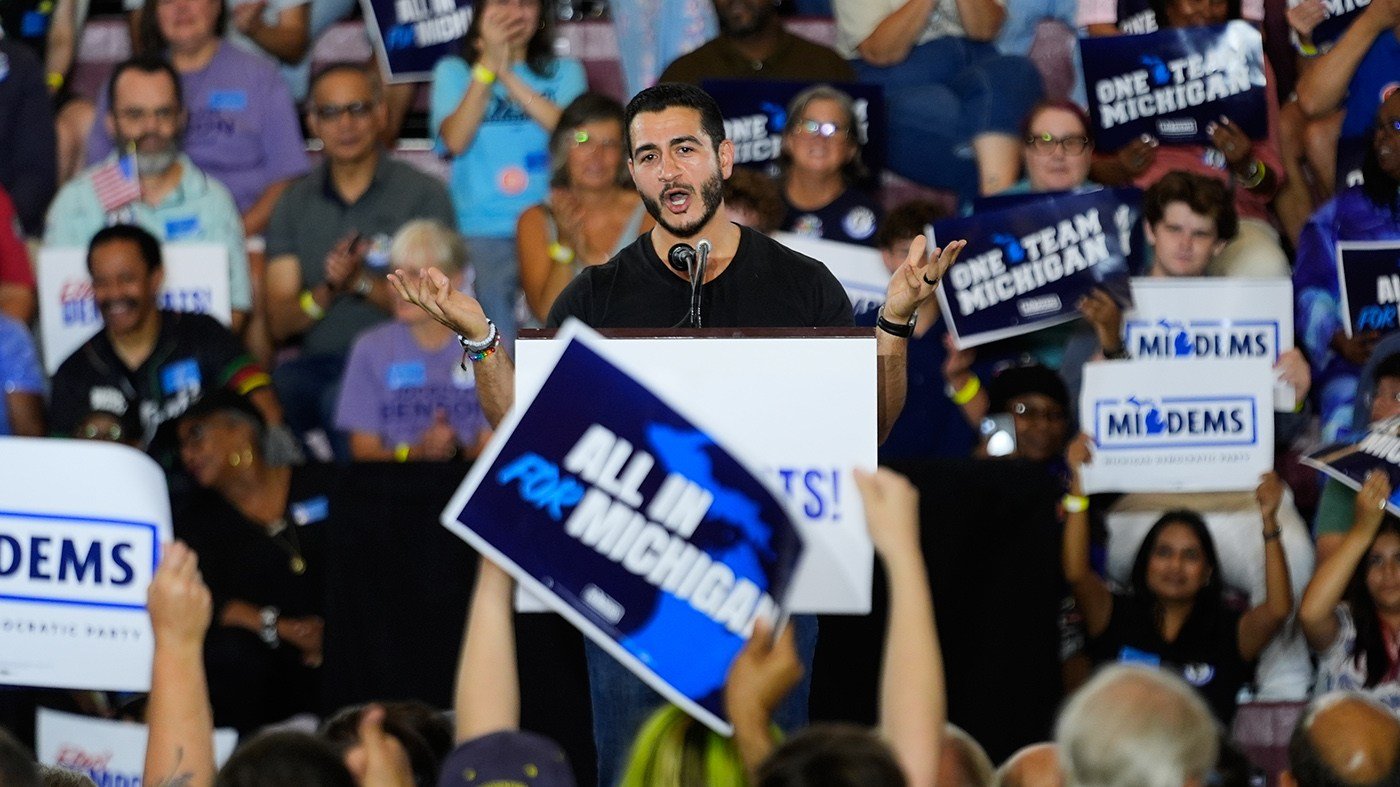
When Pete Buttigieg took the stage at a Michigan rally earlier this month to rally support for Abdul El-Sayed's Senate bid, his presence was more than a show of party unity. The former Transportation secretary, now a Michigan resident, is among a growing list of Democrats eyeing the 2028 presidential race, and his appearance doubled as an early campaign stop in a state that could shape the next nomination fight.
Michigan is poised to play a pivotal role in the 2028 Democratic primary, and El-Sayed's campaign is offering would-be contenders a chance to connect with a diverse electorate months before the presidential contest heats up. Buttigieg is not alone in this strategy. California Governor Gavin Newsom recently embarked on a two-day swing through the state, meeting with union workers and Black community leaders, and sat down with El-Sayed for over half an hour in East Lansing.
Newsom later praised El-Sayed as "a thoughtful person" who articulated his views clearly, adding, "This is not a wild ideologue." The governor's visit included an appearance at an annual barbecue hosted by Michigan Democratic Party chair Curtis Hertel, where he was mobbed by attendees. "Safe to say Michigan Democrats were excited by the opportunity to meet Gavin Newsom," wrote his spokesperson, Izzy Gardon, on X.
Other potential 2028 contenders have also reached out. Maryland Governor Wes Moore received a text from El-Sayed shortly after his primary victory, and sources confirm that former Vice President Kamala Harris and Arizona Senator Mark Kelly were in touch in the days following. The outreach underscores the importance of Michigan, a must-win state for Democrats in both the 2026 midterms and the 2028 presidential election.
Democratic strategist Joel Payne noted, "There's a good case that Michigan will be the bellwether of the first tranche of Democratic primary states in 2028." He added, "I believe the winner of the 2028 Michigan Democratic primary will be the eventual nominee, and you will see 2028 hopefuls on the ground in Michigan between now and Election Day this year not only to support Abdul El-Sayed, but also to start building infrastructure."
Jamal Simmons, a Democratic strategist from Michigan, said the level of engagement from potential candidates will be telling. "Which do and which don't will tell us a lot about the politics of 2028," he said.
Buttigieg's rally speech emphasized the stakes: "The stakes are high, and people from around the country, people from around the world are watching the state of Michigan right now to see if we have the capability to put together that coalition to win, and we will win."
The influx of presidential hopefuls is not coincidental. The Democratic National Committee recently approved a 2028 primary calendar that places Michigan fifth, cementing its importance as an early test of candidate appeal. The state's status as a perennial battleground only adds to its allure, as Democrats seek to retain the open Senate seat and build momentum for the next White House race.
Other states are seeing similar patterns. New Hampshire's Senate race has attracted visits from Kelly and Buttigieg to support front-runner Chris Pappas, and Kentucky Governor Andy Beshear hosted Pappas on his podcast. But Michigan is emerging as the epicenter, with observers expecting appearances from figures like Alexandria Ocasio-Cortez, who endorsed El-Sayed in the primary.
Michigan-based strategist Adrian Hemond said the choices of which candidates to campaign with will be closely watched. "Some of them will campaign with and for El-Sayed. Some of them will campaign for Jocelyn Benson or for congressional candidates," he said. "But it'll be very interesting to see, based on polling and facts on the ground, how close these folks want to hug him."
Longtime analyst Ed Sarpolus suggested that aligning with gubernatorial candidate Jocelyn Benson might be a safer bet for some Democrats, given the controversies surrounding El-Sayed's campaign, including his handling of ties to progressive streamer Hasan Piker, which has sparked debate over Senate strategy and drawn criticism from Jewish voters.
As the 2026 election approaches, Michigan is becoming a testing ground for 2028 ambitions, with every visit and endorsement offering clues about the future of the Democratic Party.