Italian Prime Minister Giorgia Meloni has forcefully rejected President Trump's account of their interaction at the Group of Seven (G7) summit, accusing him of inventing a story that she pleaded for a photograph. The dispute escalated further when Italy's foreign minister canceled a planned trip to the United States in protest.
In a video posted on X, Meloni directly addressed Trump's reported comments, in which he claimed she had begged for a photo opportunity. Speaking in Italian, she declared, “There is one thing he must remember: neither I nor Italy ever beg.” She described herself as “astounded” by Trump’s remarks, calling them “completely fabricated.”
Meloni criticized Trump for what she sees as a pattern of treating allied nations worse than adversaries. “I do not know why the president of the United States behaves this way toward his allies—it is certainly not the first time this has happened,” she said. She added that it is “regrettable that he does not show the same determination against the enemies of the West and the United States—against leaderships with whom he actually proves to be much more accommodating.”
Shortly before Meloni’s statement, Italian Foreign Minister Antonio Tajani announced he was canceling his visit to the U.S. scheduled for June 21-22. In a statement, he said, “The serious and offensive words of President Trump towards Prime Minister Giorgia Meloni offend all of Italy. For this reason, I have decided to cancel my visit to the United States.”
The controversy stems from an interview Trump gave to Italy’s La7 TV channel, which translated his remarks but did not air the original audio. According to Reuters, Trump was quoted as saying, “She’s probably happy I talked to her. I didn’t have to talk to her” and “She begged me to take a picture with her. She wanted a picture with me so badly. I wouldn’t have taken it, but I felt sorry for her.”
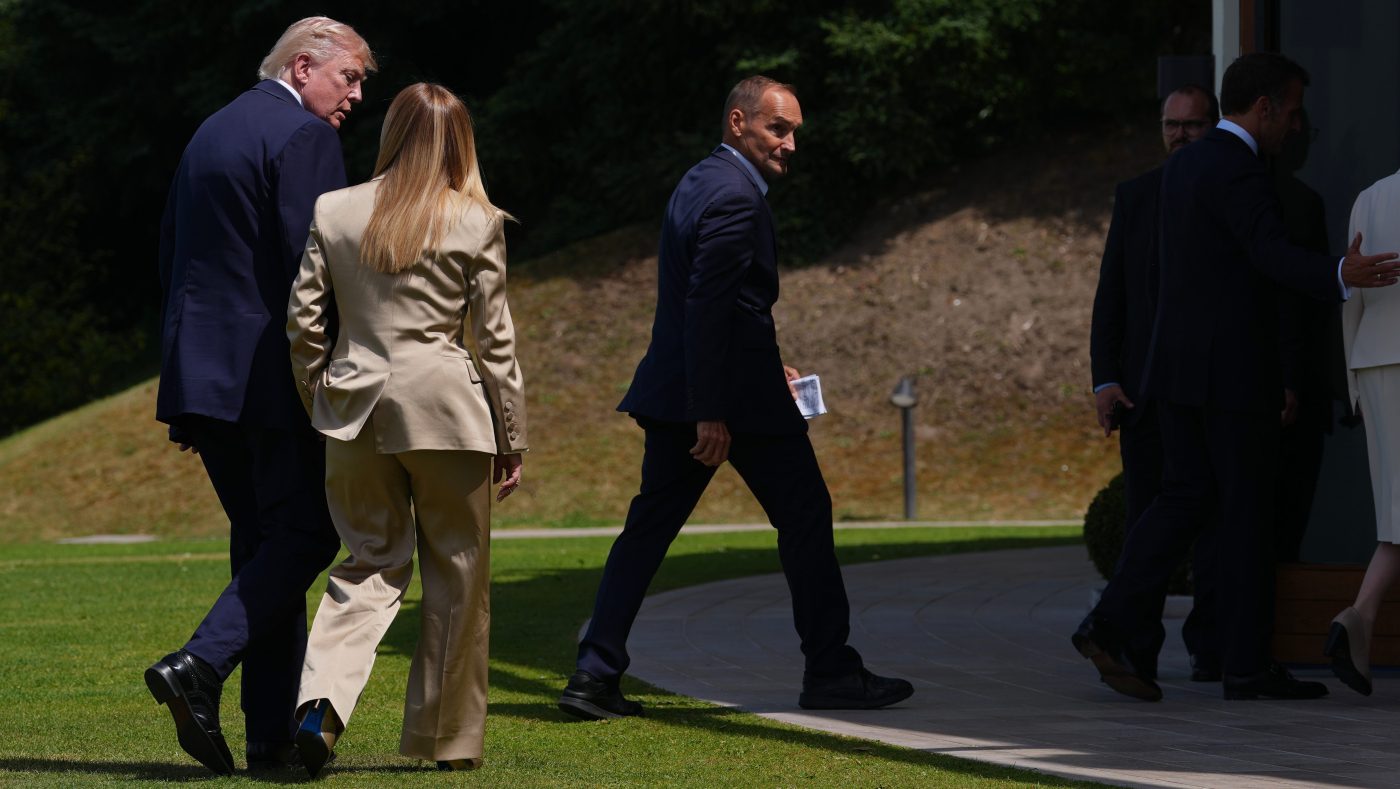
Video footage from the G7 summit in Evian-les-Bains, France, shows Meloni and Trump sitting side by side on a couch, engaged in conversation, contradicting the notion that Meloni was seeking attention.
This incident marks a sharp deterioration in U.S.-Italy relations. Trump had previously praised Meloni as a “beautiful young woman,” and the right-wing populist leader had cultivated a bond with the U.S. president that few European leaders managed. However, tensions flared earlier this year when Trump criticized Meloni, Italy, and the Pope for opposing the U.S. military campaign against Iran. Meloni had defended the Vatican’s stance against the war, setting the stage for the current rift.
The diplomatic fallout underscores the fragility of Trump’s alliances with traditional partners, even as he pursues controversial deals with adversaries. For context, Trump’s approach to Iran has drawn bipartisan criticism, with some GOP senators expressing dismay over the potential $300 billion windfall from his recent memorandum of understanding with Tehran. Critics have labeled the deal as “Art of the Surrender,” highlighting the administration’s inconsistent foreign policy.
As the dispute unfolds, Meloni’s firm response signals that Italy will not tolerate what it perceives as disrespect from Washington. The canceled visit and public rebuke suggest that the once-friendly rapport between the two leaders has soured significantly, potentially reshaping the dynamics of U.S.-European relations.