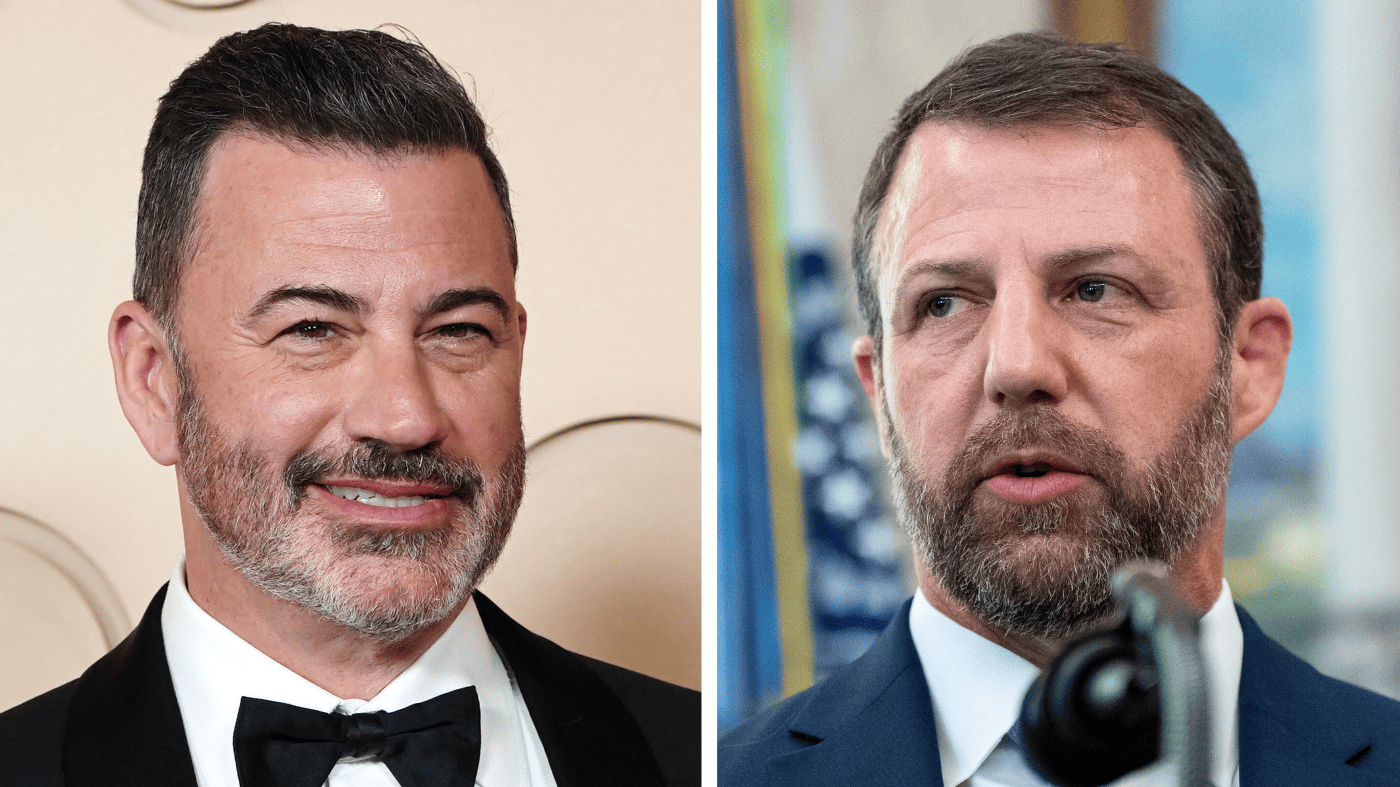
Late-night television host Jimmy Kimmel on Thursday forcefully defended his critique of newly confirmed Homeland Security Secretary Markwayne Mullin's professional background, igniting a fresh political firestorm with conservative media and drawing a personal rebuke from former President Donald Trump.
During his opening monologue, Kimmel addressed the controversy surrounding his previous comments about Mullin's resume, which highlighted the secretary's past as a mixed martial arts fighter and plumber before his political career. The comedian clarified his position, stating his objection was not to Mullin's previous occupation but to what he characterized as a mismatch between that experience and the demands of leading the massive national security agency.
"Let me be perfectly clear," Kimmel said. "I'm not upset that the head of Homeland Security used to be a plumber. I'm upset that he isn't still a plumber." He elaborated with a pointed analogy: "I wouldn't put a plumber in charge of Homeland Security for the same reason I wouldn't call a five-star general to pull a rat out of my toilet. We all have our areas of expertise."
The remarks triggered immediate backlash across conservative media platforms, with commentators accusing Kimmel of elitism and disrespect toward skilled trades. Kimmel countered that his critics were deliberately misrepresenting his argument. "Of course, they decided to twist that to say it was an insult to plumbers, which it was not," he stated.
Former President Trump, appearing on Fox News's "The Five," launched a direct attack on the ABC host. "He's a loser. He gets no ratings. None. He's got no talent. He's got Trump Derangement Syndrome," Trump declared. "Whenever I watch him, I just can't believe he's even on the air." This exchange continues the long-running feud between Trump and Kimmel, who frequently criticizes the former president and his administration's policies on his show.
Kimmel accused conservative commentators of applying a double standard, pointing to their frequent criticism of Democratic Representative Alexandria Ocasio-Cortez's background as a bartender before her election to Congress. "Well, on behalf of bartenders everywhere, we anxiously await your apology," the comedian remarked, highlighting what he views as inconsistent treatment of professional backgrounds across the political spectrum.
The controversy emerges as Secretary Mullin assumes leadership of the Department of Homeland Security during a period of significant operational challenges. Mullin, who was confirmed as Homeland Security Secretary following Kristi Noem's abrupt departure, now oversees an agency with a broad portfolio including border security, cybersecurity, and emergency management. Some analysts suggest Mullin's DHS leadership could trigger major FEMA reforms and potential staff reductions as part of a broader administration overhaul.
This incident represents another chapter in the ongoing cultural and political clashes between entertainment figures and political leadership. The debate over qualifications for high office versus diverse professional backgrounds continues to resonate in American politics, particularly as both parties seek to appeal to working-class voters. The timing is notable, coming amid other political shifts including recent Democratic upset victories in traditionally Republican areas that have altered the political landscape.
Kimmel's show has previously faced controversy for political commentary, including last year when ABC temporarily pulled the comedian off the air for a joke about conservative activist Charlie Kirk. Trump celebrated that temporary removal at the time, then criticized the network when Kimmel returned. The current dispute underscores how late-night comedy has become an increasingly polarized arena for political discourse, with hosts regularly engaging directly with political figures and policies.