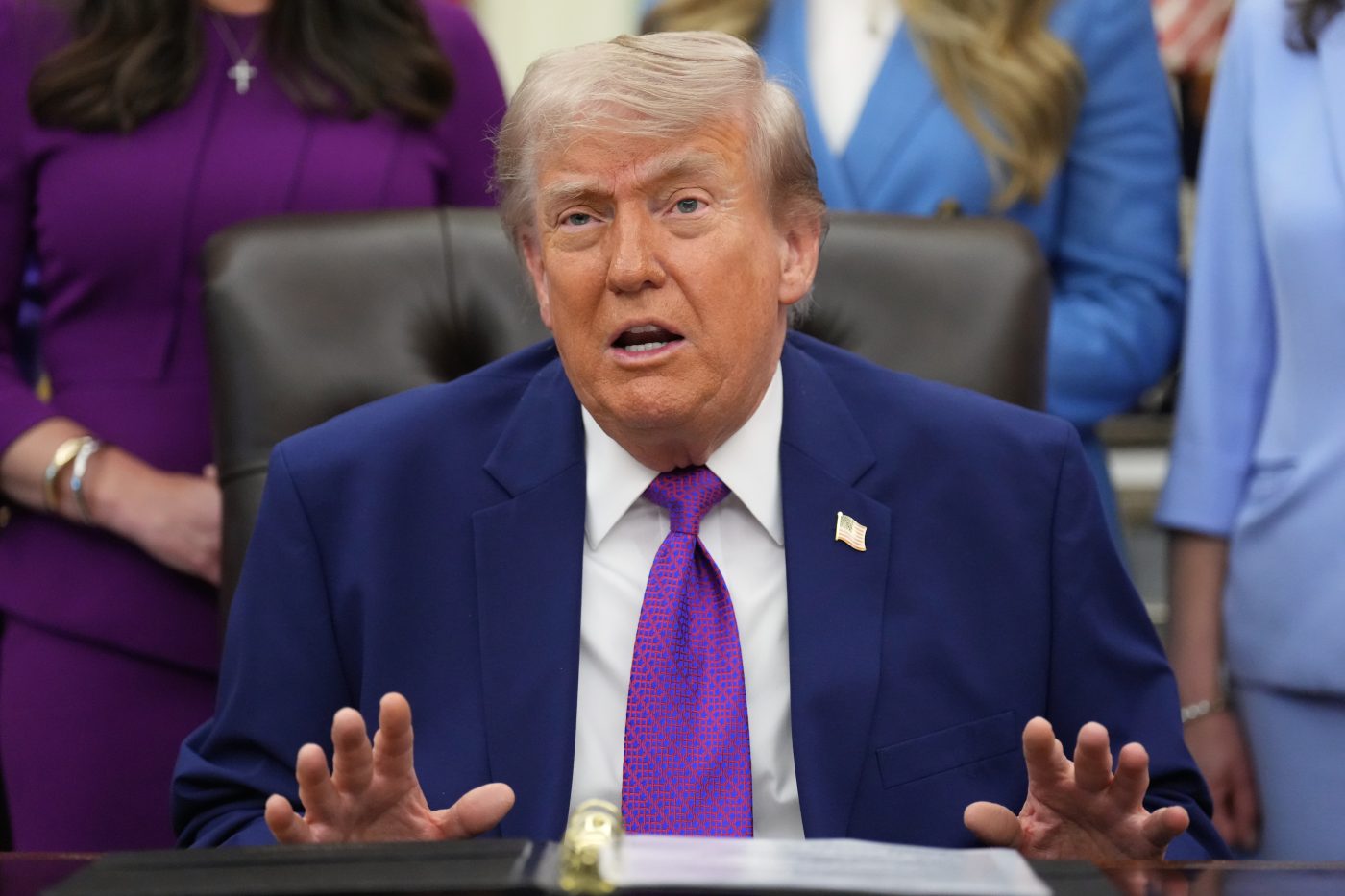
The fragile ceasefire in the 10-week U.S.-Iran war is teetering after President Trump on Monday dismissed Tehran's latest peace proposal as a “piece of garbage,” calling the month-long truce “unbelievably weak” and “on life support.” The president’s blistering remarks, echoed in an all-caps social media post declaring the offer “TOTALLY UNACCEPTABLE!”, signal that neither side appears willing to make the concessions needed to avoid a return to all-out combat.
Trump’s anger, however, raises a critical question: what happens next? For the president, a renewed offensive carries significant political risk. The average price of a gallon of gas in the U.S. has surged to $4.52, up more than 50 percent since the war began on Feb. 28, according to AAA. That spike is battering Trump’s approval ratings, which have sunk to 39 percent approval against 58 percent disapproval in Nate Silver’s weighted polling average. Republicans, already nervous about November’s midterm elections, are eager to avoid campaigning on an unpopular conflict that has driven up costs at the pump. A Reuters/Ipsos poll released Monday found that two-thirds of Americans believe the president has failed to clearly explain why the U.S. went to war with Iran in the first place.
Trump has made plain his belief that overwhelming military force can force Iran into submission. Last week, he told reporters they would know the ceasefire had ended when they saw “one big glow coming out of Iran.” But Tehran’s leadership is equally adamant. Iran’s military, though battered by weeks of U.S. and Israeli bombardment, retains the ability to block the Strait of Hormuz, a choke point for global oil shipments. That leverage, Iranian strategists believe, can inflict economic pain Washington cannot sustain.
On Monday, Mohammad Bagher Qalibaf, the Speaker of the Iranian Parliament, warned on social media that “our armed forces are ready to deliver a well-deserved response to any aggression.” He added, “Mistaken strategy and mistaken decisions will always lead to mistaken results — the whole world has already figured this out. We are prepared for all options; they will be surprised.”
While some analysts view such rhetoric as a brave face on a weakened military, Iran’s leadership appears convinced it has already scored a strategic victory simply by surviving the initial U.S.-Israeli assault. Tehran believes Trump miscalculated and now faces few palatable exit options. The Iranian proposal, details of which were leaked by state media, includes five non-negotiable demands: a full end to the war, lifting of sanctions, release of blocked funds, reparations for war damage, and recognition of Iranian sovereignty over the Strait of Hormuz. Foreign Ministry spokesperson Esmail Baghaei called the offer “reasonable demands, responsible requests and generous proposals.”
For Trump, accepting reparations or ceding control of the Strait is politically impossible. Instead, he is demanding far greater concessions, including a complete capitulation on the Strait issue. The core dispute over control of the waterway remains the central obstacle to any diplomatic resolution.
The standoff has left the administration in a precarious position. Trump could choose to resume full-scale hostilities in hopes of forcing Iran to bend, but that path is littered with domestic political landmines. The president’s own party is deeply uneasy: Trump's Iran Victory Claim Rings Hollow as GOP Faces Midterm Backlash. Meanwhile, the economic fallout continues to mount. Trump has endorsed suspending the federal gas tax in a bid to ease pain at the pump, but the move is seen as a Band-Aid on a deeper wound.
As both sides dig in, the prospect of a durable peace grows dimmer. The next few days will test whether the ceasefire can survive the political and military pressures grinding against it.