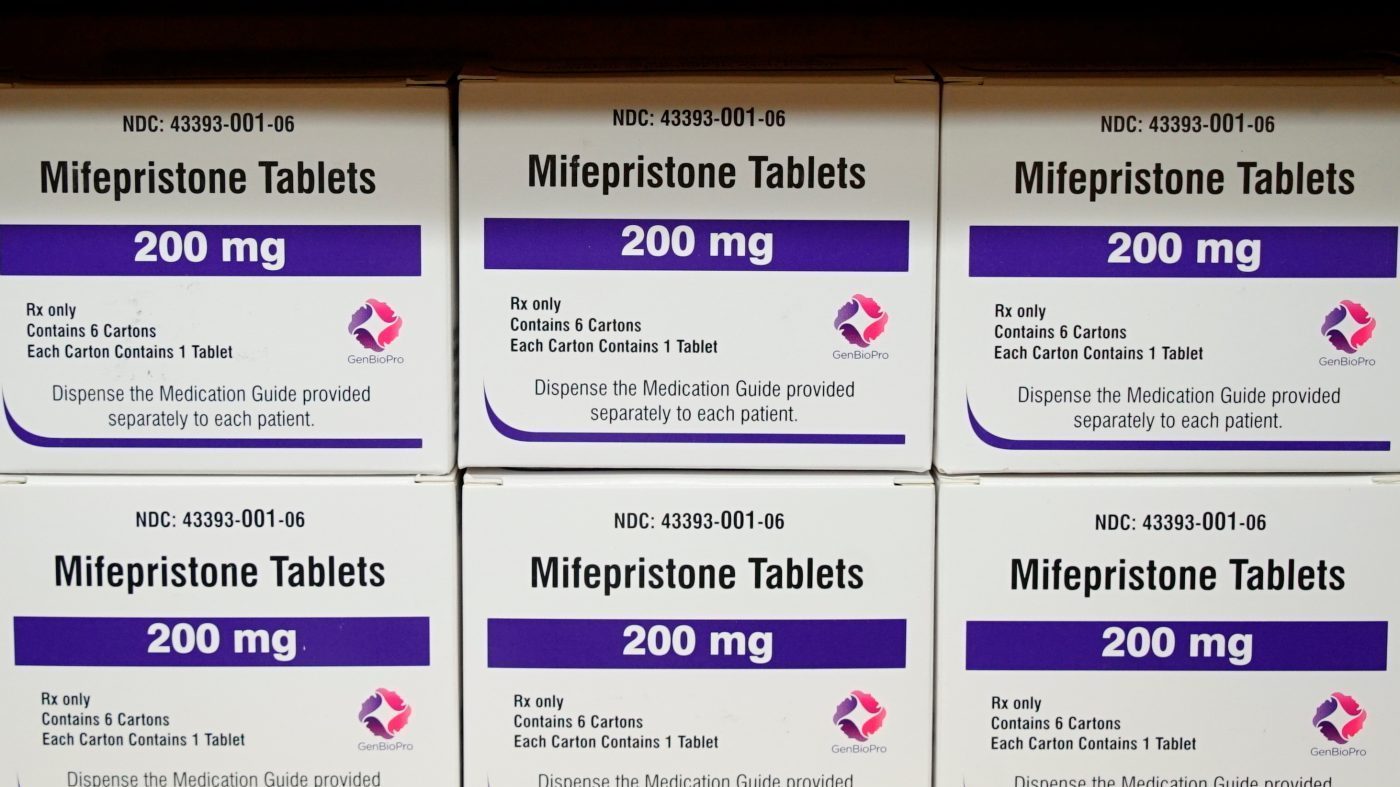
A federal judge on Sunday put on hold a lawsuit that seeks to strip the Food and Drug Administration's approval of the abortion pill mifepristone, pushing the case until after the midterm elections. The decision, issued by U.S. District Judge Reed O'Connor of the Northern District of Texas, came in response to a motion from the Department of Justice.
Judge O'Connor, a George W. Bush appointee, granted the DOJ's request to stay the proceedings until December 1 or until the FDA completes its ongoing safety review of the drug—whichever comes first. The state attorneys general of Texas and Florida, who filed the lawsuit, agreed to the pause.

The two states are asking the court to completely revoke the FDA's 2000 approval of mifepristone, arguing that the agency failed to properly evaluate the drug's safety and effectiveness. Their case also invokes the Comstock Act, a dormant 1873 anti-obscenity law that conservative groups have sought to use to ban mail-order abortion pills and related medical supplies. If the plaintiffs prevail, the ruling could restrict access to mifepristone nationwide.
In the same opinion, Judge O'Connor denied a motion to dismiss the case filed by GenBioPro, the generic manufacturer, and Danco Laboratories, the brand distributor. GenBioPro CEO Evan Masingill responded in a statement, saying, "We expect the FDA's review of mifepristone to not contradict the decision they made in 2023 that reaffirmed our product is safe and effective. GenBioPro will continue to use all legal and regulatory tools available to ensure Americans' access to reproductive care."
The stay means that the current patchwork of state-by-state access to mifepristone will remain unchanged for now, but the drug's availability remains under constant legal threat. This lawsuit is one of three pending federal cases that could alter nationwide access. It is the only one seeking to invalidate the drug's original approval.
The U.S. Court of Appeals for the 5th Circuit is scheduled to hear arguments on September 9 in a separate case brought by Louisiana, which challenges an FDA rule allowing mifepristone to be prescribed via telehealth and dispensed through pharmacies and by mail. Another lawsuit, filed in the Eastern District of Missouri by Missouri, Kansas, and Idaho, aims to reinstate the stricter conditions on mifepristone that existed before 2016, including limiting use to the first seven weeks of pregnancy and requiring three in-person office visits.
Mifepristone has been used by more than 7.5 million people in the U.S. for medication abortion and miscarriage care since its approval. The FDA has repeatedly affirmed its safety, noting that the two-drug regimen of mifepristone and misoprostol is a safe and effective alternative to surgical abortion. However, under pressure from anti-abortion lawmakers and activists, the agency has been conducting a retrospective safety review, which an administration official said in June could take up to six months, with initial results possibly released earlier.
Medication abortion has become the most common method of ending a pregnancy. Mail-order pharmacies, combined with "shield laws" in blue states that protect clinicians from prosecution, have helped women maintain access even in conservative states that have imposed strict abortion bans. As a result, the number of abortions has increased despite the end of the constitutional right to abortion.
After the Supreme Court overturned Roe v. Wade, the Biden administration in 2023 permanently removed the in-person dispensing requirement for mifepristone. The Trump administration has left those regulations in place, avoiding the issue in the political spotlight but frustrating anti-abortion advocates. Meanwhile, the legal battles continue to unfold, with the upcoming 5th Circuit arguments and the delayed Texas case both carrying significant implications for reproductive rights.