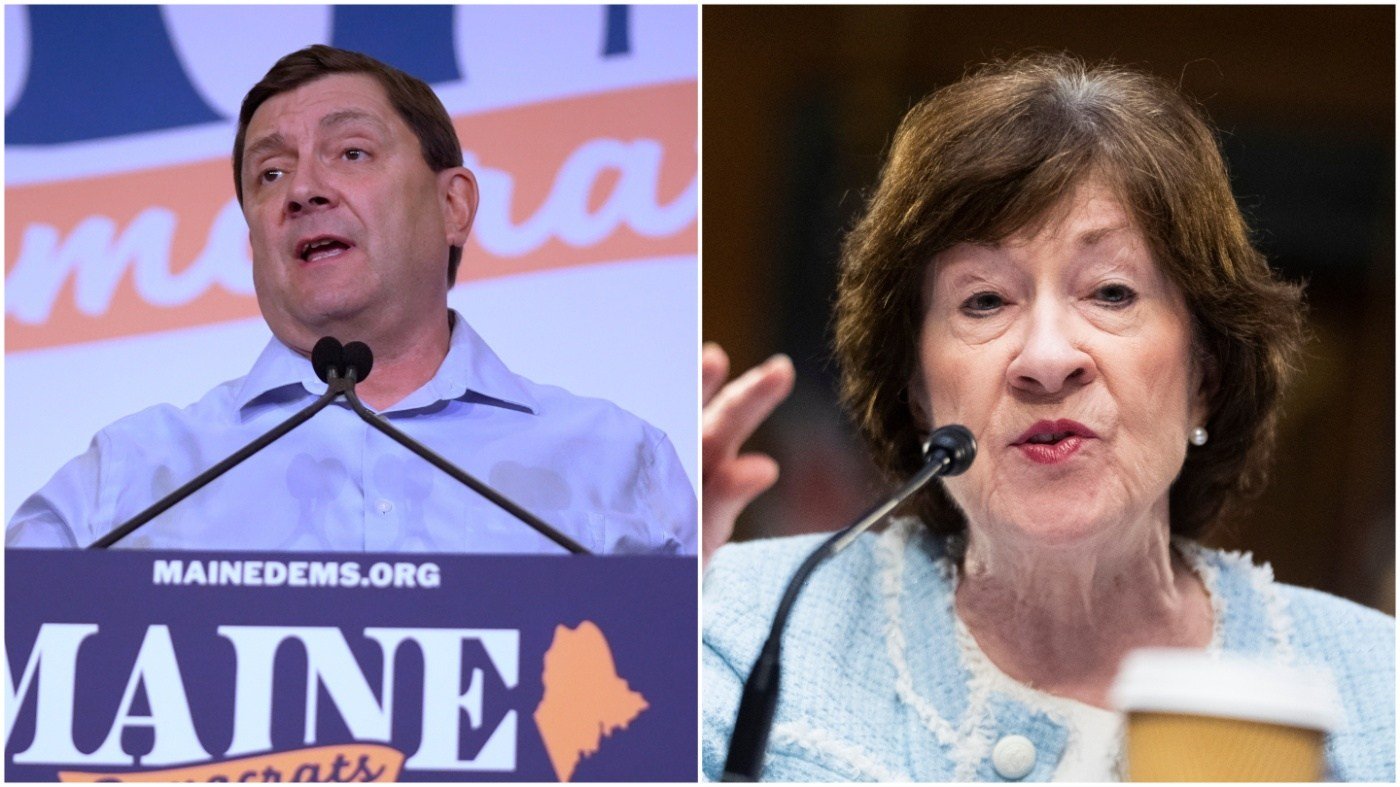
Sen. Susan Collins (R-Maine) and Democratic challenger Troy Jackson faced off in their final debate before Election Day, delivering sharp exchanges over President Trump, campaign donations, and the war in Iran. The hour-long forum, hosted by Maine Public and The Portland Herald, underscored the high stakes in a race that could help determine control of the Senate.
Collins, seeking a sixth term in a state that has trended Democratic, sought to cast herself as an independent voice willing to break with her party and the president. Jackson, a former state Senate president, repeatedly tried to paint her as a reliable vote for Trump's agenda when it mattered most.
Collins on the Defensive Over Trump Record
When pressed to name a vote where her opposition to Trump changed the outcome, Collins pointed to her efforts to block Defense Secretary Pete Hegseth's confirmation. She said she organized Republican opposition but lost a key vote at the last minute. Jackson quickly noted that Hegseth still leads the Pentagon, meaning her opposition did not alter the result.
Collins argued that a broader review of her record shows she has sided with the president only 72 percent of the time, not the 90 to 100 percent Jackson claimed. She also touted her votes to confirm three liberal Supreme Court justices nominated by Democratic presidents—Sonia Sotomayor, Elena Kagan, and Ketanji Brown Jackson.
Jackson countered that Collins only breaks with Trump when her vote is not needed. "The reality is that 100 percent of the time, when Donald Trump needs her, Susan Collins is going to be there," he said, pointing to her vote to advance Trump's sweeping tax and spending bill, even though she later opposed the final version.
Campaign Finance Clash
The debate turned heated over money in politics. Collins accused Jackson of breaking his pledge to reject donations from billionaires and corporate PACs. Jackson acknowledged receiving contributions from billionaires, drawing audible reactions from the audience. He insisted the money would not influence his votes, saying, "I'm going to tax those billionaires when I get to the U.S. Senate. So, if they want to give me money during this campaign, I guess that's up to them."
Jackson also admitted receiving $15,000 from oil and pharmaceutical industries, which he said he donated to charity. Collins criticized him for missing his self-imposed deadline to release his campaign finance report by one day, which Jackson blamed on a surge of contributions.
Iran War Takes Center Stage
Jackson argued that Collins, as chair of the Senate Appropriations Committee, could have used her power to cut off funding for the Iran war. "The way to block it now would be to shut off funding," he said. Collins has repeatedly criticized Trump's handling of the conflict and pointed to her votes against continuing military operations.
Jackson also highlighted the war's economic toll on Maine, including rising fuel prices that have hurt the state's fishing and logging industries. Collins said Congress should have been consulted before the war began, defending her votes to halt operations after the initial 60-day period under the War Powers Act.
The debate was briefly interrupted by a protester shouting about AI data centers and climate change. Collins dismissed the disruption as coming from a Jackson supporter, which Jackson denied.
This race is one of the most closely watched in the country, with Collins fighting to hold a seat in a state that has favored Democrats in recent presidential elections. Similar dynamics have played out in other contests, such as the final Iowa Senate debate, where economic and foreign policy issues dominated. In Georgia, Ossoff and Collins traded jabs over similar themes.
As voters head to the polls, the question remains whether Collins's appeals to bipartisanship can overcome Jackson's efforts to tie her to an unpopular president. The outcome could hinge on which message resonates more with Maine's electorate.