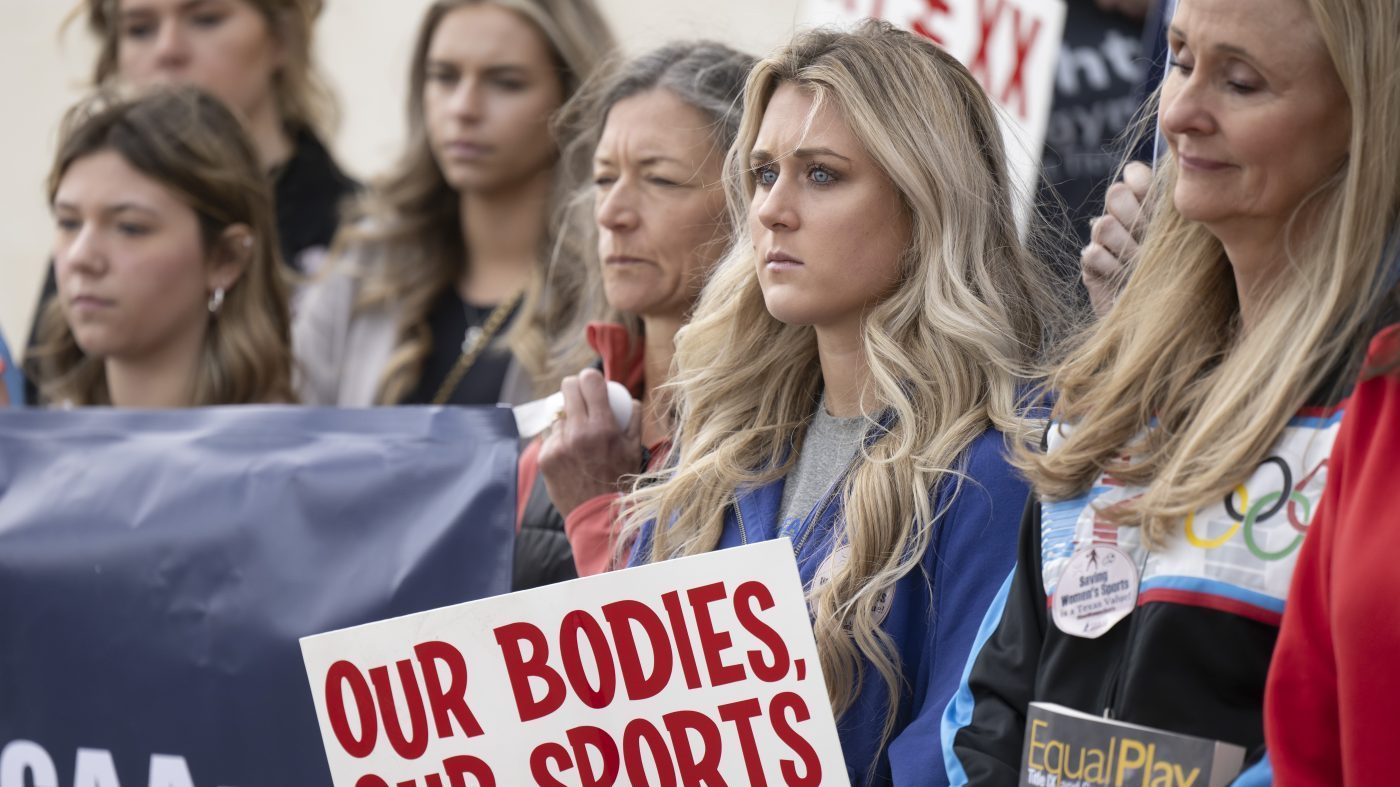
A federal judge has thrown out a lawsuit against the NCAA filed by former University of Kentucky swimmer Riley Gaines and more than a dozen other current and former college athletes, who alleged the organization's policies on transgender athletes violated their Title IX rights.
In a ruling issued in the U.S. District Court for the Northern District of Georgia, Judge Tiffany R. Johnson held that the NCAA is not subject to Title IX because the organization does not receive federal funding. Title IX is the federal law that prohibits sex-based discrimination in education programs and activities that receive federal financial assistance.
The lawsuit, filed in 2024, centered on the participation of transgender University of Pennsylvania swimmer Lia Thomas at the 2022 NCAA Division I Women's Swimming and Diving Championships, hosted by Georgia Tech. Thomas won the 500-yard freestyle and used women's locker rooms during the event. Up until February 2025, the NCAA allowed transgender women to compete on women's teams and use facilities matching their gender identity.
Gaines, who competed in the same championships and tied for fifth in the 200-yard freestyle, has been a vocal critic of the NCAA's policy. After the ruling, she announced on social media that she intends to appeal, stating that the "goal from the beginning was to get this case before the Supreme Court."
"This momentary setback will not deter me or other women athletes in the least," Gaines said in a statement obtained by Politico. "We are on the side of truth. I am confident Americans will rally to our side to fight the NCAA."
The NCAA, for its part, welcomed the decision. Spokesperson Meghan Wright said the organization "is proud to continually invest in and expand women's sports and the NCAA is in full compliance with the Trump administration's executive order on women's sports." That executive order, signed by President Donald Trump in February 2025, banned transgender athletes from competing in girls' and women's sports. The NCAA changed its policy the same day.
The ruling could have ripple effects on similar litigation. A separate lawsuit filed in February 2025 by three former University of Pennsylvania swimmers against Penn, Harvard University, the Ivy League, and the NCAA is now in question. That case alleges that Thomas's participation in the 2022 women's Ivy League championship hosted by Harvard denied them equal opportunities to compete and win, and violated their privacy in locker rooms.
In July 2025, a federal judge dismissed Harvard and the Ivy League from that case, and also issued a stay on proceedings against the remaining defendants pending the outcome of Gaines' lawsuit. With that lawsuit now dismissed, the stay may be lifted, but the Georgia ruling's reasoning could influence how courts view Title IX claims against the NCAA.
Legal experts note that the decision underscores the limits of Title IX when applied to organizations that do not directly receive federal funds. The NCAA, however, does receive some indirect funding through member institutions that do receive federal aid, an argument the plaintiffs made but the judge rejected.
Gaines and her supporters have framed the fight as a broader battle for women's sports. "We are on the side of truth," she said. The case now heads to the U.S. Court of Appeals for the 11th Circuit, where the outcome could set precedent for similar challenges across the country.