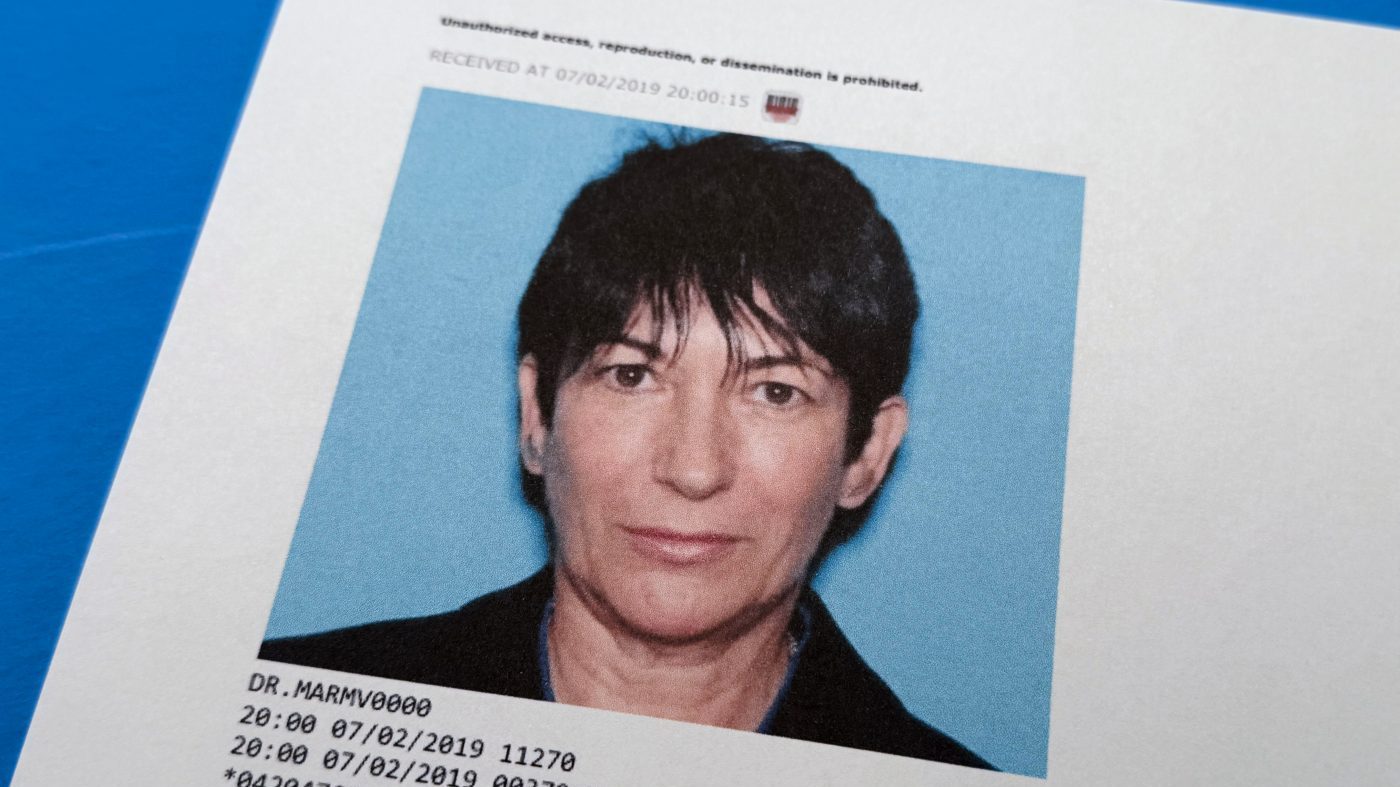
A federal judge on Tuesday rejected Ghislaine Maxwell's latest attempt to overturn her conviction for her role in Jeffrey Epstein's sex trafficking network, a decision that drew sharp rebukes from survivors who said the legal maneuvering reopens old wounds.
Judge Paul A. Engelmayer of the U.S. District Court for the Southern District of New York ruled that Maxwell, who is serving a 20-year sentence, is barred from filing any further motions to vacate her conviction. The judge's order, made public Tuesday, stated that any additional filings from Maxwell "will not be considered."

The ruling comes after Maxwell, 63, filed a motion earlier this year arguing that newly released documents and the conduct of Epstein accusers' attorneys violated her due process rights. She also claimed that a non-prosecution agreement between federal prosecutors and Epstein shielded her from charges.
Audra Christiansen, a former Playboy Playmate who accused Epstein of sexual abuse in 2004, called Maxwell's post-conviction efforts "deeply troubling." In a statement to NewsNation, Christiansen said that "for decades, survivors of Jeffrey Epstein's network fought to be taken seriously," and that Maxwell's legal strategy attempts to "shift the focus away from the people who were harmed and toward portraying those convicted in this network as its victims."
Christiansen, who said Maxwell threatened her and her family after the abuse, added: "Survivors deserved due process, too. We deserved investigations when we came forward. We deserved institutions that acted when warning signs were raised."
Arick Fudali, an attorney representing 11 Epstein survivors, described Maxwell's motion as "frivolous" and expressed satisfaction with the judge's rejection. "Ghislaine Maxwell is a convicted child sex trafficker, and she belongs behind bars for the remainder of her sentence," Fudali said.
This is not the first time Maxwell has sought to undo her conviction. In October 2025, the U.S. Supreme Court dismissed her earlier bid, and in April 2025 her attorney, David Oscar Markus, argued in a petition that a written promise from the government not to prosecute Epstein's co-conspirators should have protected her. The Department of Justice released audio recordings and transcripts in August 2025 from meetings between Maxwell and then-Deputy Attorney General Todd Blanche, after which she was transferred to a minimum-security prison in Texas.
The ruling is a significant setback for Maxwell, who was convicted in 2021 on charges of sex trafficking minors and related conspiracy counts. Epstein, who died in 2019 while awaiting trial on federal sex trafficking charges, was a wealthy financier with connections to political and business elites.
Judge Engelmayer's decision also underscores the judiciary's growing impatience with Maxwell's repeated attempts to relitigate her case. Legal experts note that her claims about "de facto prosecutors" and newly released documents were largely dismissed as irrelevant to the evidence presented at trial.
For survivors, the legal battles serve as a reminder of the long road to accountability. As Christiansen put it, "We deserved transparency, accountability, and protection from people who used wealth and power to avoid consequences."