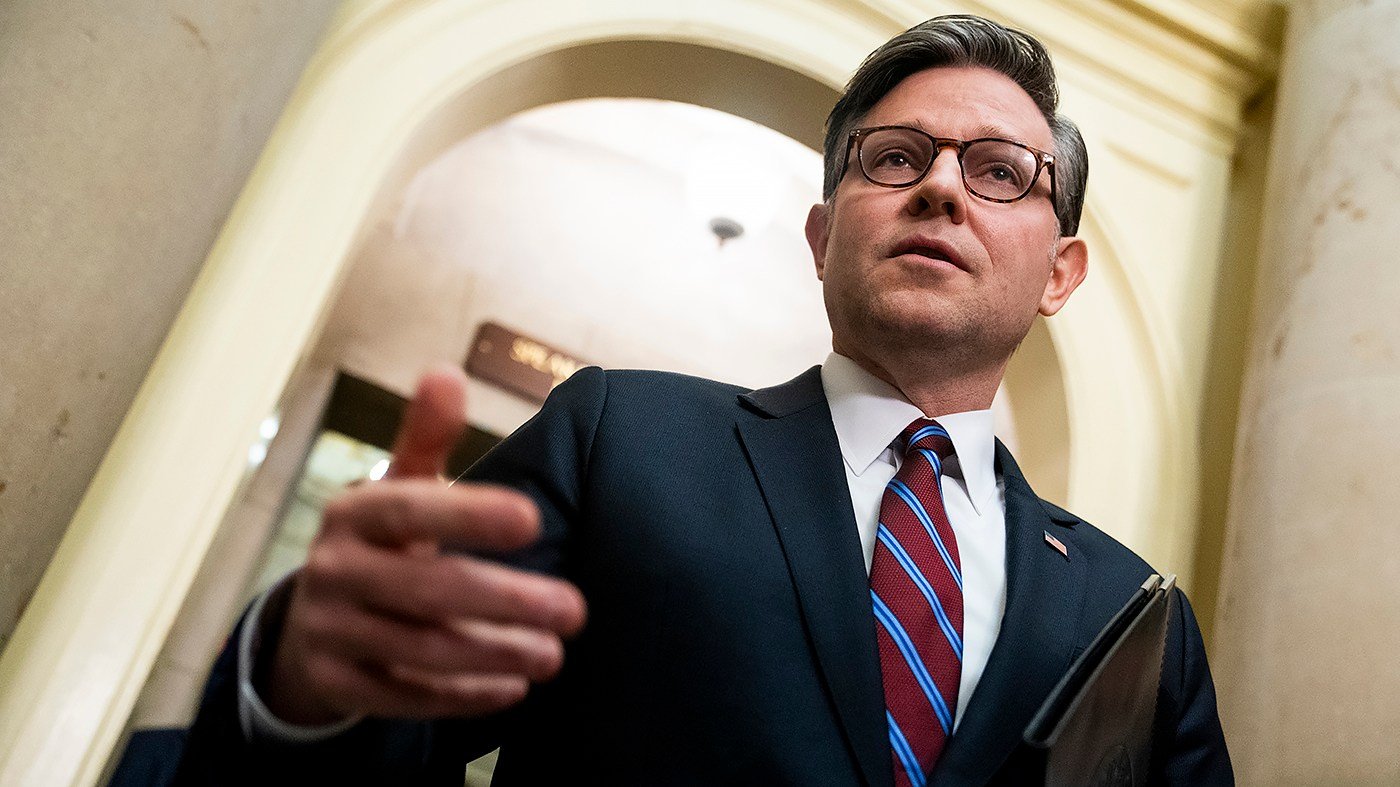
House Speaker Mike Johnson (R-La.) has publicly urged a path to end the Iran war, marking a notable shift as Republicans confront the political fallout of the prolonged conflict just weeks before the midterm elections. In an interview with a local TV station, Johnson described the military operation as a success but stressed the need to bring it to a close.
“It’s been a priority and an objective of every administration, for 50 years nearly, to ensure that Iran didn’t have a nuclear capability. Now that’s done. Operation Epic Fury was an epic success. … The world is safer because of it,” Johnson said. “But now we’ve got to bring that to a resolution.”
Johnson stopped short of demanding an immediate withdrawal or outlining specific steps for the administration to wind down operations. Still, his comments align with a growing chorus of vulnerable Republicans in both chambers who are calling for an end to the conflict to ease domestic economic pressures.
“Iowans are being squeezed and shouldn’t have to foot the bill at the pump or the checkout line for the war in Iran,” Rep. Ashley Hinson (R-Iowa), who is running for Senate, wrote Tuesday on X. She is advocating for a suspension of the federal gas tax and a halt to diesel exports, among other measures. “These actions to lower costs are needed ASAP,” she added, “and the war needs to be brought to a successful and immediate end.”
Democrats, who have opposed the Iran war from the outset, are seizing on the Republican shift. House Minority Leader Hakeem Jeffries (D-N.Y.) told reporters Wednesday that the sudden GOP calls for an end are politically motivated. “It’s interesting to me that several [Republicans] who are in tight races, and are on the verge of losing — including in places like Iowa, or Michigan, or Wisconsin — are all now starting to say the war needs to end,” Jeffries said. “Where were these Republican sycophants over the last six-plus months when Democrats, in lockstep, have been fighting to end the war of choice in Iran, precisely because it’s not made our country safer, but it has made America, and the American people economically weaker? That’s the source of the problem.”
Johnson himself now acknowledges that the conflict has directly driven up fuel costs, which in turn have raised prices for other essentials. “The Strait of Hormuz not being open affects commerce. It directly affects gas prices and fuel prices. And also, you know, the price of groceries, for example, because they [have] got to be transported, and the higher fuel prices are a factor in that, as well,” he told the local outlet. “Now, all that said, we acknowledge it. We [have] got a lot of work to do. I think as soon as the Strait of Hormuz is reopened, and I think we’re entering a new phase of that very soon, then the president’s right. Gas prices come back down.”
The political stakes are high for Republicans, who face a difficult electoral landscape. The war’s economic toll has become a central issue in many battleground districts, and the GOP’s shift reflects a broader anxiety about voter anger over inflation. For more on how the conflict is shaping the campaign, see recent polling on public sentiment. Meanwhile, the administration shows no immediate signs of altering its strategy, but the pressure from Capitol Hill is mounting. As the midterms approach, the question of how to end the war without appearing weak is likely to dominate Republican messaging. The party’s base remains divided, but the economic reality is forcing a recalculation. Democrats are also using the issue to rally their own voters, pointing to the GOP’s earlier support for the conflict. For a deeper look at the political maneuvering, check out this analysis of partisan tactics. The coming weeks will test whether Johnson’s call for a resolution translates into concrete policy changes, or if it remains a rhetorical gesture aimed at calming restless constituents.