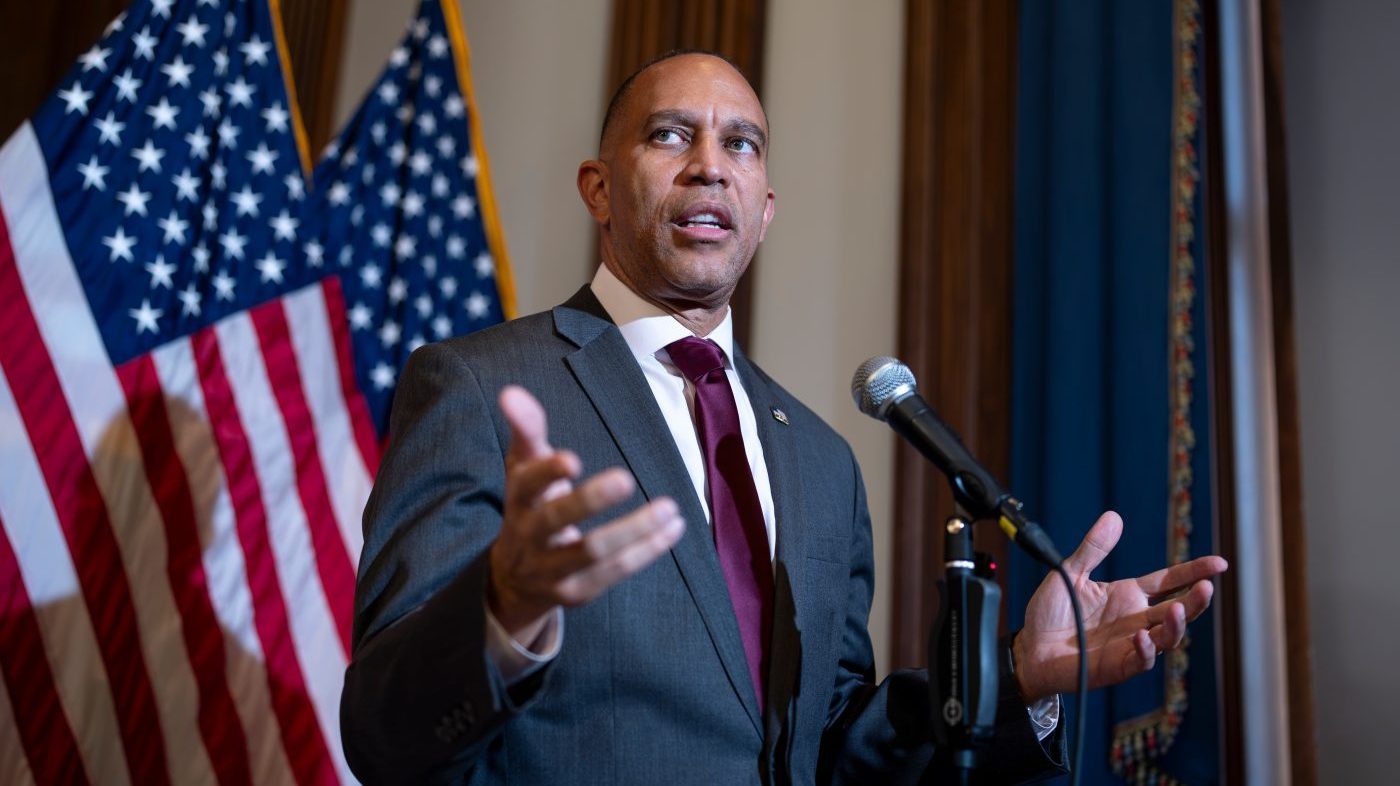
House Minority Leader Hakeem Jeffries (D-N.Y.) was projected to win reelection in his deep-blue Brooklyn district on Tuesday, easily dispatching a token Republican challenge from data analyst Lewis Mizrahi, according to Decision Desk HQ. The victory clears the way for Jeffries to continue his leadership of the House Democratic caucus, a position he has held since 2023 when Nancy Pelosi stepped aside to make room for a new generation of party leaders.
If Democrats flip the chamber in the midterms, Jeffries — already the first Black lawmaker to lead either party in Congress — would make history again by becoming the first Black Speaker of the House. That prospect has energized the party’s base and set the stage for a potentially transformative two years in Washington.
A Platform for the Future
From his leadership perch, Jeffries has outlined an ambitious legislative agenda for a Democratic-controlled House, including bills to reverse GOP Medicaid cuts, tackle the high cost of living, and end the war in Iran. While those proposals stand little chance of becoming law with President Trump in the White House, they are expected to serve as a rallying point for Democrats heading into the 2028 presidential election.
Jeffries has also vowed to serve as a check on the Trump administration, promising a series of investigations into the president and his inner circle. Among the probes: Trump’s efforts to use the Justice Department to prosecute political enemies and his pardons of loyalists convicted of violent crimes. Such an agenda could set up explosive confrontations between the House and the White House over the next two years.
Internal Tensions Loom
But Jeffries will face significant challenges within his own caucus. The House Democratic conference is a broad coalition, and leadership will have to balance the interests of centrist lawmakers from battleground districts against the demands of progressive firebrands, including an incoming group affiliated with the Democratic Socialists of America (DSA).
Indeed, Jeffries’s toughest test this cycle came not from Republicans but from liberal Democrats who argue he has been too conciliatory in his dealings with Trump during the president’s second term. Last year, New York City Council member Chi Ossé, a DSA member, considered a primary challenge against Jeffries for that reason. Ossé was encouraged by the success of Zohran Mamdani, another DSA member who won the race for New York City mayor in November 2025.
However, New York’s DSA ultimately declined to endorse Ossé, and he quickly abandoned his bid, allowing Jeffries to secure an eighth term without an internal fight. That outcome underscores both the staying power of the established leadership and the simmering discontent among the party’s left flank.
As Jeffries looks ahead, he will need to navigate these internal dynamics while also preparing for the broader political battles that lie ahead. His ability to unite the caucus could determine not only his own political future but also the direction of the Democratic Party in the years to come.