Israel executed its largest military operation in Lebanon in over a month on Wednesday, striking more than 100 Hezbollah targets in a concentrated ten-minute barrage. The escalation occurred just hours after the United States and Iran agreed to a fragile two-week ceasefire, immediately exposing a fundamental disagreement over whether the Lebanon front should be included in the pause.
Ceasefire Terms in Dispute
The diplomatic rift centers on conflicting interpretations of the ceasefire's scope. Iran's proposed peace plan explicitly demanded an end to Israeli military operations in Lebanon. Pakistani Prime Minister Shehbaz Sharif, whose country is mediating, publicly stated the US-Iran agreement included Lebanon. However, Israeli Prime Minister Benjamin Netanyahu's office directly contradicted this, asserting in a statement that the two-week pause "does not include Lebanon."
President Donald Trump appeared to align with Israel's position. When questioned about the intensified fighting, he stated Lebanon "was not included in the deal" due to Hezbollah's presence, describing it as a "separate skirmish" that would "get taken care of." This clarification from Washington underscores the limited nature of the initial diplomatic achievement, isolating the Lebanon-Israel conflict as a continuing flashpoint. For more on the administration's stance, see our report on Trump's characterization of the Lebanon conflict.
Scale and Aftermath of Israeli Strikes
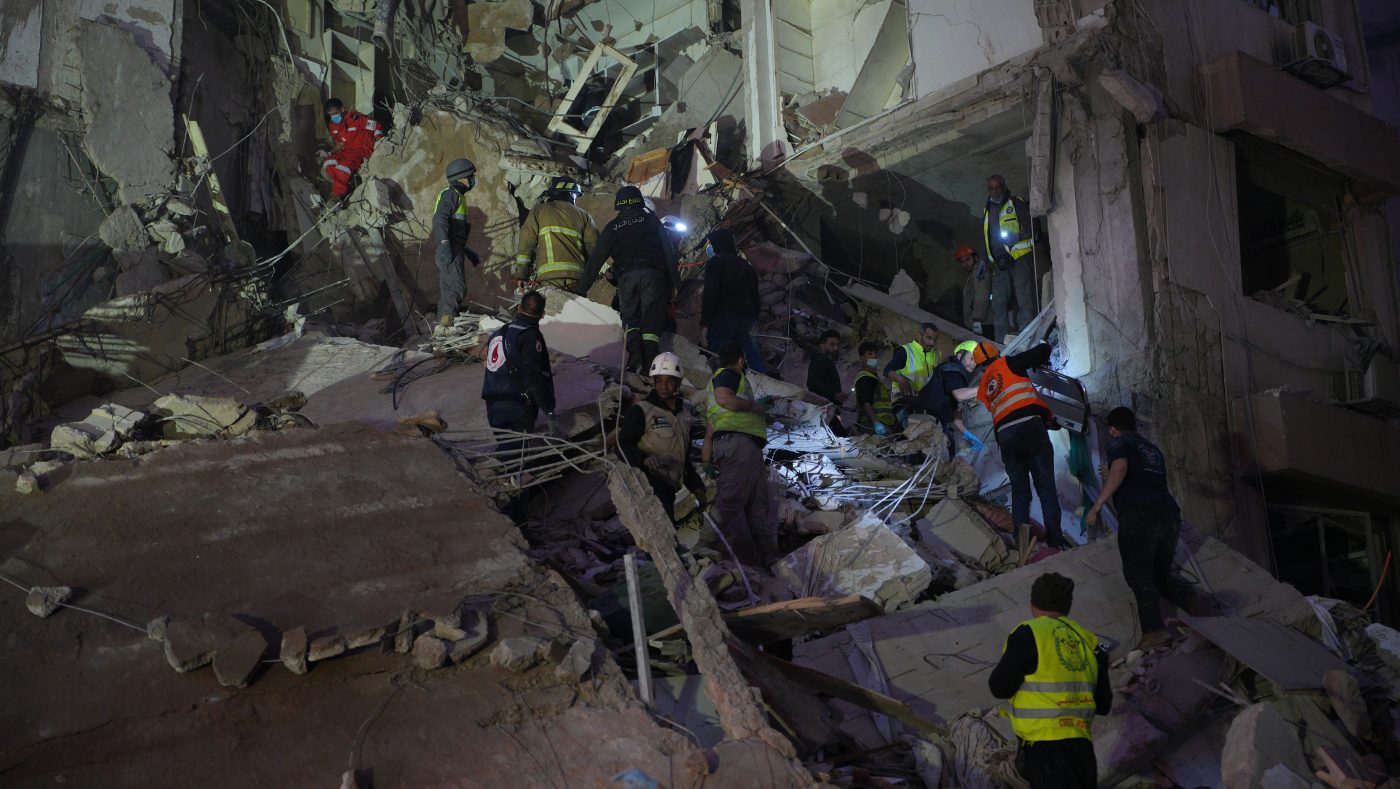
The Israeli military described the operation as its most extensive assault on Hezbollah infrastructure to date. Targets included command centers, military installations, and weapons depots, many situated within civilian population centers. The attacks, which occurred without warning, struck areas in southern and eastern Lebanon, as well as the capital, Beirut. Local journalists documented significant damage, with videos showing flattened buildings in residential neighborhoods.
In a swift retaliatory move, Iran reportedly closed the Strait of Hormuz on Wednesday, a critical global oil transit route, citing the Israeli strikes. This action highlights how regional tensions can quickly trigger escalations with global economic consequences. Analysis of Iran's strategic posture in the waterway is available in our coverage of Iran's leverage in the Strait of Hormuz.
Diplomatic Efforts and Mediation
Prime Minister Sharif, in the aftermath of the strikes, issued a public plea for restraint. He acknowledged reported ceasefire violations and urged all parties to "respect the ceasefire for two weeks, as agreed upon, so that diplomacy can take a lead role." His statement, directed at US and Iranian officials, emphasized Pakistan's role as a key intermediary.
Formal talks between US and Iranian officials are scheduled for Friday in Islamabad. The primary agenda will be sustaining the fragile pause, but the massive Israeli operation in Lebanon now threatens to dominate discussions. The exclusion of this front from the ceasefire framework presents a major challenge for mediators attempting to build broader stability.
The situation reveals the complex layers of Middle Eastern conflict, where a bilateral US-Iran agreement fails to encompass proxy wars and regional rivalries. Israel's offensive against Hezbollah, an Iranian-backed militant group, continues unabated, testing the durability of the nascent diplomatic process. For further context on the military dynamics, read our analysis of Israel's recent campaign against Hezbollah.