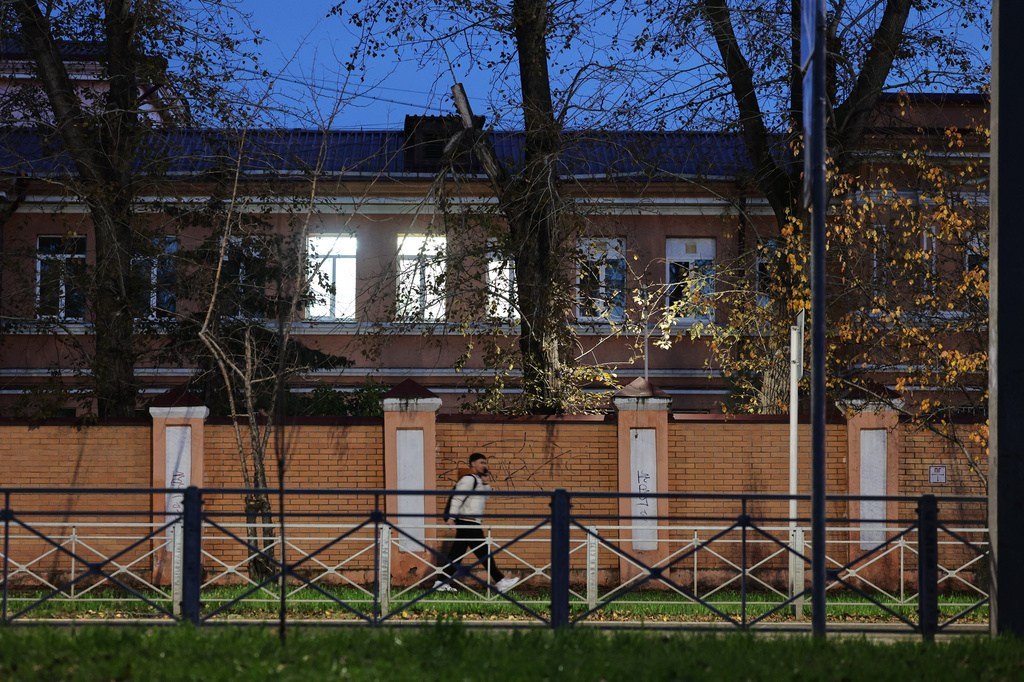
An unexplained death at Russia's Irkutsk Research Anti-Plague Institute has put the world on alert, with nearly 200 people under medical observation and the treating hospital quarantined. The technician died of what officials describe as "pneumonia of unknown etiology," and Moscow insists there is no plague outbreak, urging the public to dismiss the reports. But the facility is one of the few places on Earth that handles the most lethal strains of pneumonic plague, and Russia's track record on biological weapons secrecy has analysts demanding independent oversight.
The incident comes as the Trump administration has already pressed Moscow for details. Secretary of State Marco Rubio has asked Russia to share information, and President Donald Trump says he plans to raise the matter with Vladimir Putin "very soon." The U.S. Embassy in Moscow has gone further, advising Americans in Russia to "depart immediately." Those actions suggest Washington is not taking the official reassurances at face value.
Russia's history with plague as a weapon is not a matter of speculation. Soviet scientists began exploring biological warfare in the 1920s, and by 1928 the USSR had a formal offensive program. In 1937, a deputy director of a military biological institute died after contracting plague during research, and authorities contained the incident without public disclosure. During the Cold War, the program expanded dramatically. According to Kenneth Alibek, a former deputy director who defected to the U.S., the Soviet Union stockpiled roughly 20 tons of plague material and was working to genetically engineer more virulent strains.
Moscow signed the Biological Weapons Convention in 1972, but it continued its offensive work behind a facade of civilian research centers. The KGB monitored scientists to prevent leaks, and accidents were routinely covered up. The 1979 anthrax release in Sverdlovsk, which killed civilians, was initially denied by the Kremlin. Russia formally ended the offensive program in 1992, but many facilities tied to it remain active, including the now-infamous Sergiev Posad-6 site, where satellite imagery in 2024 showed new construction. Russian officials call it biodefense research, but international inspectors are not allowed inside.
The Kremlin's response to questions about its own program has long been to deflect with accusations against the United States. In June, Russia's Defense Ministry claimed the U.S. was running biological weapons research in Ukraine, including work with plague pathogens. That is part of a pattern that dates back to Soviet propaganda alleging the Pentagon created AIDS. In 2018, Moscow blamed Washington and London for chemical attacks in Syria. During the COVID-19 pandemic, Russia accused the U.S. of using labs in former Soviet states to develop pathogens. In 2022, it blamed America for the monkeypox outbreak. At the United Nations, Russian officials have floated claims that the U.S. considered delivering bioweapons via migratory birds and bats, and even that blood samples from Ukrainians were used to develop weapons targeting Slavic people.
Washington has dismissed these allegations as disinformation, but the current situation in Irkutsk is different. A death at a high-security lab demands a credible explanation. The U.S. should form an interagency team to monitor health data and determine the cause and extent of any outbreak. It should also press for access for American experts, and the Defense Threat Reduction Agency should be ready to counter Russian propaganda that might try to shift blame.
Russia owes the international community a transparent account. If this was a routine pneumonia case, there is little reason to fear an independent investigation. But when a laboratory with a history of bioweapons work reports a mysterious death, "trust us" is not sufficient. If Moscow truly has nothing to hide, it should open the doors in Irkutsk and let the world see.