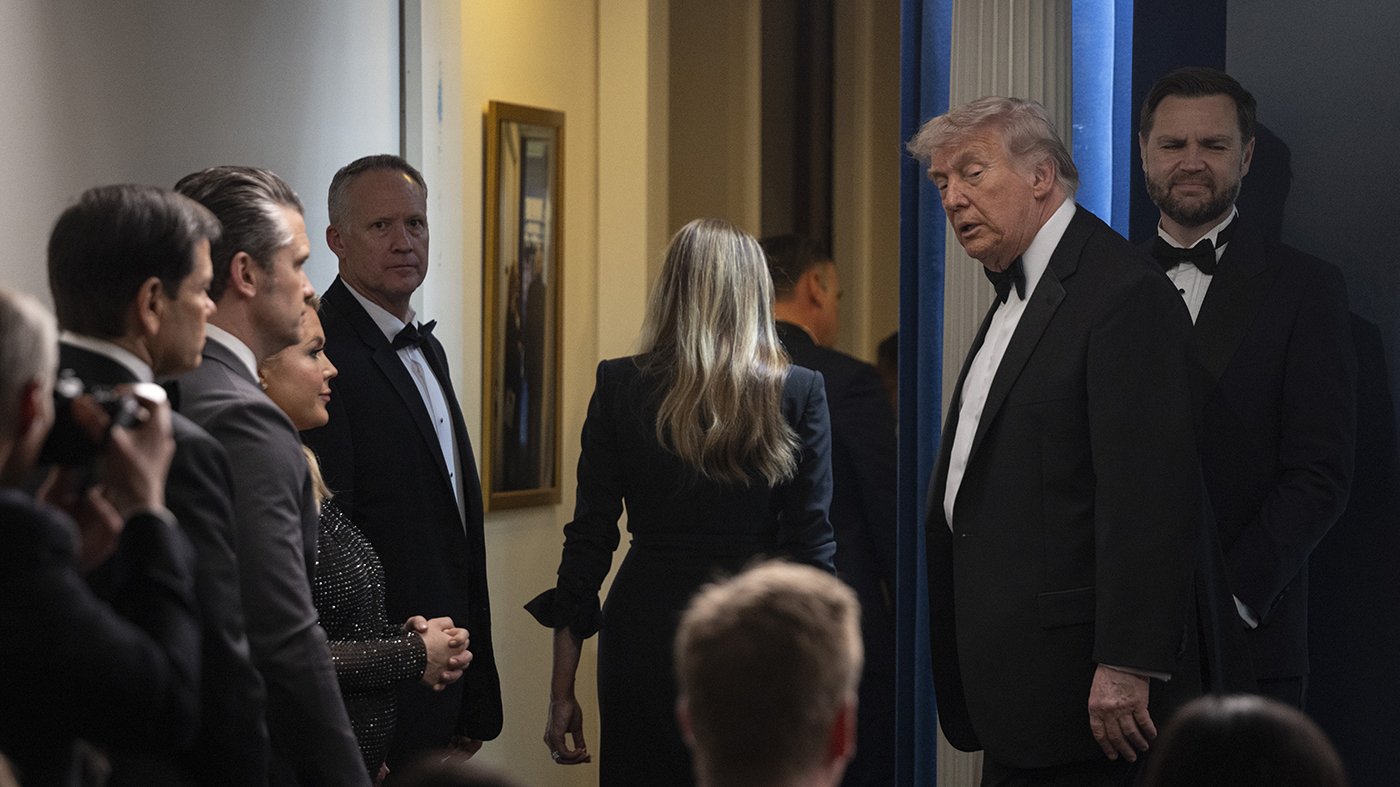
The attempted mass shooting at this year's White House Correspondents' Association dinner was a grim affair, but for many in the media elite, the biggest outrage seemed to be the interruption of their beef course. The Washington Hilton's kitchen, tasked with feeding 2,500, usually delivers a respectable entrée, but the evening ended before 10 p.m. for once. Yet the real annoyance wasn't the terrorism—it was the spectacle of pampered journalists and influencers acting as if they'd survived a war zone, all while millions of Americans, from social workers to police officers, face real threats daily.
This is a nation where children practice active-shooter drills in schools; a black-tie dinner disruption hardly merits sympathy. But what truly grated was the accused attacker's manifesto—a brief, breezy document that read more like a resignation email than a call to arms. It lacked the pseudo-intellectual fluff typical of such writings, stating bluntly that the system had failed and he would take justice into his own hands. The tone was unnerving: matter-of-fact, almost casual, as if he were closing with a note to stay in touch.
Some Republicans, including Newt Gingrich, who blasted CBS for airing the manifesto, blamed the president's detractors for inciting the attack. The manifesto did mirror a typical Bluesky thread, calling Trump a 'pedophile, rapist, and traitor.' But millions believe that and don't attempt murder. In America, free speech is a right—one Trump supporters have wielded against their enemies. Telling people to watch their words lest they push the deranged over the edge seems un-American, especially given how MAGA has used incendiary language to gain power. Coarse debate is one thing; incitement is another.
But what about excusing violence? That's where Hasan Piker, the left's answer to Jesse Watters, enters the picture. On a New York Times podcast, Piker discussed the 'trend' of stealing from big corporations with Jia Tolentino, but the conversation turned to the murder of health insurance CEO Brian Thompson. Piker invoked Karl Marx's co-author Friedrich Engels and the concept of 'social murder,' arguing that Thompson's death was understood by many as a form of justice because of the pain caused by the private healthcare system. Host Nadja Spiegelman nodded along, musing whether the killing was a 'release valve' or 'effective political action.'
This isn't just foolish—it's wicked. Vigilante killings are no more a 'release valve' than a police killing of a helpless suspect is 'law and order.' They are murders, affronts to human dignity. Excusing them as means to policy ends is the banality of evil Hannah Arendt warned about. It's a permission structure for violence that echoes the shooter's own reasoning: 'I don't see anyone else picking up the slack.'
The alleged attacker, now charged with attempted assassination, may never have heard of Piker or Engels. But the cultural drift toward justifying violence—whether from the left's intellectualizing or the right's demonization of opponents—is dangerous. The WHCA dinner was a reminder that the line between political rhetoric and action is thinner than we think, and that the media's self-absorption only obscures the real stakes.