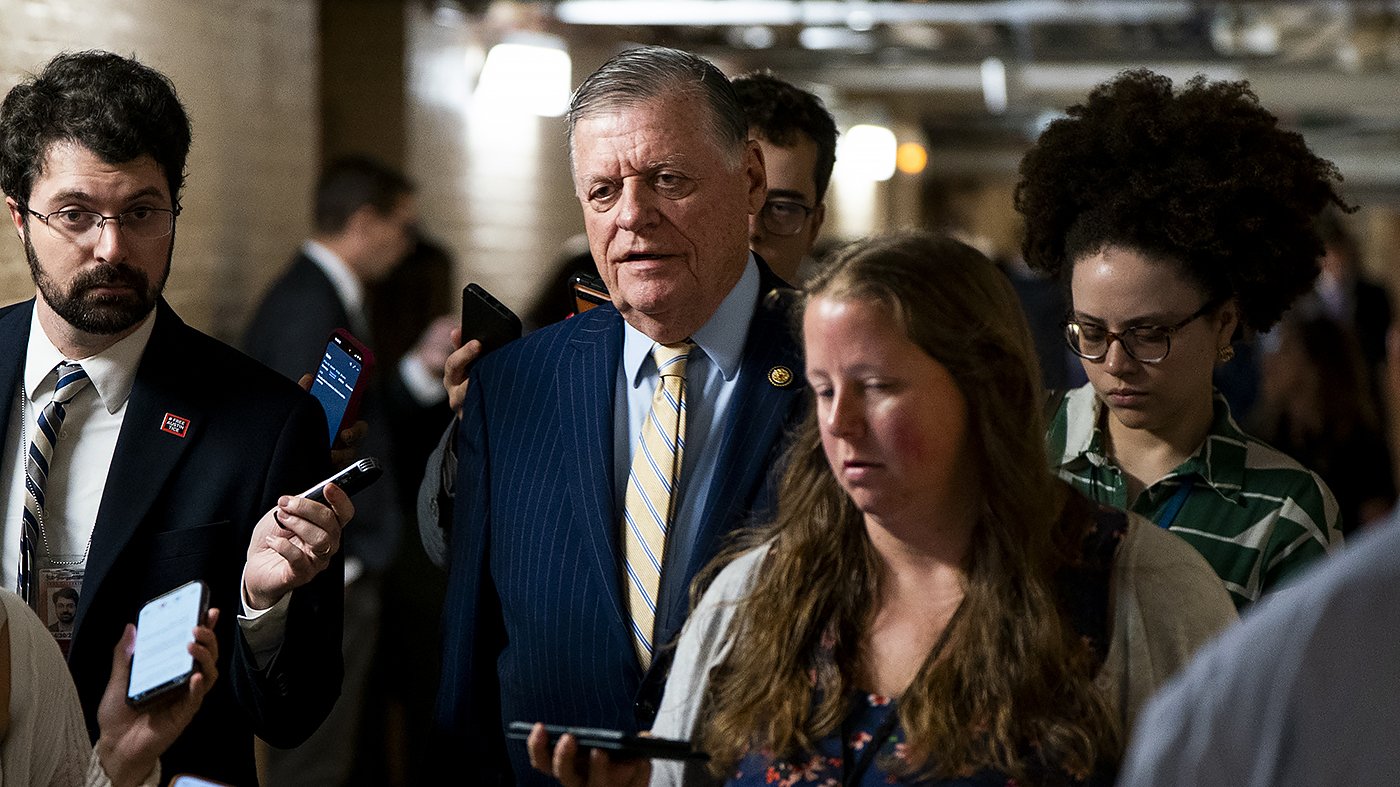
The House passed a stopgap funding measure on Tuesday, voting 220-205 to keep federal agencies operating at current levels until December 4. The move aims to prevent a government shutdown before the fiscal year ends on September 30.
The bill saw near-unanimous Republican support, with 213 GOP lawmakers joined by six Democrats and Independent Rep. Kevin Kiley of California. Only one Republican voted against the measure.

The stopgap comes as Congress has made little progress on full-year appropriations. The House has only passed three of twelve spending bills—covering national security, the State Department, agriculture, the FDA, military construction, and veterans affairs. Meanwhile, Senate appropriators remain deadlocked over government funding, with both parties unable to reach a deal.
House Appropriations Committee Chair Tom Cole, an Oklahoma Republican, defended the stopgap as a necessary step to avoid a crisis. “The hard reality before us is straightforward—the fiscal year deadline is outpacing the work that remains,” Cole said on the House floor. “Our conference refuses to let the obstruction and inaction of Senate Democrats trigger another manufactured shutdown at the end of September. That is why we are acting before a funding lapse crisis, not in response to it.”
Cole also emphasized that the measure is a clean, short-term continuing resolution. “This clean, short-term continuing resolution simply keeps the government open, protects the progress we’ve made, and preserves the path to full-year appropriations,” he added.
The stopgap includes a provision to allocate $174,000 to Alfredia Scott, the widow of the late Democratic Rep. David Scott of Georgia, and to the heirs of Sen. Lindsey Graham, a South Carolina Republican who died earlier this month.
Democrats largely opposed the bill, arguing it was crafted without bipartisan input. House Appropriations Committee Ranking Member Rosa DeLauro, a Connecticut Democrat, criticized the process during a House Rules Committee hearing on Monday. “If I am going to support a continuing resolution, it needs to continue government operations, exclude any poison pills, and it must maintain Congress’s constitutional authority over spending decisions,” DeLauro said.
The measure now moves to the Senate, where it faces significant hurdles. With a 60-vote threshold required for passage and potential Democratic opposition, the bill’s fate remains uncertain. The House earlier advanced a similar stopgap as part of a broader push to avoid a shutdown before the midterms, as House GOP leaders have sought to sidestep a funding crisis. Meanwhile, House Democrats have united against the GOP stopgap, citing concerns over Iran policy and border security.