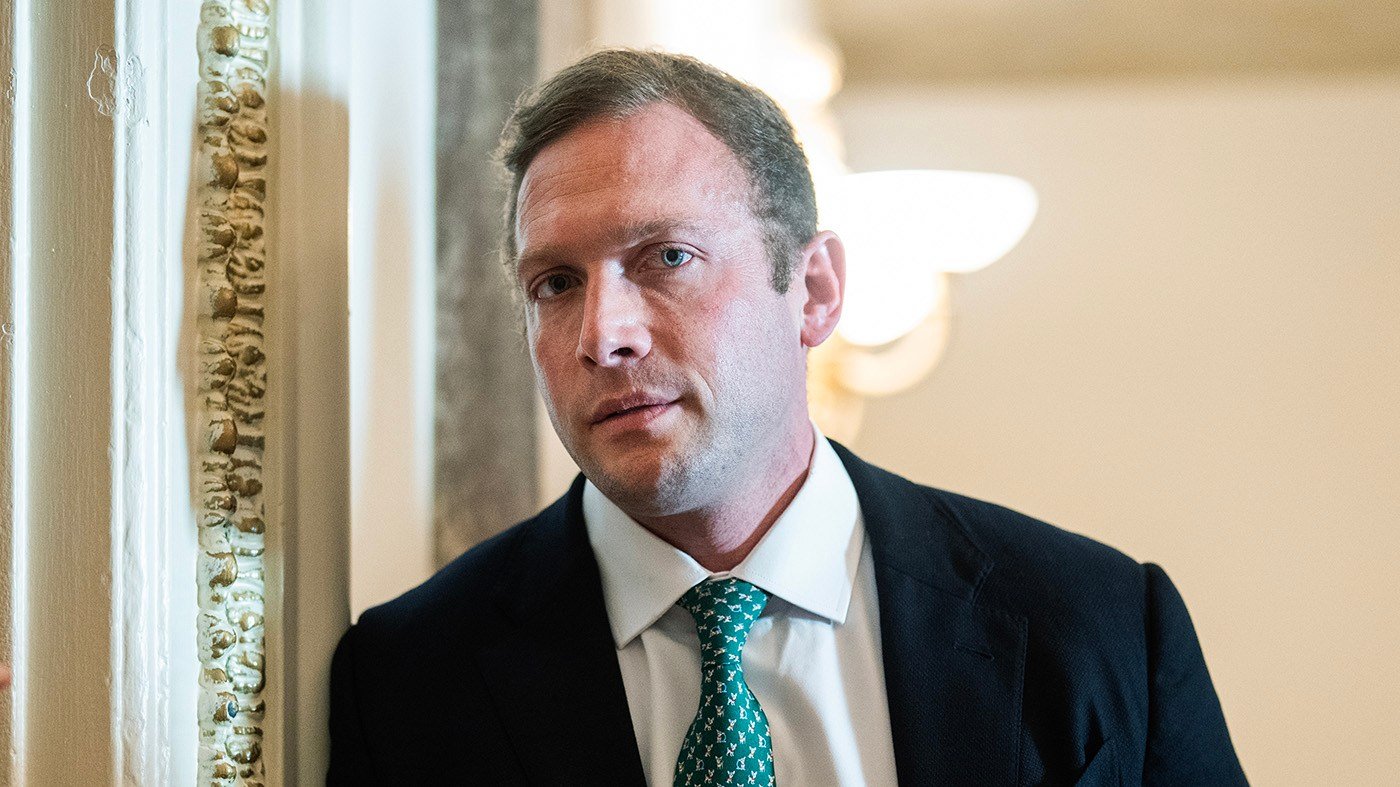
House Republicans are publicly endorsing Rep. Max Miller's (R-Ohio) reelection campaign, but they are notably steering clear of joint appearances and detailed defenses of the embattled congressman. The strategy reflects a desire to hold a seat that was once considered safely Republican while sidestepping the domestic abuse allegations that have dogged Miller for months.
Miller's ex-wife, Emily Moreno, has accused him of throwing hot water at her, pointing a gun at her head, and breaking their daughter's collarbone. Miller has denied all allegations. Despite calls from several Senate Republicans—including his former father-in-law, Sen. Bernie Moreno (R-Ohio)—to exit the race, Miller has pressed on, leaving House GOP leaders in a tricky spot as they try to protect their narrow majority.
Speaker Mike Johnson (R-La.) said last week that he supports Miller's bid and called him a “great member,” but also told Politico he has “no plans” to campaign with Miller. “I've said everything I can say about the situation. It's up to the people in his district,” Johnson said. He also noted the House Ethics Committee is reviewing the allegations and that “we allow due process to play out.”
House Republican Conference Chair Lisa McClain (R-Mich.) echoed that sentiment on CBS's “Face the Nation,” praising Miller as a “good advocate for his constituents” while underscoring that “divorces are really ugly.” She said she supports “anybody with an 'R' behind their name” and that the party must “let the process play out.” Rep. Kat Cammack (R-Fla.), chair of the Republican Women's Caucus, called the allegations “deeply troubling” and stressed the need for a “fair, thorough review.”
Meanwhile, the political landscape in Miller's district is shifting. Recent polls show him trailing his Democratic opponent, Brian Poindexter, in a district that President Trump carried by 11 points in 2024. A co/efficient survey released last month put Poindexter ahead by 14 points, and 48% of voters said they were less likely to support Miller after hearing about the allegations. The nonpartisan Cook Political Report has moved the race from “solid Republican” to “toss-up.”
The Democratic Congressional Campaign Committee (DCCC) has added Poindexter to its “Red to Blue” program, signaling a serious investment in flipping the seat. DCCC spokesperson Riya Vashi called Miller's record “scandal-ridden” and said his “party bosses will barely lift a finger for him because they know he's a lost cause.”
The National Republican Congressional Committee (NRCC), however, has not abandoned Miller. It launched a three-week ad buy with his campaign starting Sept. 7, totaling more than $450,000, according to available reports. That support stands in contrast to the distance kept by leadership, a dynamic that has not gone unnoticed by political operatives. The situation echoes other races where national parties have had to balance electoral math with candidate controversies, as seen in the GOP's approach to contested primaries.
Miller's campaign has also drawn attention from outside groups. Notably, former Transportation Secretary Pete Buttigieg has thrown his support behind Poindexter, underscoring the race's national significance. As the election nears, the House Ethics Committee's slow-moving investigation is unlikely to yield public results before voters head to the polls, leaving Miller's fate in the hands of his constituents.