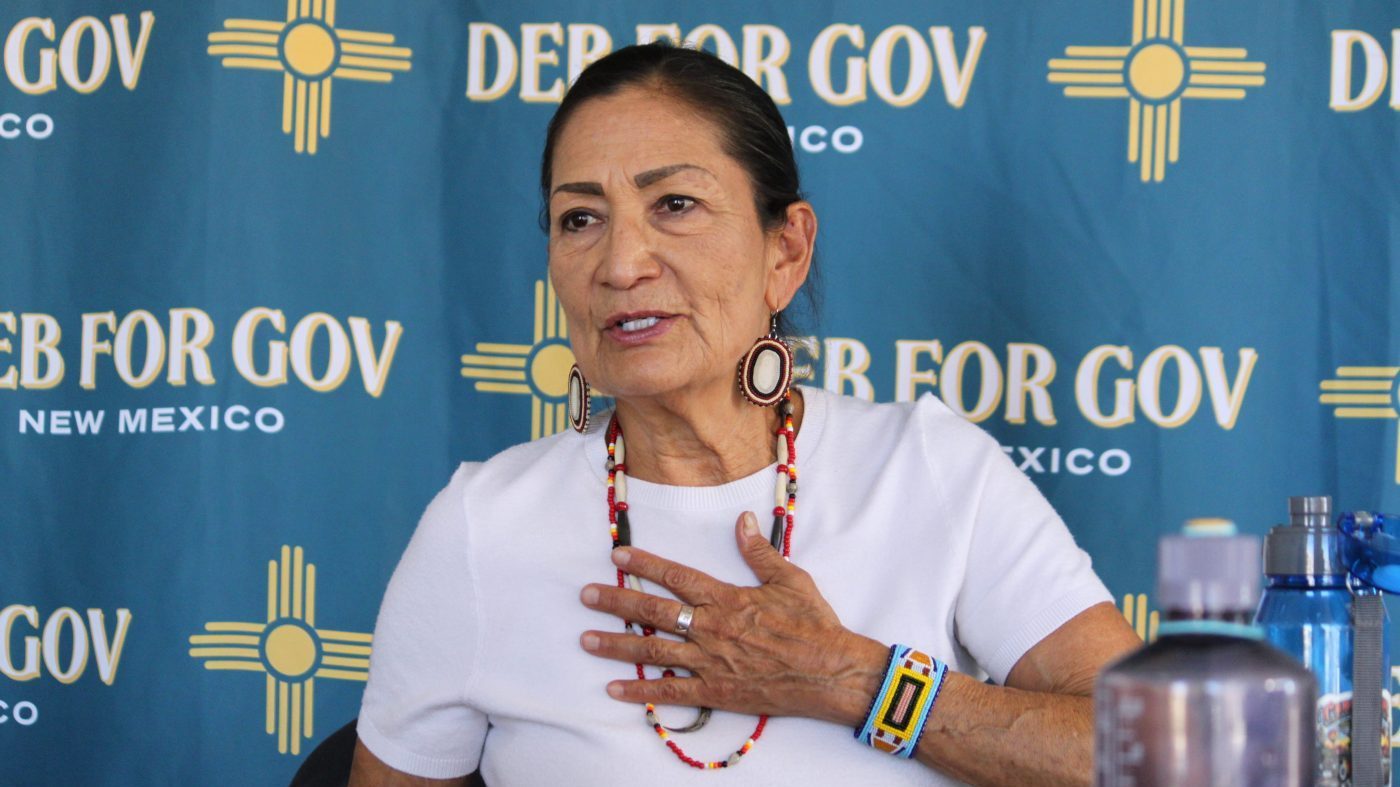
Democrat Deb Haaland has secured a historic victory in New Mexico's gubernatorial race, defeating Republican Gregg Hull, according to Decision Desk HQ (DDHQ). With 37 percent of votes counted as of 10:33 p.m. EST, DDHQ projected Haaland would win by nearly 12 percentage points, giving Democrats control of the governor's mansion for another term.
Haaland, a member of the Laguna Pueblo and former U.S. Interior secretary under President Biden, will become the first Native American woman to serve as governor of any U.S. state. Her election builds on her 2018 breakthrough when she was among the first two Native American women elected to Congress. She represented New Mexico's 1st Congressional District before joining the Biden administration in 2021.
As Interior secretary, Haaland oversaw federal public lands, conservation efforts, and an investigation into abuses at Native American boarding schools. Her campaign focused on affordability, proposing to raise the minimum wage, expand tax credits for working families, and boost housing construction. She also pledged to expand healthcare access, protect Medicaid, and strengthen the state's universal childcare program.
Hull, who served three terms as mayor of Rio Rancho, New Mexico's third-largest city, campaigned on improving public safety, expanding economic opportunities, and reforming education. He argued that Democratic leadership had failed to address the state's challenges, while Haaland criticized the Trump administration's economic policies.
The race highlighted sharp partisan divides over President Trump's agenda, with Haaland positioning herself as a defender of federal programs and Hull aligning with GOP criticism of Democratic governance. New Mexico has not elected a Republican governor since Susana Martinez won reelection in 2014.
Haaland's victory comes as Democrats have made significant gains in other races, including flipping a Maine Senate seat and ousting a Wisconsin congressman, signaling a broader shift in voter sentiment. DDHQ had given Haaland an 87 percent chance of winning ahead of Election Day, and her projected margin underscores the state's Democratic lean.
Haaland's win is also a landmark for Native American representation in politics, a theme that resonated across the campaign. As she takes office, she will inherit a state grappling with economic pressures and healthcare needs, but her supporters see her as a transformative leader capable of addressing long-standing inequities.
The outcome solidifies Democratic control in Santa Fe and positions Haaland as a rising national figure, potentially elevating her profile in future federal politics. Her governorship will be closely watched as she implements her policy agenda, which includes expanding the state's childcare program and tackling housing shortages.