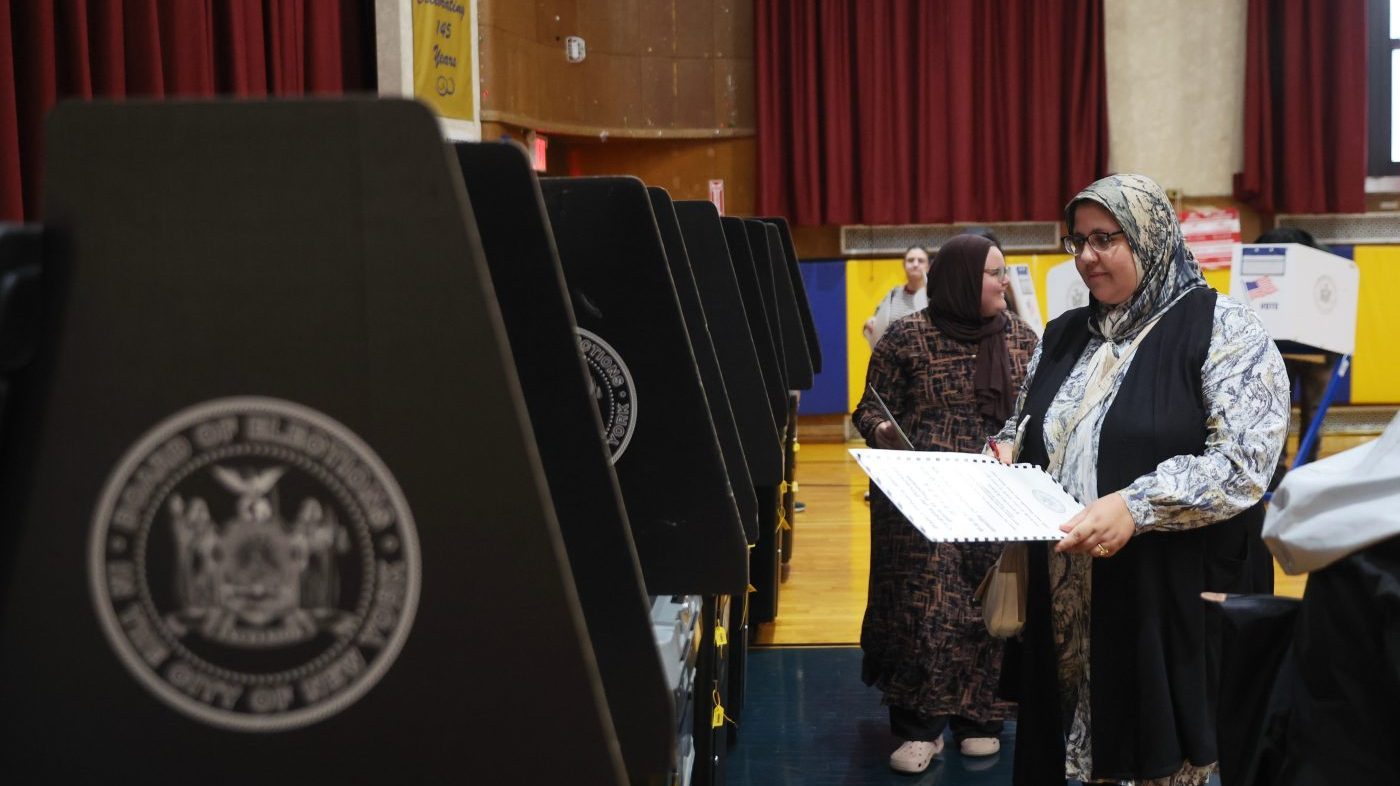
Georgia voters head to the polls Tuesday to select their U.S. House representatives for the next two years, but political handicappers see no competitive contests in the state's 14 congressional districts. The delegation currently stands at nine Republicans and five Democrats, a split that is not expected to change.
Despite the lack of toss-up races, Georgia's congressional delegation will see at least three new faces in January. GOP Reps. Mike Collins (10th District) and Buddy Carter (1st District) both chose to run for the state's open U.S. Senate seat rather than seek reelection. Collins, who won the Republican nomination over Carter in that Senate primary, is now squaring off against Democratic incumbent Jon Ossoff in a race that has drawn national attention. Meanwhile, Republican Rep. Barry Loudermilk (11th District) is retiring after more than a decade in office.
The open seats have set the stage for a trio of Republican nominees to step into the House. In the Savannah-anchored 1st District, Jim Kingston—son of former GOP Rep. Jack Kingston—is the party's pick to succeed Carter. State Rep. Houston Gaines is running to replace Collins in the Athens-based 10th District. And neurosurgeon John Cowan will carry the GOP banner in the 11th District, which covers the northern Atlanta suburbs.
Georgia's political landscape has been shaped by a failed redistricting push earlier this year. Outgoing Gov. Brian Kemp (R) called a special legislative session to pursue mid-decade map changes following the U.S. Supreme Court's ruling in Louisiana v. Callais, which allowed states to redraw district lines before the next census. However, Republican leaders in the state Legislature reversed course and declined to take up the new maps, effectively killing Kemp's plan. That decision leaves the current district boundaries in place for this election cycle.
The lack of competitive House races stands in contrast to the state's high-profile Senate contest, where Ossoff and Collins are locked in a tight battle that could determine control of the upper chamber. That race has overshadowed the House contests, but voters will still cast ballots for their representatives. As Georgia voters also decide who will succeed Kemp in the governor's mansion, the down-ballot races are largely procedural for the state's dominant parties.
The new House members will join a delegation that has seen significant turnover in recent cycles. The 1st District has been reliably Republican for decades, and Kingston's name recognition from his father's tenure could help him maintain that tradition. In the 10th, Gaines brings state legislative experience to a district that has trended conservative. The 11th, which includes parts of Cherokee and Cobb counties, has been a GOP stronghold since its creation, and Cowan is expected to hold it.
While Georgia's House races may not be competitive, they are part of a broader national pattern. In other states, such as California's 2026 House races, several districts are genuinely up for grabs. But in Georgia, the only drama is who will fill the open seats. For those tracking the Georgia Senate race between Ossoff and Collins, the House results will likely be a footnote.
Polls close at 7 p.m. EST, with results expected to come in shortly thereafter. Political observers will watch to see if any surprises emerge, but all signs point to a status quo outcome in the Peach State's House delegation.