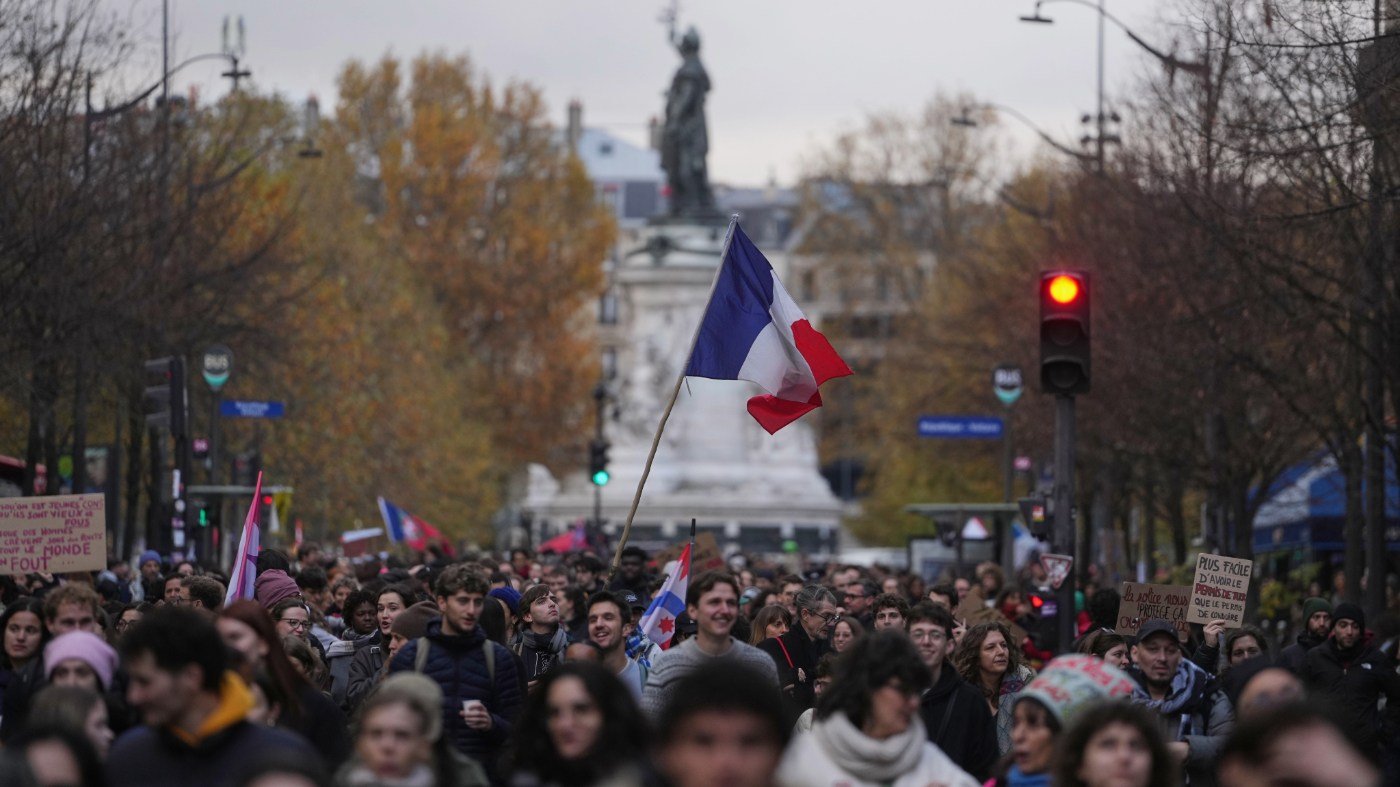
France is burning. Not metaphorically, but literally, as riots—not protests—erupt across the country. These are not the orderly marches of citizens exercising their democratic rights; they are arson, looting, and violent clashes with police. The images from Paris and other cities are a stark reminder that fiscal decisions have real-world consequences.
The root cause of this unrest is not a single policy or a moment of social tension; it is the French government's recognition that it is mired in a fiscal crisis. With a debt-to-GDP ratio hovering around 120%, France is in a precarious position, surpassed in Western Europe only by Greece (136%) and Italy (138%). To avoid a debt spiral, Paris must choose between cutting spending and raising taxes—an impossible choice that inevitably alienates voters who benefit from the status quo.
For Americans watching from across the Atlantic, the temptation is to dismiss this as a European problem, a consequence of their generous welfare states. But the numbers tell a different story. The United States is not far behind, with a debt-to-GDP ratio of 125%. While the US GDP is projected to grow at 2% annually over the next decade—double France's expected 1%—that growth is not enough to offset the explosive growth in government spending.
In the last ten years, US government spending has increased by an average of 6.7% per year, compared to 3.1% in France. This has pushed total US government spending to 35% of GDP, leaving 65% for households. But the trend is alarming: as spending grows faster than the economy, the gap widens, and the pressure on interest rates mounts.
Politically, cutting spending is a minefield. Every dollar of government spending goes to a constituent who benefits from it, and no one wants to be labeled "the fat" that needs to be trimmed. Raising taxes is equally fraught, as former Senator Russell Long (D-La.) famously quipped in 1973: "Don't tax you, don't tax me, tax that fellow behind the tree."
In France, the government's attempts to address its fiscal crisis—starting with cuts to education and entitlements—have lit the fuse. The lesson for the US is clear: a fiscal reckoning is possible here if Congress continues to ignore the problem. The midterm elections were full of promises to cut "waste, fraud, and abuse," but the reality is that real spending cuts are politically toxic.
Some observers point to US private sector productivity as a saving grace, suggesting that the economy can grow its way out of debt. But the math is unforgiving: 2% GDP growth versus 6.7% spending growth is a recipe for disaster. As fiscal hawks have long warned, the longer Congress delays, the more painful the adjustment will be.
The French riots should serve as a wake-up call. If Washington continues to kick the can down the road, it may find itself facing a similar day of reckoning. The political aftermath of the midterms has shown that neither party is willing to make the tough choices. But the clock is ticking, and the fiscal pressures are mounting.