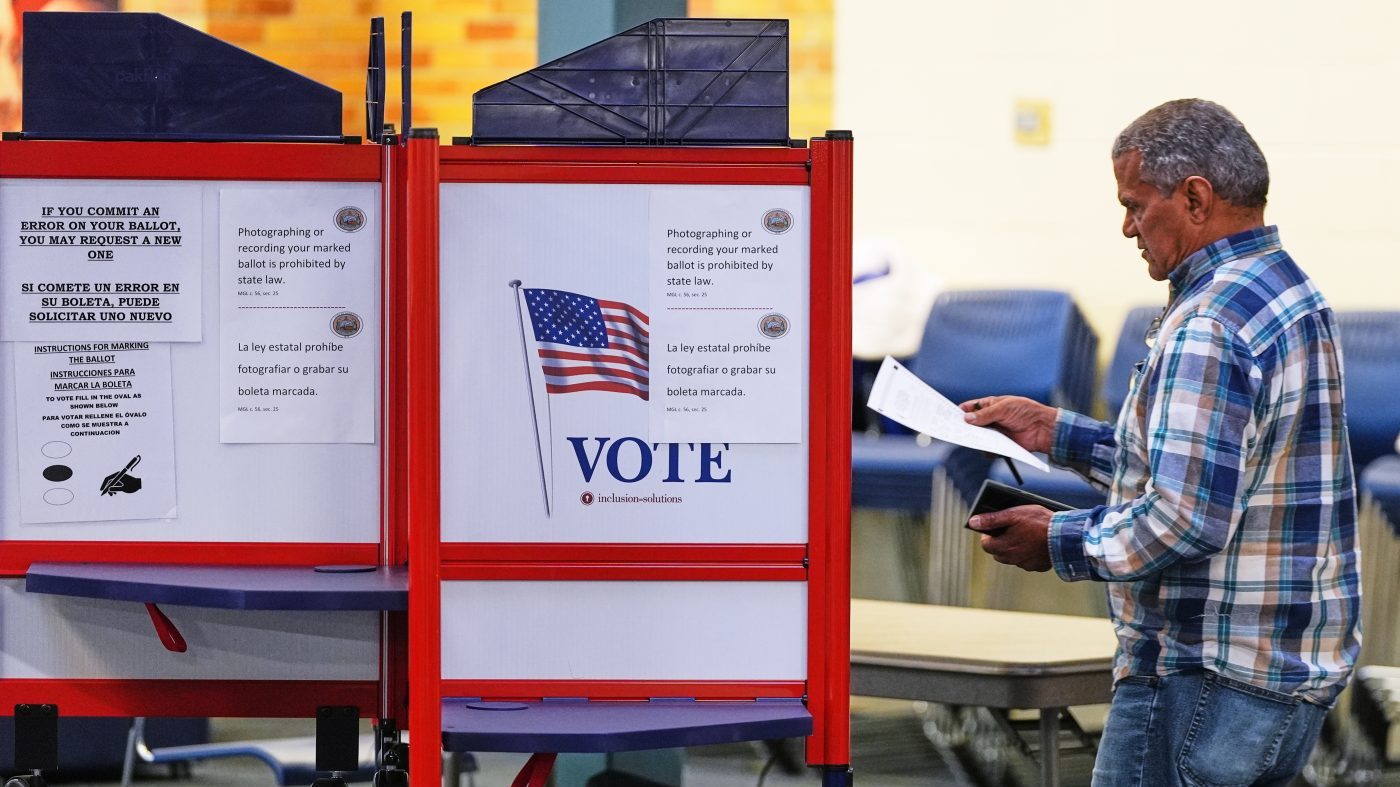
A federal judge in Boston has dismissed a lawsuit from the Department of Justice that sought to compel Massachusetts to hand over its statewide voter registration list. The ruling represents a significant setback for the Trump administration's broader effort to obtain voter data from states across the country.
Judge Cites Failure to Comply with Civil Rights Act
In his Thursday ruling, U.S. District Court Judge Leo Sorokin found the DOJ's demand legally insufficient. He wrote that the request "fails for the simple reason that the Attorney General's demand did not comply with Title III of the Civil Rights Act of 1960, the statute on which it purports to rely." That law requires the attorney general to provide a statement detailing the purpose for the request and how sensitive voter data—including names, birth dates, and partial Social Security numbers—will be used.
"The Attorney General's demand for the Massachusetts statewide voter registration list was facially deficient," Sorokin concluded. "It failed to satisfy a simple requirement imposed by Congress as one precondition to obtaining documents under the authority of the Civil Rights Act of 1960." The judge, an Obama appointee, noted the administration failed to identify a "plausible purpose" for its demand, siding with arguments from Massachusetts Secretary of State William Galvin, a Democrat.
DOJ Arguments "Miss the Point"
The Department of Justice had sued Galvin after he refused to provide the data. In court filings, the DOJ argued it possessed "sweeping powers" to access voter information and that courts had a "limited, albeit vital, role" in directing state election officials to comply. The department contended the Civil Rights Act was intended as a tool to investigate potential election law violations.
Judge Sorokin determined those arguments "miss the point," focusing instead on the procedural failure to meet the statute's explicit requirements for justifying such a demand.
State Officials Hail Ruling as Victory for Voter Privacy
Massachusetts officials celebrated the decision. "I am very pleased that the court has recognized that the Department of Justice's demand for unfettered access to personal voter data was completely without any stated basis or purpose," Galvin said in a joint statement with Massachusetts Attorney General Andrea Joy Campbell. "Private voter information should never be the subject of a fishing expedition."
Campbell called the ruling a "decisive win for Massachusetts voters and the rule of law." She added, "The privacy of our voters is not up for negotiation, and I will continue to defend the integrity and security of our elections from the Trump Administration's cruel and harmful agenda."
National Context of Voter Data Disputes
The lawsuit is part of a wider national confrontation. According to a tracker maintained by the Brennan Center for Justice, at least twelve states—including Alaska, Arkansas, Indiana, Louisiana, Mississippi, Nebraska, Ohio, Oklahoma, South Dakota, Tennessee, Texas, and Wyoming—have provided or agreed to provide their voter registration lists to the DOJ. Meanwhile, twenty-four states and Washington, D.C., are engaged in legal battles over the same demand.
Former Attorney General Pam Bondi, who was tasked with acquiring the lists, has argued that "clean voter rolls are the foundation of free and fair elections." Her office previously stated it could use the Civil Rights Act "at its disposal to demand the production, inspection, and analysis of the statewide voter registration lists." This legal approach, however, has now been directly challenged by Judge Sorokin's ruling, which underscores the increasing judicial scrutiny of federal overreach under the current administration.
The ruling also highlights the persistent legal conflicts surrounding election administration, a theme that continues to shape the political landscape as seen in other disputes, such as the debate over local control and voter approval for major projects. The Department of Justice did not immediately respond to a request for comment on the dismissal.