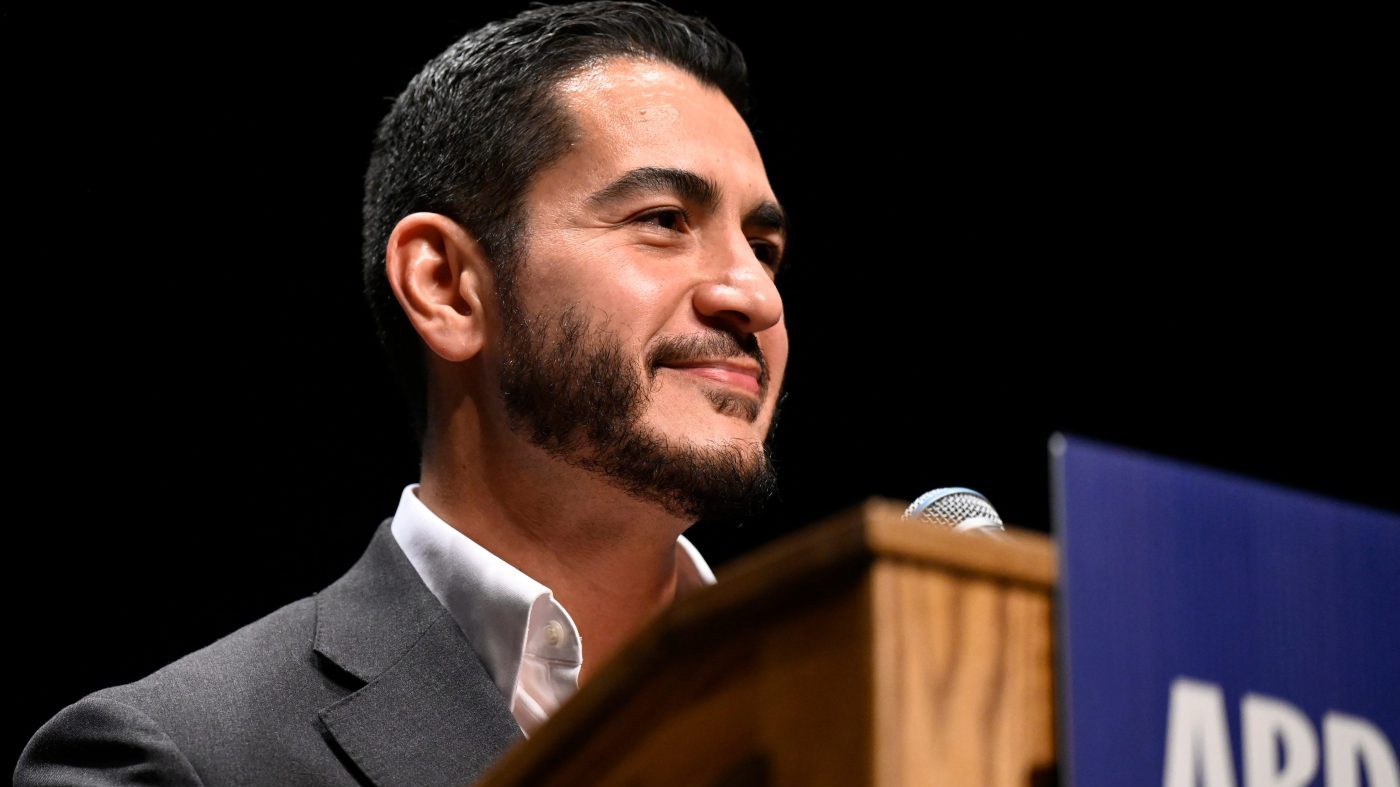
Michigan Democratic Senate candidate Abdul El-Sayed stirred the primary contest on Tuesday by suggesting that supporters of former Representative Marjorie Taylor Greene, the Georgia Republican, might cast ballots for him in the general election. In an interview with Politico's "The Conversation," El-Sayed argued that establishment Democrats fear his potential victory more than a loss, pointing to a growing ideological divide within the party.
"When you ask me about why the establishment elite Democrats are so worried about me, it's because there are a lot of people who listen to her who are going to vote for me in the general election," El-Sayed said, referring to Greene. He added, "They are not afraid I'm going to lose. They're afraid I'm going to win."
The progressive candidate outlined several areas of agreement with Greene, including skepticism about foreign influence in U.S. elections—specifically donations from the American Israel Public Affairs Committee (AIPAC)—and a push to lower healthcare costs. "We get so polarized about D versus R, red versus blue, that we forget that when you talk about the things that people actually care about, you can win elections. You can do that in uncommon ways," he told host Dasha Burns.
El-Sayed criticized the Democratic Party for prioritizing corporate donors over addressing core voter concerns. "Too often, the Democratic Party is more interested in continuing to take money from its corporate and special interest donors than it is in speaking conventional truth," he said. He argued that keeping American money at home and preventing medical debt should be noncontroversial, adding, "The fact that MTG agrees with those points should not be all that uncommon 'cause they're just like obvious things to say." This echoes a broader rift within the party over Israel policy and campaign finance.
The Michigan Senate primary, set for August 4, pits El-Sayed against Representative Haley Stevens to replace retiring Senator Gary Peters. Stevens, a moderate, leads El-Sayed by 7 points in a recent Detroit News/WDIV-TV poll. She has accepted nearly $30 million from AIPAC, according to the Associated Press, a figure El-Sayed has seized upon. Stevens defended the contributions, telling the AP that "anyone who supported me is supporting me because of my dedication to the people of Michigan."
El-Sayed has secured endorsements from Representative Alexandria Ocasio-Cortez and Senators Bernie Sanders and Elizabeth Warren, while Stevens is backed by Peters, Nancy Pelosi, and Senator Ruben Gallego. The progressive surge in Michigan has sparked debate, with Senator John Fetterman criticizing Sanders for backing El-Sayed. Meanwhile, the UAW's endorsement of El-Sayed signals a shift in labor politics.
When asked about his political label, El-Sayed dismissed comparisons to democratic socialism. "I don't have to be a socialist to think that big corporations shouldn't be able to nickel and dime us at every turn," he said. "I don't have to be a socialist to believe that everybody in the richest, most powerful country in the world can have guaranteed health insurance." He added, "That doesn't make me a socialist. That just makes me somebody who wants government to work for people."
The contest highlights racial and educational divides, as polling data shows differing support among demographics. With the Democratic Senate majority hanging in the balance, the outcome could have national implications. El-Sayed's strategy of courting cross-party voters may be a gamble, but he insists it reflects a deeper truth about American politics.