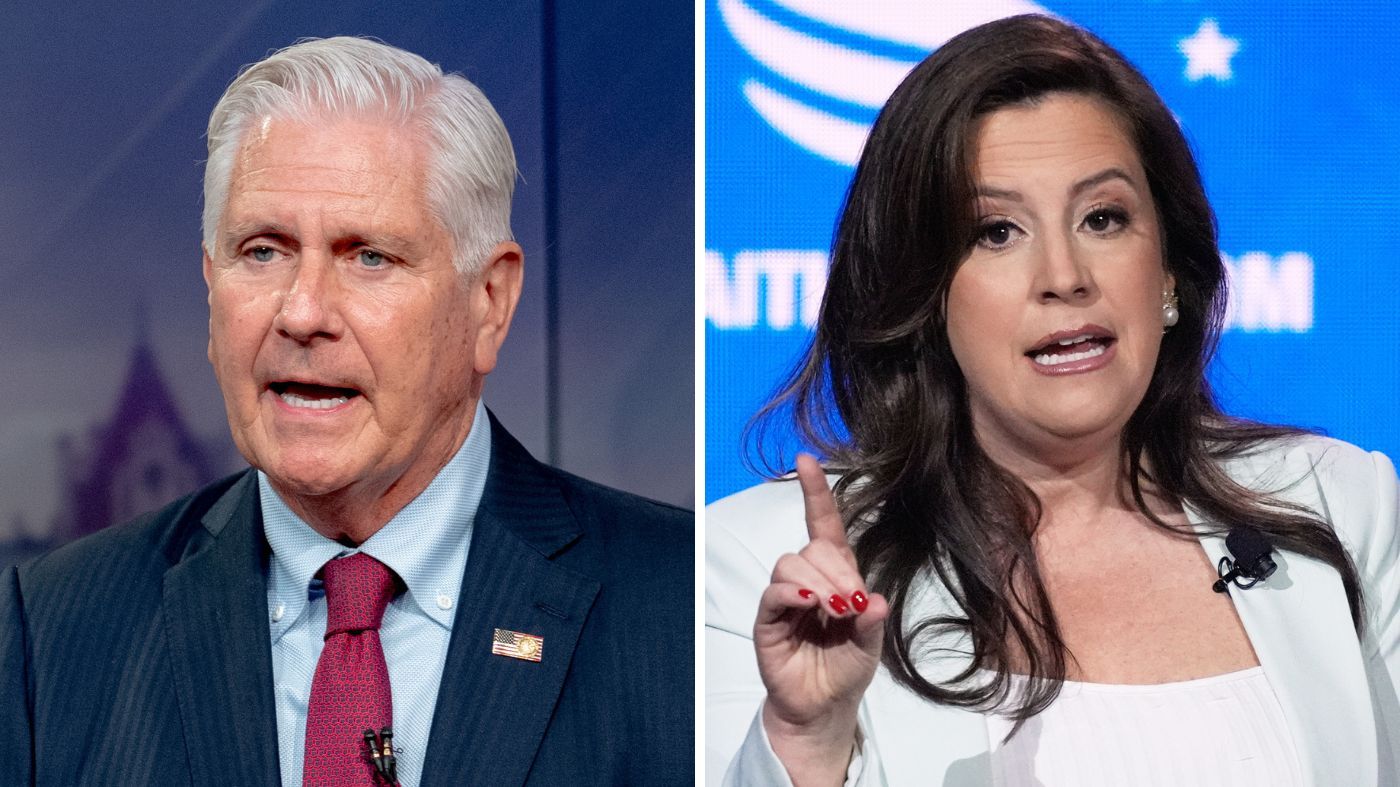
Democrat Matt Dunlap conceded Tuesday in the open race to replace retiring Rep. Jared Golden (D) in Maine's 2nd District, a move that came as state officials signaled the contest would move to ranked-choice voting.
"This isn't the result we were hoping for, and I'm disappointed that we came short," Dunlap said in a statement. He congratulated Republican Paul LePage and thanked his volunteers.

LePage, who served as Maine's governor from 2011 to 2019, declared victory Wednesday, with his campaign asserting that the ranked-choice tabulation would confirm his win. The Associated Press has not yet called the race, but LePage's team pointed to the initial vote tally as evidence of his lead.
In the first round of counting, LePage secured 170,263 votes—just under 50 percent—while Dunlap received 164,845 votes, roughly 48 percent. More than 6,000 ballots were left blank, and 123 went to write-in candidates. Because no candidate cleared the majority threshold, Maine's ranked-choice system was triggered, with a reallocation scheduled for Monday.
The race was a critical test for both parties. Golden, a four-term Democrat, opted not to seek reelection, and the district—which President Trump carried three times—was a prime GOP target. LePage's victory would mark a Republican pickup in a region that has trended conservative in recent cycles.
Maine and Alaska are the only states that use ranked-choice voting statewide. The system, approved by voters in 2016 and first used in 2018, allows voters to rank candidates in order of preference. If no one wins a majority in the first round, the last-place candidate is eliminated and ballots are reallocated to voters' next choices until a winner emerges.
LePage's senior adviser, Brent Littlefield, said in a post on X that the campaign had spoken with Secretary of State Bellows and acknowledged that "initial indications show a small number of blank votes and write-ins for this race may trigger Ranked Choice Voting." He insisted, however, that "it is very clear from our campaign team's work yesterday talking one-on-one with local town clerks, and the publicly available numbers, that Paul LePage is the Congressman-Elect."
Dunlap's concession came as the secretary of state's office announced the ranked-choice process, but his statement did not explicitly address the pending tabulation. He said he was grateful for the support he received and wished LePage well.
The outcome is a boost for Republicans as they seek to expand their House majority. It also underscores the shifting political landscape in rural Maine, where Trump's appeal has helped reshape the district's partisan lean. National Democrats had poured resources into the race, but the GOP's focus on economic issues and border security appears to have resonated with voters.
LePage's return to Washington would give Republicans a seasoned conservative voice, though his contentious history with state officials and his brash style could make him a polarizing figure in the Capitol. His victory, once confirmed, would cap a dramatic comeback for a politician who left the governor's office in 2019 with low approval ratings but remains a force in Maine politics.