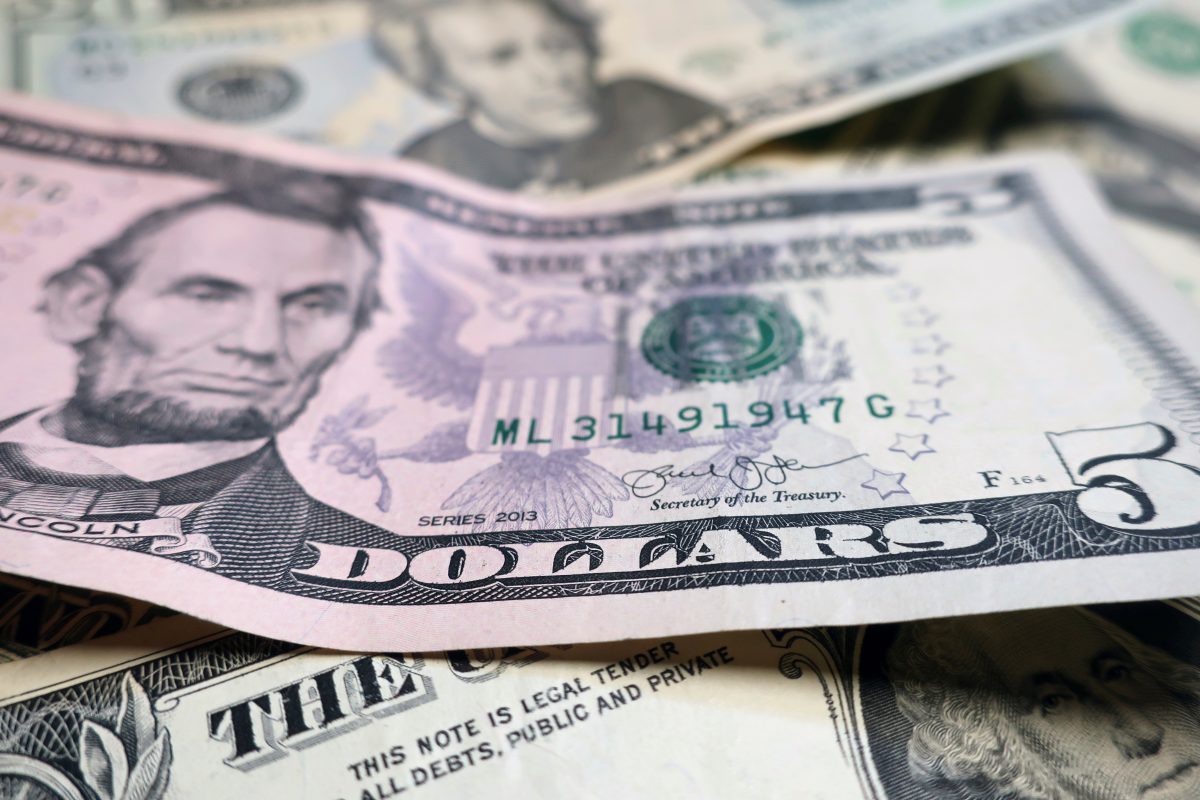
The U.S. dollar has shed roughly 10% of its value against major currencies since President Donald Trump returned to the White House, a stealthy shift that is now quietly inflating costs on everything from summer travel to weekly grocery runs.
Economists describe the effect as a kind of hidden tax on American consumers. Thomas Savidge, an economist at the conservative American Institute for Economic Research, put it bluntly: “It’s kind of a hidden tax. What your dollar is going to be able to buy is going to shrink.”
Historic decline in the greenback
The U.S. Dollar Index, which tracks the dollar against a basket of major currencies, recorded its steepest six-month drop in over 50 years during the first half of 2025. Though the slide has since leveled off, the index remains about 10% below where it stood when Trump took office.
A strong dollar typically lowers the cost of imported goods and helps keep inflation in check. A weaker one does the opposite: it raises prices on foreign products but gives American exports a competitive edge abroad. Historically, U.S. presidents have publicly backed a strong dollar, even when their policies nudged it lower. Trump has broken with that tradition, openly stating his preference for a weaker currency.
“You make a hell of a lot more money with a weaker dollar,” Trump said last year, repeating a theme he has emphasized in public remarks.
Big multinationals cash in
Trump is not alone in seeing advantages from the dollar’s decline. Major multinationals with overseas operations are reaping the benefits. Corporate earnings calls in recent months have been filled with references to “favorable currency impact,” as executives from Philip Morris to Coca-Cola note how the weaker dollar boosted their international revenues.
Elie Maalouf, CEO of InterContinental Hotels, told investors on a February call that “in many cases, we’ve got a weaker dollar, which is not unhelpful,” as the company reported higher profits and revenues. For these global giants, a cheaper dollar makes their products more affordable abroad, driving up sales.
But the picture is starkly different for the vast majority of U.S. businesses that operate only domestically, especially those that rely on imports. Travis Madeira, a fourth-generation lobsterman who co-founded the lobster-shipping business LobsterBoys, makes about 80% of his sales to Americans. Unlike competitors who export heavily, he is feeling the pinch from higher costs for imported bait and Canadian lobsters.
“The exporters are gonna have the advantage when it comes to the dollar weakening,” Madeira said. “These guys are gonna have a little bit of a lever on us.”
Smaller companies feel the pain
Even among businesses with some international exposure, the currency swing can hurt. While large corporations often hedge against currency risk or shift more sales overseas, smaller firms are more vulnerable. David Navazio, CEO of Pennsylvania-based Gentell, which manufactures bandages and medical supplies, runs plants in Brazil, Paraguay, Canada, New Zealand, and the United Kingdom. In every location, the dollar has weakened, raising his production costs.
Gentell has been forced to raise some prices to offset the currency hit, on top of pressures from tariffs and war-related fuel spikes. “A year ago, none of these were concerns,” Navazio said. “And it always hurts the consumer.”
For American consumers, the impact is most visible when they travel abroad or buy directly from international sellers. Crossing into Mexico, the top foreign destination for U.S. travelers, the dollar now buys about 16% less than it did in early 2025. Similar declines of 10% to 17% have been recorded against the Swiss franc, the South African rand, the Danish krone, the Swedish krona, and the euro.
The effect on imported goods is harder to measure. Economists estimate that in advanced economies like the U.S., only about 5% to 10% of a currency drop is passed through to consumer prices. But when prices are already under strain from other factors, even a small addition can matter. Coffee is a case in point: Brazil, the top supplier of coffee to the U.S., has seen its currency strengthen roughly 13% against the dollar. Meanwhile, coffee prices in the U.S. have jumped nearly 19% over the past year.
More volatility ahead
Currency markets are inherently fluid, and while the dollar’s recent decline is striking, it has fallen further during past administrations, including under Richard Nixon when the Dollar Index was created in 1973. Kenneth Rogoff, a Harvard economist and former chief economist at the International Monetary Fund, argues that the dollar’s slide was inevitable regardless of who occupied the Oval Office.
“A lot of policies that Trump is doing are something of a cancer for the dollar,” Rogoff said, but added that “the dollar had been on a 15-year bull run,” making some correction likely. With Trump’s trade policies and tariff battles continuing to roil markets, analysts expect further currency swings that will keep pressure on American households.