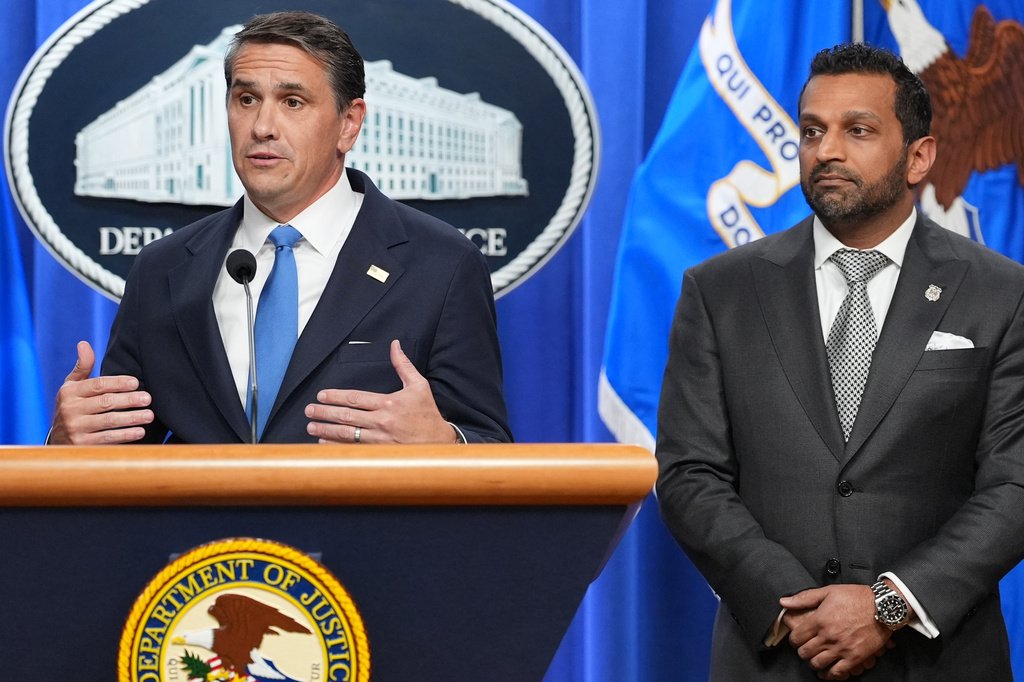
The Justice Department has indicted the Southern Poverty Law Center on 11 counts of wire fraud, bank fraud, and conspiracy to commit money laundering, alleging the civil rights group paid informants to infiltrate hate groups without disclosing those payments to donors. The charges, announced by Acting Attorney General Todd Blanche, mark a sharp escalation in the Trump administration's targeting of organizations it views as adversaries.
According to the indictment, the SPLC funneled at least $3 million between 2014 and 2023 to informants who embedded with groups like the Ku Klux Klan and neo-Nazi organizations. Prosecutors claim the payments were hidden from donors, violating federal fraud statutes. Blanche accused the SPLC of manufacturing extremism to justify its own existence. “The SPLC was not dismantling these groups,” he said. “It was instead manufacturing the extremism it purports to oppose by paying sources to stoke racial hatred.”
The SPLC’s interim president, Bryan Fair, dismissed the charges as baseless. “We are outraged by the false allegations,” Fair said, emphasizing the organization’s 55-year mission to fight white supremacy and promote racial justice. He acknowledged that the group paid informants to gather intelligence on potential violence, sharing that information with local law enforcement and the FBI. However, FBI Director Kash Patel terminated the bureau’s partnership with the SPLC in October, labeling the group “a partisan smear machine.”
The use of informants is a long-standing investigative tool. A 2005 Justice Department Inspector General report noted that informants have been central to federal crime-fighting since the FBI’s founding in 1908. Critics argue that charging the SPLC for employing such tactics reflects a double standard and a broader pattern of political interference in the justice system.
For many observers, the case fits a troubling pattern: the Trump administration using federal power to go after political enemies. Trump has issued executive orders banning diversity, equity, and inclusion programs, pushed voting restrictions that disproportionately affect Black Americans, and cut funding for programs serving low-income communities. He has also argued that civil rights laws discriminate against white people. The charges against the SPLC, critics say, are part of a broader effort to roll back civil rights progress.
A. Scott Bolden, a former New York state prosecutor and former chair of the D.C. Democratic Party, wrote in the original article that the Justice Department under Trump has become a “legal hit squad.” He argued that Blanche is trying to outdo former Attorney General Pam Bondi in prosecuting Trump’s enemies to secure his own position. “Under Trump, the Justice Department now investigates his enemies and seeks to come up with crimes they committed to justify prosecutions, even if no crimes occurred,” Bolden wrote. “This is the way ‘justice’ works in dictatorships, not democracies.”
Bolden recalled his own childhood encounter with racist violence in 1968, after the assassination of Martin Luther King Jr., when his family faced death threats and rock-throwing attacks. He credited the SPLC with saving lives by using informants to prevent violence. “The Southern Poverty Law Center has saved lives by placing informants in hate groups to avert violence,” he wrote. “The organization deserves our gratitude, not criminal charges.”
The case has drawn comparisons to other Trump-era actions, including the indictment of former FBI officials and efforts to curb congressional oversight. With Republican majorities in Congress so far unwilling to intervene, critics warn that the SPLC may not be the last target. Bolden concluded that if Democrats regain control of Congress in November, they will hold the administration accountable.