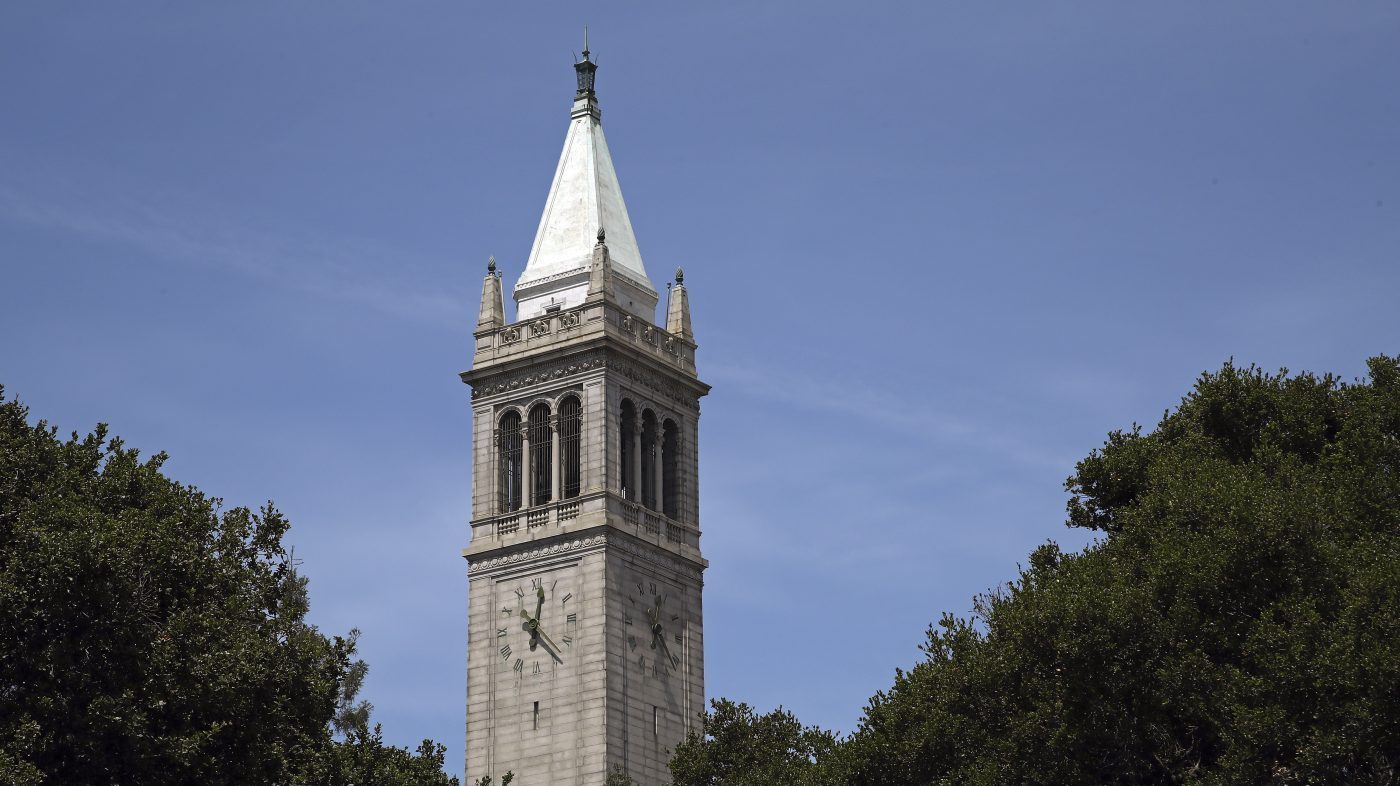
The Trump administration has formally accused the University of California, Berkeley School of Law of systematically favoring Black applicants over white and Asian applicants, a practice that federal officials say violates civil rights law. In a letter sent Wednesday, the Justice Department and Education Department detailed allegations that the law school's admissions process has run afoul of Title VI of the Civil Rights Act of 1964, which prohibits racial discrimination by institutions receiving federal funds.
Assistant Attorney General Harmeet Dhillon, who heads the DOJ's Civil Rights Division, wrote to the law school's attorney, Tania Faransso, asserting that Berkeley Law "deliberately discriminated" against Asian and white applicants. The letter contends that the school used racial proxies and specific essay prompts to achieve a preferred racial mix, despite the Supreme Court's 2023 ruling that struck down race-conscious admissions in higher education.
The investigation, launched in March 2025, comes less than two years after the Supreme Court's landmark decision in Students for Fair Admissions v. Harvard. Dhillon's letter alleges that Berkeley Law's discriminatory practices continued "well after" that ruling, which had explicitly barred the use of race as a factor in admissions. The DOJ is now seeking a resolution agreement to bring the law school into compliance with federal law.
Berkeley Law's dean, Erwin Chemerinsky, responded forcefully, stating that the school "scrupulously complies" with all state and federal laws prohibiting racial considerations in admissions. He pointed to California's Proposition 209, which bans affirmative action in public institutions, and emphasized that the school's policy is clear: race is not considered in any way. "Our admissions policy is clear that race is not considered in any way in admissions decisions," Chemerinsky said. "Proposition 209, federal statutes, and the Supreme Court's decisions do not preclude schools from pursuing diversity so long as they give no preferences based on race. Berkeley Law does not do so."
However, the DOJ's letter presents statistical evidence that paints a different picture. According to Dhillon, in 2024 and 2025, Black applicants had 6.5 and 5.8 times higher odds of admission, respectively, compared to "comparable" white applicants with similar qualifications. The median Black admit in 2024 had an LSAT score eight points lower than the median white or Asian admit, and in 2025 that gap narrowed to five points but remained significant. Over the two-year period, half of admitted Black students had LSAT scores below 95 percent of admitted white applicants.
The data, which Dhillon says was produced by Berkeley Law itself, also reveals a stark demographic breakdown. As of October, the law school had 1,128 students: 516 white, 293 Asian, 51 Black, and 130 Hispanic. Dhillon argues that these numbers, combined with the admission odds, demonstrate "a strong intentional bias against Asian and white applicants, with a corresponding bias in favor of black applicants."
The letter also quotes Chemerinsky from a 2020 statement in which he wrote that the college "must continue to aggressively pursue" diversity in terms of race, ethnicity, class, religion, gender, gender identity, sexual orientation, disability, and ideology. Dhillon suggests this public commitment to racial diversity is evidence of intent, even if the school now denies considering race.
This action against Berkeley Law is part of a broader Trump administration crackdown on diversity initiatives in higher education. The DOJ previously accused Duke University School of Law of similar discrimination in August. Additionally, the Treasury Department and IRS have proposed ending tax-exempt status for private schools that give preferential treatment to minority students. The administration's efforts have drawn both praise from critics of affirmative action and condemnation from civil rights advocates who argue that such policies are necessary to address historical inequities.
For now, Berkeley Law faces the prospect of a federal resolution agreement, which could impose monitoring or other corrective measures. The school maintains its innocence, but the data presented by the DOJ raises serious questions about the true nature of its admissions practices. As the legal battle unfolds, the case will likely serve as a test of how far the federal government can go in enforcing the Supreme Court's ban on race-conscious admissions.