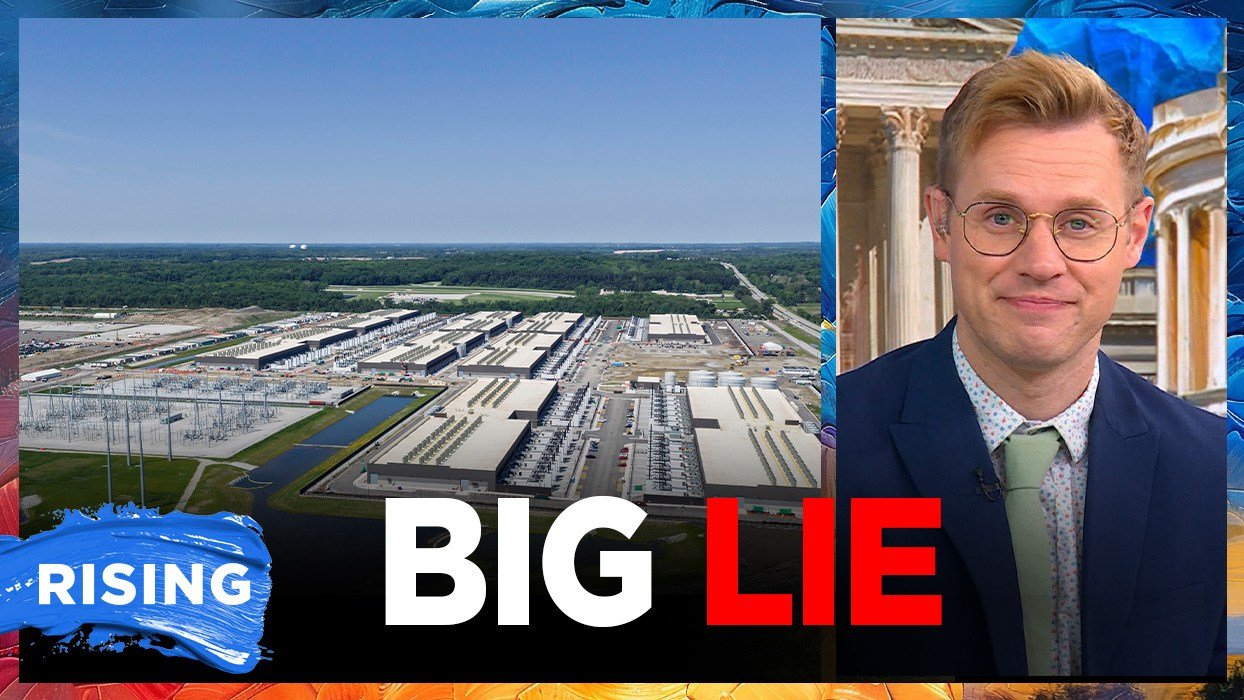
The debate over data centers has become increasingly heated, with many Americans expressing opposition to new facilities in their communities. However, a key driver of that opposition—the belief that data centers consume massive amounts of water—is based on misinformation. Recent polling suggests that when voters learn the facts, their views shift dramatically.
According to Echelon Insights, after being informed that data centers can recycle and reuse water, support for building them jumps by 31 percentage points. This indicates that the public's resistance is not rooted in anti-technology sentiment but rather in legitimate concerns about resource depletion—concerns that have been amplified by misleading narratives.

Some of these narratives, as noted by commentators, may be fueled by hostile foreign actors seeking to undermine U.S. technological progress. Additionally, far-left degrowth activists, who oppose any new construction, have been vocal in spreading these claims. Yet, the evidence shows that data centers use far less water than agriculture, and the water they do use is largely recycled.
There is also genuine conservative skepticism, exemplified by The Federalist's John Daniel Davidson, who compared data centers to casinos and racetracks as economic saviors. That comparison is flawed: casinos and racetracks profit from vice, whereas data centers provide essential infrastructure for modern life without harming anyone. In fact, they can even help lower property taxes for local residents.
For those concerned about revitalizing struggling American towns, data centers offer a viable path. If we cannot build data centers due to exaggerated concerns about noise or resource use, we will struggle to achieve any domestic industrial policy. The inability to build would lead to stagnation, which is exactly what our adversaries desire.
Interestingly, the polling reveals that within the Republican coalition, those who are more conservative, male, and MAGA-aligned are the most supportive of data centers. This aligns with President Trump's continued endorsement of expanding data center infrastructure. As one commentator put it, "When he's right, he's right." Data centers create jobs and prosperity, and their water usage is a drop in the bucket.
The broader implications for policy are significant. As the economic risks of blocking AI data centers become clearer, local and state governments may need to reassess moratoriums, such as the one proposed in Michigan. The public's shift in opinion after learning the facts suggests that education could be key to overcoming opposition.
Ultimately, the data center debate is a microcosm of larger tensions between progress and precaution. By dispelling myths and focusing on the tangible benefits, supporters of data centers can build a more informed consensus. As the public turns against data centers in some areas, the facts may offer a way forward.