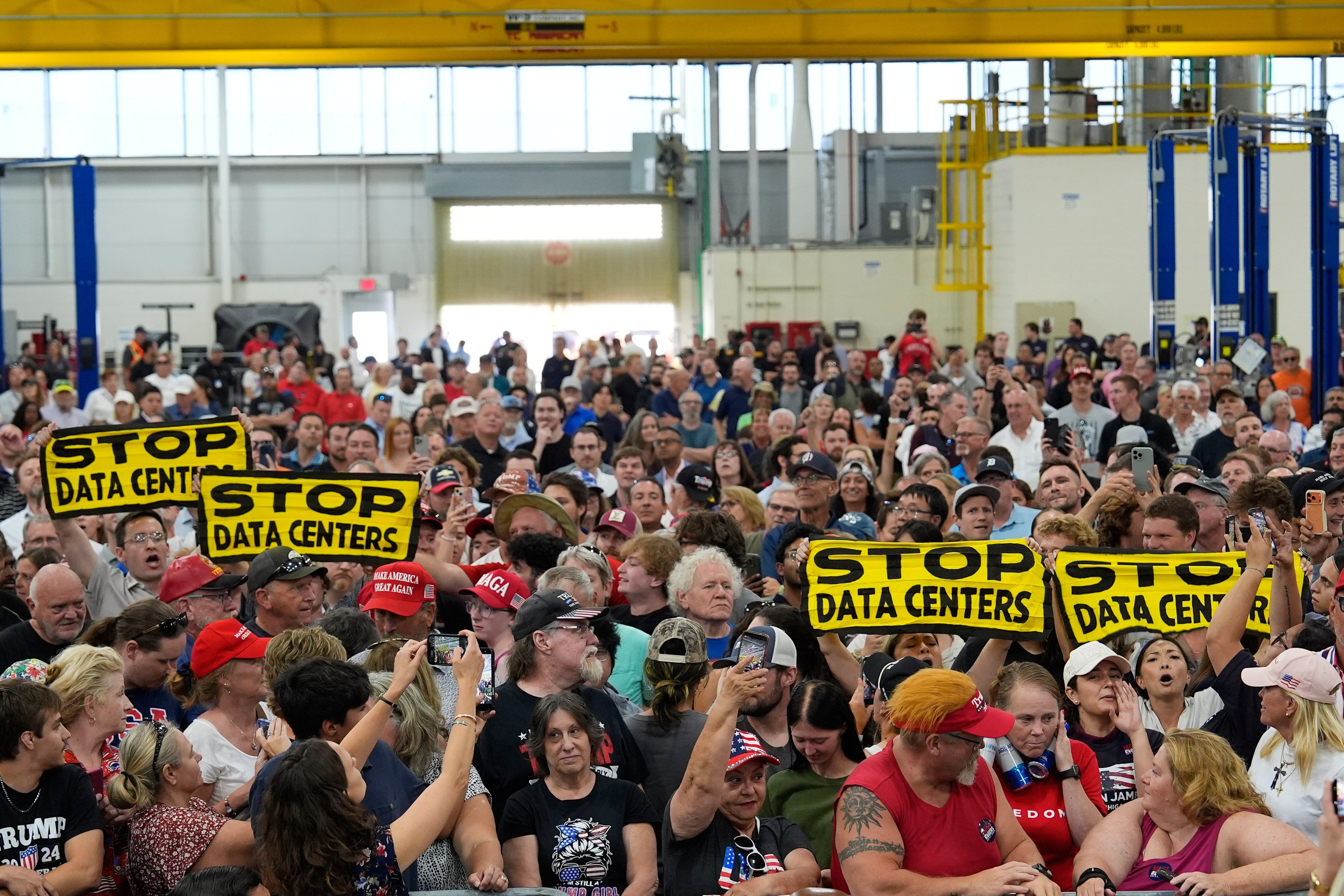
The tech industry's surprise at the widespread opposition to data center construction is as predictable as it is misplaced. For years, Silicon Valley's elite have operated from their insulated Bay Area bubble, reaping billions while their physical footprint remained distant from the everyday Americans who fuel their profits. Now, as they seek to build massive AI infrastructure across the country, they are encountering a public that is neither impressed by their track record nor willing to absorb the costs without a share of the gains.
The grievances are well-documented: algorithms designed to hook children, relentless data harvesting, apps that squeeze small businesses and gig workers, AI-amplified scams, and a constant drumbeat of data breaches. Add to that OpenAI's Sam Altman, who has flip-flopped on whether AI will cause mass unemployment, and the industry's credibility is threadbare. It is no wonder that communities are skeptical.

Public Opinion Turns Against Data Centers
The numbers are stark. A recent YouGov poll found data centers viewed negatively by a net 20 points overall, with Democrats at net-negative 47 and young voters at net-negative 36. Even among MAGA voters—the most favorable group—approval sits at just 41 percent. When asked about hosting a facility in their own community, opposition grows across every demographic except MAGA voters, who are evenly split. Majorities expect electricity prices to rise, and even President Trump's endorsement fails to move the needle: only 39 percent of MAGA voters and 34 percent of Republicans agree with his support for data centers.
Annenberg Public Policy Center polling reinforces the trend: 68 percent say AI is under-regulated, 61 percent oppose local data centers, and majorities expect negative effects on jobs, child safety, and privacy. The message is clear—the public is not buying what the tech giants are selling.
Money Talks, but Will It Be Enough?
Belatedly, the industry is trying to adapt. Developers promise self-built power plants, water recycling, and other mitigation measures. But the real breakthrough has been financial. In a reversal of decades of corporate welfare, where communities offered tax breaks to attract factories, data center developers are now offering direct payments. One developer in a Pennsylvania township recently offered $10,000 per household plus additional community funds. This is the new template: locals are no longer willing to accept the costs without a piece of the profits.
This shift reflects a broader political reality. As bipartisan backlash to data centers grows, the industry can no longer rely on friendly politicians to smooth the way. Even the Trump administration's support has not translated into public acceptance, as claims about water usage clash with local concerns.
So, will the data center boom bust? Unlikely. America is vast, and there are communities willing to host facilities—for a price. The key for companies like Google, Microsoft, and OpenAI is to identify those places and negotiate fairly. Northeastern Pennsylvania, with its proximity to New York, will command a premium over rural Montana. But the era of free rides is over.
This is capitalism working as it should: the public is demanding a fair share of the wealth generated by AI. Whether the Altmans of the world learn humility remains to be seen. But for now, they are learning that the public is not a passive audience—it is a stakeholder with leverage.