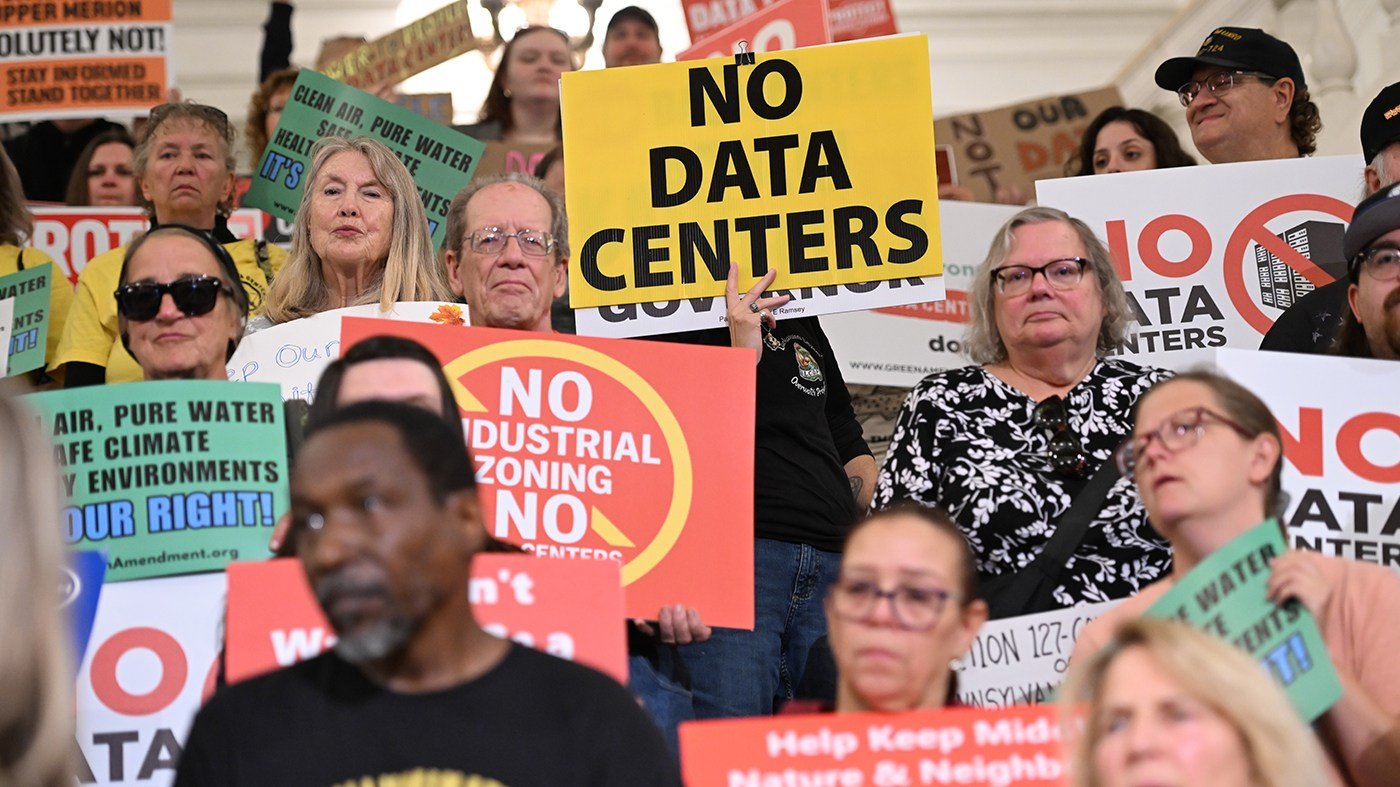
As the 2026 midterm elections approach, a new political flashpoint is emerging in rural America: the proliferation of AI data centers. In states like Ohio and Texas, where President Trump has enjoyed double-digit margins, grassroots movements are pushing back against the infrastructure's costs and environmental toll, potentially shaking the GOP's rural stronghold.
In Pickaway County, Ohio—a region Trump carried by roughly 50 points in 2024—residents are voicing concerns over a proposed EdgeConneX facility. Sherri Fahringer, a Republican running for county commissioner, says the issue is resonating deeply with voters. "That's weighing heavily, especially with the Senate races," she said, noting that it's pushing some voters "further left toward" former Sen. Sherrod Brown in his bid against incumbent Sen. Jon Husted.
The political stakes are high. A recent National Republican Senatorial Committee memo, obtained by Axios, warned that "more than any other thing in this race, data centers are the anchor hanging around Husted's neck." The memo noted that Brown's opposition to data centers has become a "centerpiece of his campaign" because "it works." Despite Trump's 10-point win in Ohio in 2024, Husted has trailed Brown in recent polls.
Brendan Steinhauser, a GOP strategist and president of the Alliance for Secure AI, observes that the opposition is unusual. "It's really fascinating because I know a lot of people who are opposed to data centers locally, and these are Republicans. Many of them are MAGA Republicans, very conservative areas," he said. "What makes this really powerful is you know this is a bipartisan coalition, and that's kind of unique."
A Bowling Green State University poll underscores this bipartisan concern, with 75 percent of Ohioans opposing data center construction in their communities and 78 percent favoring a moratorium until further research is done. In Pickaway County, Fahringer points to the projects' impact on local energy grids, noise pollution, and their placement on former farmland near homes and schools. "I think it is upending a lot of people's typical votes that they would have you know, along party lines," she said.
The rural vote is pivotal in Ohio, where 83 of 88 counties are predominantly rural, according to a Cleveland.com analysis of Census data. Steinhauser notes that while these areas are "overwhelmingly Republican," many voters "don't support the president's position here." Trump has championed data centers as economic boons, and his administration has taken a hands-off approach to AI regulation.
In Texas, the issue is also heating up. Gov. Greg Abbott, a Trump ally running for reelection, has shifted his stance, proposing new restrictions on data centers, including water-efficiency requirements and repealing tax incentives. This comes after he previously touted Texas as the "epicenter of AI development" and welcomed Google investments. Agriculture Commissioner Sid Miller (R) warned that GOP candidates could lose because of the backlash. "Basically, we've just quit listening to the people, and we're gonna pay for it this election," he told NewsNation.
A University of Texas poll found 66 percent of rural Texans oppose data center construction in their communities. Abbott's Democratic challenger, Gina Hinojosa, is trying to capitalize on the discontent, though she still trails among rural voters. Steinhauser sees Abbott's pivot as a "good barometer" for Republican sentiment. "He saw this movement and adjusted," he said.
As the election nears, the data center debate is becoming a litmus test for GOP loyalty in rural areas. With Texas' governor's race potentially shaping national politics for years, the outcome could hinge on how candidates navigate this unexpected wedge issue. Meanwhile, in Ohio, the Senate contest is drawing national attention, with Trump and Vance making final pushes across the South. The question remains whether the GOP can hold its rural base or whether data centers will become the anchor that drags down its candidates.