In 2019, a head-on collision with a wrong-way driver changed my family forever. While my husband and son walked away with minor fractures, my daughter and I suffered catastrophic injuries—seatbelts tore into our abdomens, and my head struck the airbag with enough force to cause a traumatic brain injury. The safety devices that protected the men in my family nearly killed the women.
This experience sent me on a deep investigation into a disturbing reality: women are 17% more likely to be killed in car crashes than men, and 73% more likely to be seriously injured. The root cause isn't random—it's a systemic bias in how vehicles are designed and tested.
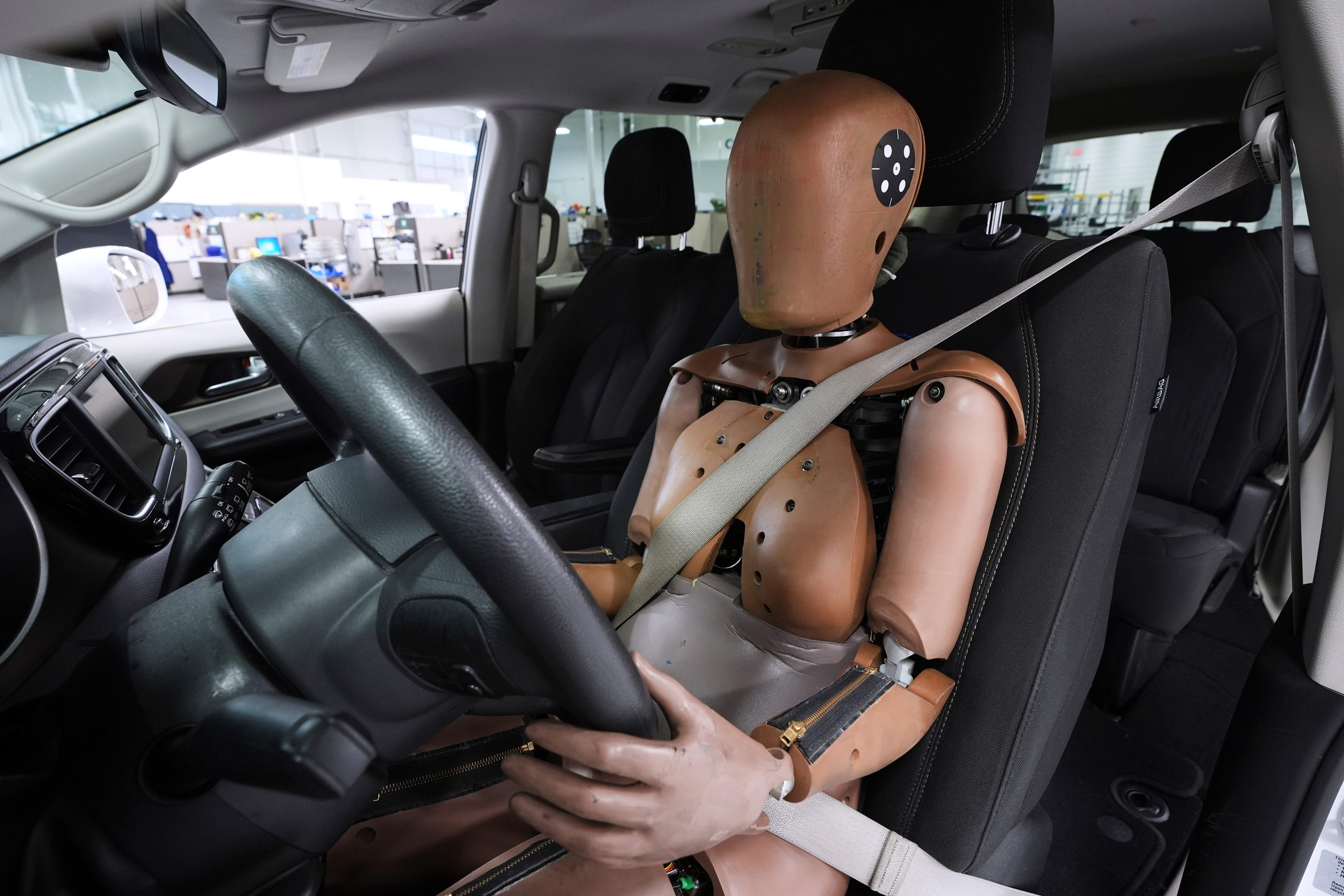
For decades, crash test dummies have been modeled on the average male body. The first female dummy was a scaled-down male with cosmetic features, representing only 5% of women. Modern 'biofidelic' dummies accurately reflect 95% of female anatomy, but no American automaker uses them because federal regulations don't require it. The National Highway Traffic Safety Administration (NHTSA) still relies on a 1970s-era male standard, and female dummies weren't even required in tests until 2011—and even then, not in the driver's seat.
My attempts to bring this to the attention of policymakers were met with bureaucratic inertia. I reached out to a former colleague in the Biden White House, but the administration was consumed by ideological priorities, like the electric vehicle rollout, which would only exacerbate the problem if safety standards remained unchanged. I even highlighted that President Biden lost his first wife and daughter in a car crash, but the response was silence.
At the Department of Transportation, officials acknowledged the data but defended their approach. When I asked why they didn't mandate female driver tests, the reply was, 'We can't mandate every test.' They touted automatic braking as a life-saving innovation, but that technology wouldn't have prevented my injuries—my scar from the crash is a constant reminder of what wasn't done.
The consequences are staggering: over 44,000 women died during the Biden administration's term, a toll that could have been reduced with simple regulatory updates. The issue isn't just about safety—it's about how government prioritizes some lives over others.
There is hope, however. Last November, the Trump Transportation Department issued a press release advocating for biofidelic dummies. But words must be followed by action. The federal government should mandate the use of these dummies in crash tests, ensuring that all drivers—regardless of gender—are protected equally.
This isn't just a technical issue; it's a matter of political will. As trust in government continues to decline, the failure to address such a clear-cut safety disparity only deepens public cynicism. The time for excuses is over. Our leaders must act to save lives, not just talk about it.