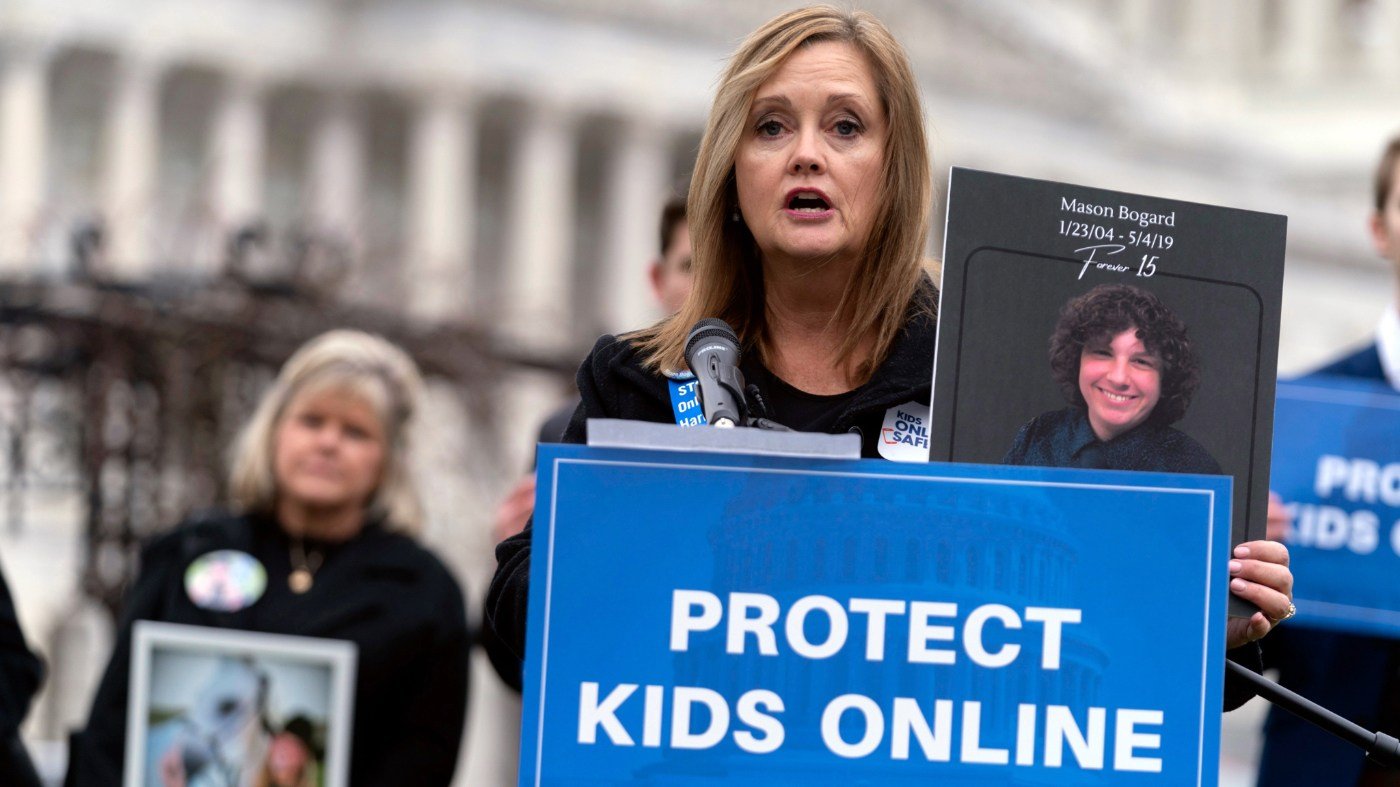
Five years after Frances Haugen testified before a Senate subcommittee, her warning remains unheeded. The former Facebook employee told lawmakers in October 2021 that "congressional action is needed" and that "they won't solve this crisis without your help." Yet the Kids Online Safety Act, which enjoys broad bipartisan support, still has not become law.
Haugen's recent appearance at a screening of "The Social Reckoning," a documentary about social media's influence, reignited the debate. In an interview, she pointed to the financial incentives that keep Big Tech from changing its practices. "They [Meta] fear the blowback more than they fear the harm," she said.
Her original testimony included internal documents showing that Meta repeatedly chose profit over safety. Those disclosures have not led to binding regulations. Instead, tech companies have spent over $50 million lobbying against child safety bills, signaling that protecting children is less important than protecting their bottom line.
The legislative path has been tortuous. Senators Marsha Blackburn (R-Tenn.) and Richard Blumenthal (D-Conn.) introduced KOSA in February 2022. In July 2024, the Senate passed a package combining KOSA with privacy legislation by a 91-3 vote, but the House did not take it up.
The House later passed its own version, the Kids Internet and Digital Safety Act, in June by 267-117. However, that bill explicitly states it does not impose a duty of care on platforms, a significant departure from the Senate approach.
On August 5, the Senate Commerce Committee advanced KOSA again. On September 30, Senator Blumenthal attempted to pass it by unanimous consent, but Senator Rand Paul (R-Ky.) objected, citing free speech concerns. Paul's objection reflects a broader debate over Section 230, which shields platforms from liability for user content.
Child safety advocates, including Richie Hamm, president of the National Center on Sexual Exploitation, argue that this is not about speech but about conduct. "These companies are not only knowingly engaging in practices that cause harm to our children online, but also are profiting from them and amplifying them," Hamm said. He stressed that parents cannot bear the burden alone.
The failure to act has real consequences. Hamm, a father of teenagers, sees the toll on families. He calls for a carefully drawn, enforceable duty of care focused on platform design, with strong privacy defaults and independent scrutiny.
Lawmakers can disagree sincerely, but they must explain how their approach will protect children and when it will become law. As public confidence in government continues to decline, voters are asking why their representatives are not delivering on this promise.
Haugen took a personal risk to bring this information to Congress. Families have spent years pressing for action. Children are growing up while Washington negotiates. They cannot get those years back.