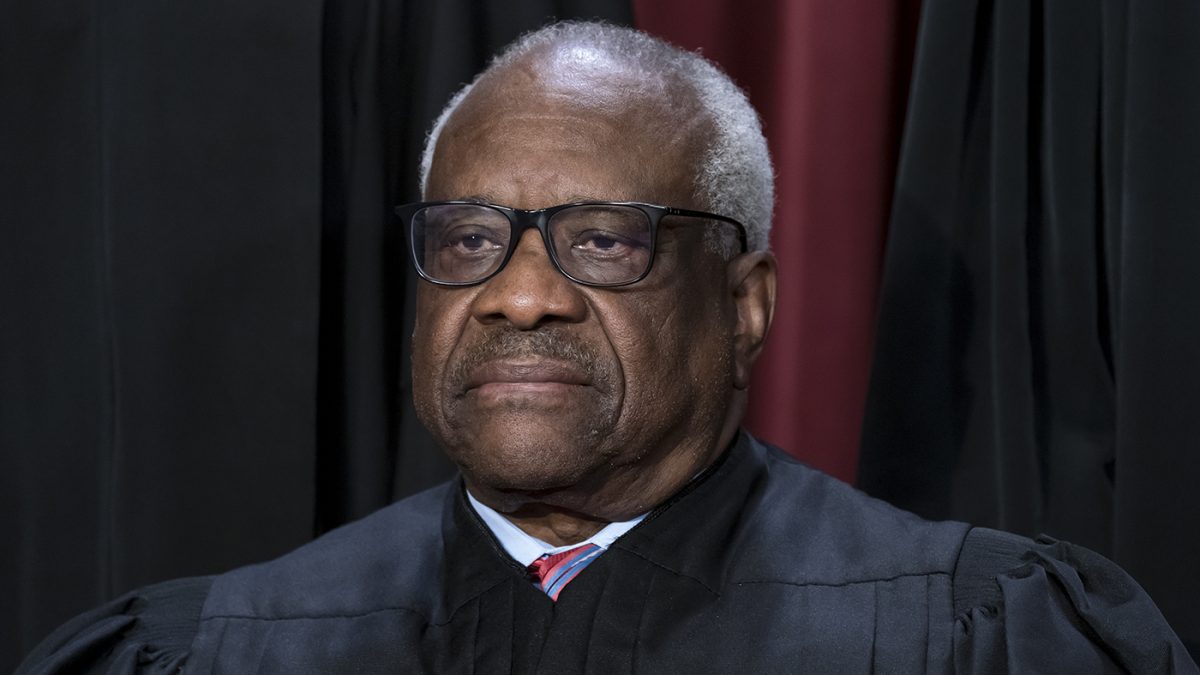
There’s a growing threat to free speech in America, and it’s coming from the Supreme Court. Justices Clarence Thomas and Neil Gorsuch have repeatedly signaled their desire to overturn New York Times v. Sullivan, the 1964 decision that requires public figures to prove actual malice in defamation cases. Last week, the Court declined to hear a case brought by Alan Dershowitz seeking to overturn the ruling, but Thomas and Gorsuch made clear they believe the decision was wrongly decided.
In their view, the founders never intended such broad free speech protections for critics of public figures. They argue the ruling “bears no relation to the text, history, or structure of the Constitution.” They even suggest the founding generation believed public figures deserved more protection from defamation, not less. This is a radical reinterpretation that could fundamentally weaken the First Amendment.

Chris Truax, an appellate attorney and member of the Society for the Rule of Law, warns that originalism can become a sterile exercise if applied without context. “Whipping and mutilation were widely practiced in the 18th century,” he notes. “Thomas Jefferson drafted a bill that would have allowed castration for sodomy, rape, and polygamy—and it failed as too lenient.” The point is clear: applying historical tradition mechanically ignores how the world has changed.
The 18th-century founders had no concept of modern mass media, the internet, or billionaires using lawsuits to silence critics. Strategic lawsuits against public participation and the prospect of a president suing opponents into submission were alien to them. Yet Thomas and Gorsuch would strip away federal protections and leave free speech to the whims of state courts.
This is where Congress must step in. The lesson of Roe v. Wade is instructive. Democrats had decades to codify abortion rights into federal law but failed, and when the Court overturned Roe in Dobbs, the rights vanished. As Truax writes, “If Roe had been a federal law as well as a Supreme Court ruling, any court ruling on an abortion case would have first looked at the statute.” The same principle applies to Sullivan.
Congress could incorporate the actual malice standard into a federal statute, such as a revived Free Speech Protection Act or a national anti-SLAPP law. Justice Brett Kavanaugh, no fan of birthright citizenship, upheld it in a recent case because Congress had codified the 1898 Wong Kim Ark ruling into law. The same logic would protect Sullivan from being overturned.
The threat is real. Thomas and Gorsuch have made their intentions clear, and with a conservative majority, Sullivan could fall. Constitutional rights should not depend on the shifting winds of judicial appointments. Congress has the power to protect free speech—it should act before the wildfire consumes it.