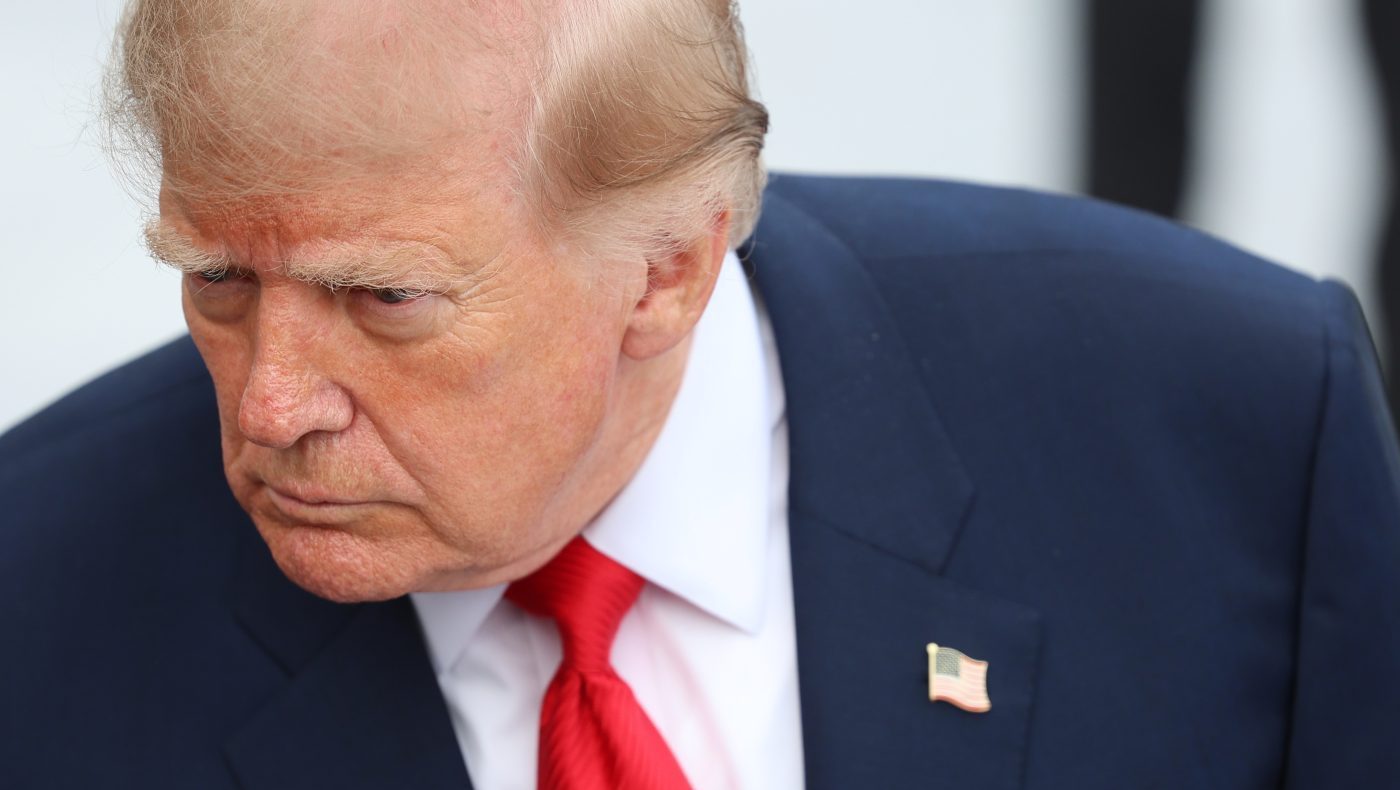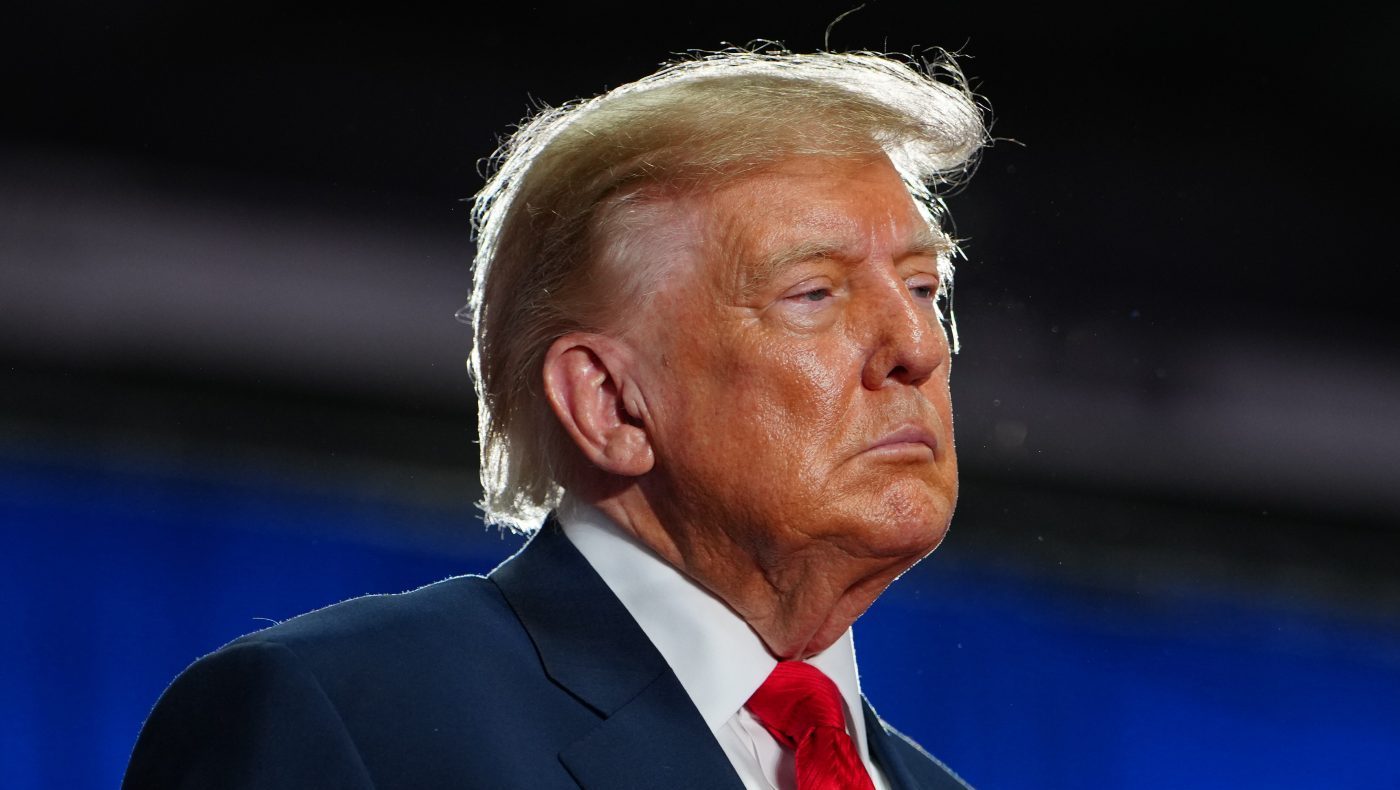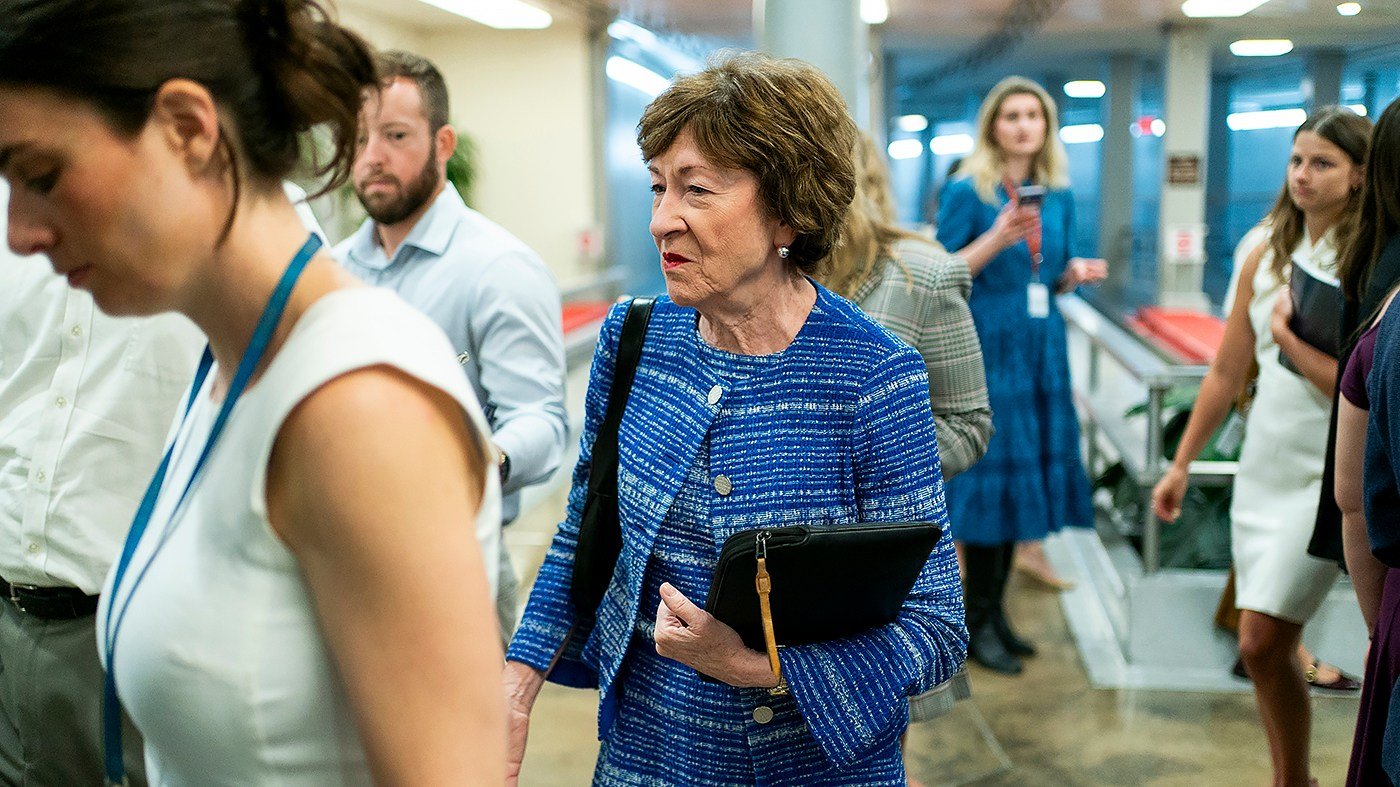
Sen. Susan Collins (R-Maine) is navigating one of the most delicate political balancing acts of her career as she seeks a fifth term in a state that hasn't backed a Republican for president in decades. With President Trump's approval ratings sinking and Vice President Vance rallying the GOP base in her home state, Collins is deliberately signaling her independence—skipping the vice president's event, breaking with the administration on tariffs, and casting a rare vote against Trump's attorney general nominee.
Collins's strategy reflects the broader challenge for Republicans in purple states this cycle. As Trump's national approval hovers at 33 percent in a recent Reuters/Ipsos poll, and with a University of New Hampshire survey showing his standing in Maine at just 40 percent, GOP incumbents are being forced to choose between loyalty to the president and their own political survival. For Collins, the choice has been clear: distance herself from the White House whenever possible.
Her recent actions underscore that approach. In July, she was one of the few Republican voices calling for federal immigration agents to pause non-urgent traffic stops in Maine after a deadly shooting in Biddeford. Earlier this month, she joined only one other Republican in voting against Todd Blanche, Trump's pick for attorney general. And she has been the most vocal GOP senator criticizing the administration's escalating trade war with Canada, which has direct consequences for Maine's economy.
"The discussion of Kavanaugh, Canadian tariffs, or any of these individual issues just absolutely pales in comparison to the general nausea people have about this administration right now," said Lance Dutson, a former senior adviser to Collins's 2020 campaign, referencing her controversial vote to confirm Supreme Court Justice Brett Kavanaugh.
Collins's absence from Vance's rally in Brewer on Monday was notable, though her campaign cited a scheduling conflict. "Senator Collins has a great working relationship with the Vice President," her campaign said in a statement, adding that she had a prior personal commitment. Dutson downplayed the significance, noting that Collins has appeared alongside Energy Secretary Chris Wright at a recent event promoting an energy storage facility, suggesting she is willing to engage with the administration on issues that matter to Maine.
Her Democratic opponent, Troy Jackson, a logger and former state Senate president, is wasting no time capitalizing on the dynamic. After Vance's speech, Jackson pointed out that the vice president called Collins his "dear friend," and noted that she has voted with Trump's agenda 96 percent of the time. "Maine voters aren't stupid, and they see the game that Susan Collins is playing," said Maggie Amjad, a spokesperson for Jackson's campaign.
Collins's team counters that she has always put the state first. "No matter who's in the White House, Susan Collins works with the president when she agrees with his policies and opposes him when she disagrees," said Blake Kernen, a campaign spokesperson, noting that Collins first criticized the Canadian tariffs on the Senate floor in April of last year.
The tariff dispute has become a flashpoint in the race. The Trump administration recently imposed a 50 percent tariff on certain Canadian goods after negotiations collapsed, and Trump has threatened further tariffs on cars, auto parts, and aluminum. Canada has vowed to retaliate "dollar for dollar," a prospect that alarms Collins, whose state relies heavily on cross-border trade.
"I really want us to go back to the very friendly, economically beneficial relationship that we have with our Canadian neighbors," Collins told News Center Maine. "We produce a lot in Maine—our blueberries, our potatoes, our lobster, our lumber—that is processed across the border. If it comes back with a huge tariff on it, perhaps as much as 50 percent, that increases the cost of eating, building homes, and merchandising our best-known products."
The fight over tariffs is just one front in a broader battle. Collins is the only Senate Republican running in a state that Vice President Harris carried in 2024, and she faces the historical headwinds of a first midterm for a new president. Some GOP strategists argue the party should give her room to run her own race. "You've got to give those candidates room to breathe and not try to force yourself onto their shoulders," said one Republican strategist. "Stay out of Maine. Give her space to say what she needs to say, do what she needs to do to hold that seat."
Vance, for his part, praised Collins's independence during his rally, albeit with a touch of humor. "Whenever I'm in Maine, I've got to give Susan a little bit of crap because as you know, Susan is the most independent member of the United States Senate," he said. "And as the president of the United States Senate, she sometimes makes my job just a little bit harder." But he added, "She makes it harder because she is coming to work every single day and fighting not for a political party or not for any abstraction. She comes to work every single day, and she fights for the great people of Maine."
The race has also drawn national attention, with the Cook Political Report rating it as a toss-up. As the campaign heats up, Collins's ability to balance her independent brand with the demands of a polarized electorate will likely determine whether she can hold onto her seat in a state that has trended Democratic.