A recently released U.S. Census Bureau report on noncitizen voting in the 2020 election has ignited a debate over data accuracy and the politicization of election integrity efforts. The report, titled “Noncitizen Voting in the 2020 Election, a Beginning Analysis,” claims that Texas had approximately 2,500 noncitizen voters, the second-highest number after California’s 4,300. Florida followed with 1,800, and New York with 1,700. However, the report's methodology and timing have raised eyebrows among election experts and political observers.
The Census Bureau, whose core mission does not include election administration or fraud detection, released the report on August 18. It acknowledges that more than 32 million voter records—roughly 20 percent of the nearly 160 million ballots cast—remain unanalyzed. The agency stated it “readily determined with high confidence” that over 128 million records were citizens and over 24,000 were noncitizens at the time of the election. Yet the decision to publish preliminary findings, with rounded state-level numbers, suggests a lack of statistical confidence and invites speculation about political motivations.
Critics question why the bureau would release an incomplete analysis so close to the midterm elections. The report cannot alter the outcome of the 2020 presidential race, but it may serve to amplify former President Donald Trump’s unsubstantiated claims of widespread voter fraud. Trump has repeatedly asserted that the 2020 election was stolen, and this report could be used to justify further interference in upcoming elections. The timing is particularly suspicious given that the bureau typically avoids such partisan entanglements.
Adding to the confusion, the Trump administration released a separate report on July 16 claiming that the Department of Homeland Security had identified over 250,000 noncitizen voters in just four states: California, New Jersey, Nevada, and Pennsylvania. California alone was said to have 190,832 noncitizen voters. That figure dwarfs the Census Bureau’s August estimate of 4,300 for the same state. While the July press release described these individuals as “potential” noncitizen voters, both Trump and Homeland Security Secretary Markwayne Mullin omitted that qualifier in public remarks, implying that these were confirmed cases of illegal voting.
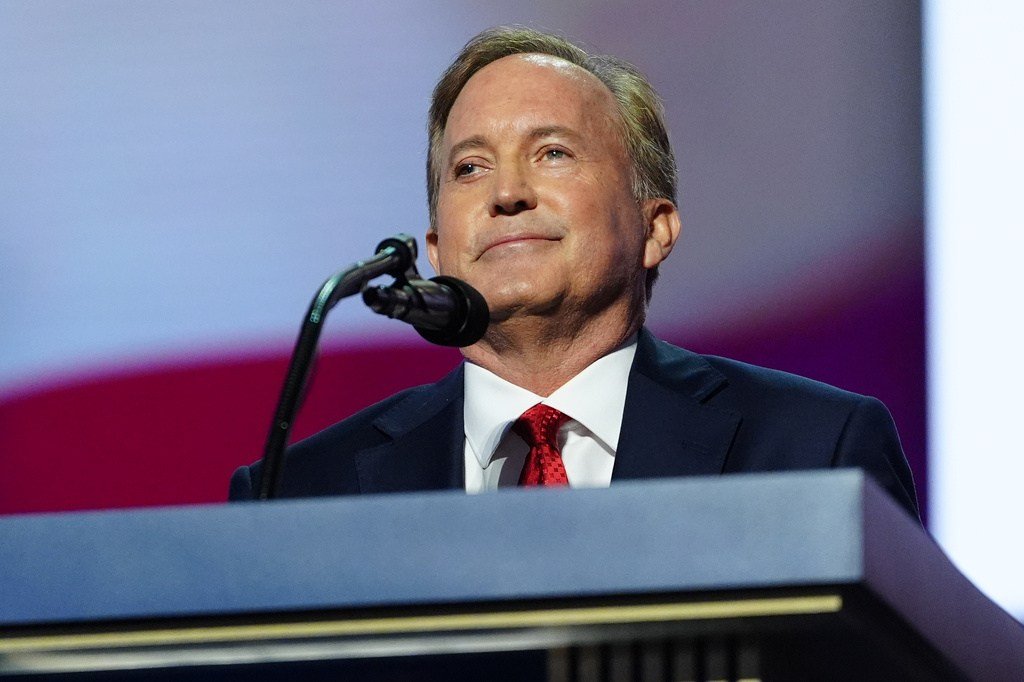
Texas Attorney General Ken Paxton, whom Trump recently praised as the best state attorney general in history, now faces uncomfortable questions. If the Census Bureau’s data is accurate, why has Paxton’s office not prosecuted thousands of alleged noncitizen voters? Paxton has a track record of pursuing voter fraud cases—last year he announced an investigation into 33 noncitizens for voting in the 2024 election, and the Justice Department recently charged seven noncitizens in Texas for unlawful voting or falsely claiming citizenship. But these numbers are minuscule compared to the thousands alleged in the Census report.
In reality, noncitizen voting is exceedingly rare. A recent announcement from the Texas Secretary of State’s Office referred only 117 cases of “potential noncitizen voting” to Paxton for investigation. The office also confirmed that 578 registered voters flagged last year as potential noncitizens by a federal database were actually U.S. citizens, according to the Texas Tribune. Similarly, other states have found very few cases after auditing their rolls: Florida identified 85, Georgia 139, Ohio 138, and Iowa 35, according to Politifact. These figures are a far cry from the Trump administration’s claims of rampant fraud.
The discrepancy leaves two possibilities: either Paxton and the Justice Department have failed to charge thousands of known noncitizen voters in Texas, or the Trump administration is releasing unreliable, exaggerated, or false data. It cannot be both. The Census Bureau’s report, with its rounded numbers and incomplete analysis, does little to resolve the contradiction. Instead, it raises serious questions about the integrity of the data and the motives behind its release.
As the nation approaches another election cycle, the debate over noncitizen voting is likely to intensify. But without credible evidence, such claims risk undermining public confidence in the electoral system and distracting from real issues. Lawmakers and officials must prioritize accurate data and fair enforcement over partisan narratives. For now, the Census Bureau’s report stands as a cautionary tale about the dangers of politicizing statistical analysis.