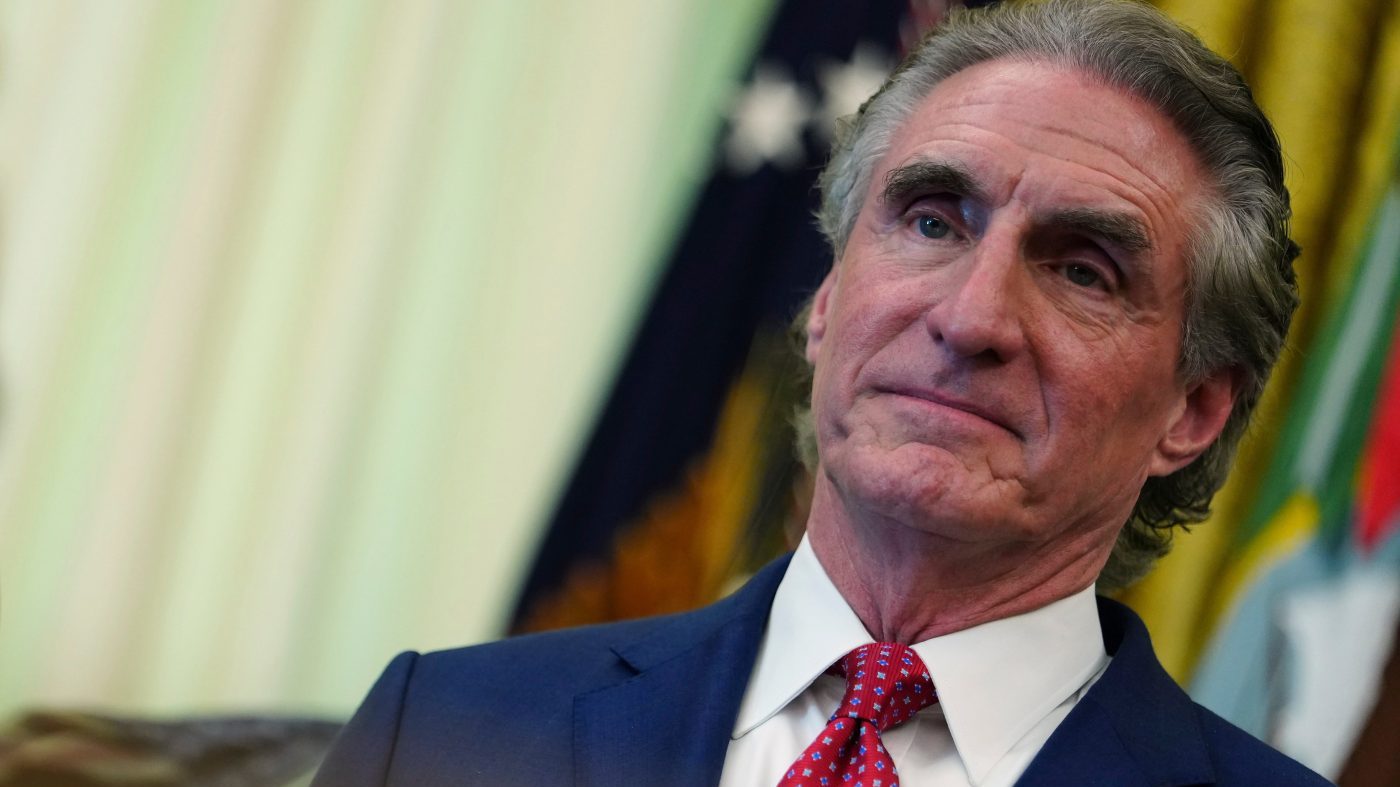
Interior Secretary Doug Burgum on Friday shifted responsibility for rising gasoline costs away from the ongoing conflict with Iran and onto Democratic-led states, arguing that local policies and taxes are the primary drivers of price differences across the country.
“The price of gasoline varies across our whole country largely right now by state policy and state taxes, not by the underlying fundamentals,” Burgum told Fox News’s Aishah Hasnie.
Burgum specifically called out California, where average gas prices hit $5.75 on Saturday, compared to $4.65 a year ago. He described the state’s high costs as “self-inflicted,” pointing to its aggressive push for renewable energy and strict environmental regulations.
“They are going to have high prices,” Burgum said. “You can thank [California Gov.] Gavin Newsom for that and the state legislature for the policies they put in. That has nothing to do with the Strait of Hormuz.”
The U.S. Energy Information Administration notes that California’s fuel costs are driven by the highest gasoline taxes in the nation, stringent clean fuel standards, and limited refinery capacity. Meanwhile, the national average has climbed to just over $4 a gallon, a more than 30 percent jump from roughly $3 a year ago, according to AAA.
The price spike follows the joint U.S.-Israel attack on Iran on Feb. 28, which effectively closed the Strait of Hormuz and disrupted global oil supplies. President Trump has sought to downplay the economic fallout, recently announcing that a deal with Iran is imminent and claiming the U.S. military secretly moved 100 million barrels of crude oil through the waterway.
“This wildly successful effort is because the UNITED STATES of AMERICA CONTROLS the Strait of Hormuz — NOT Iran,” Trump wrote on Truth Social. “Their military is defeated, and their economy is lost. It’s over for Iran.”
The president said Saturday that a framework for a peace deal could be finalized Sunday, which would reopen the strait “immediately.” Energy Secretary Chris Wright has also insisted that traffic through the strait is “rising very meaningfully,” as reported by The World Signal.
Oil prices dipped Thursday after Trump’s announcement, but consumer anxiety over the war’s economic impact remains high. The administration has consistently tried to steer the narrative away from the conflict’s role in rising costs, with Burgum’s comments the latest example of that strategy.
Critics argue that the administration’s focus on state-level policies ignores the broader global supply shock caused by the Hormuz closure. As Trump touts secret oil moves through the strait, inflation continues to bite, with May prices hitting 4.2 percent.