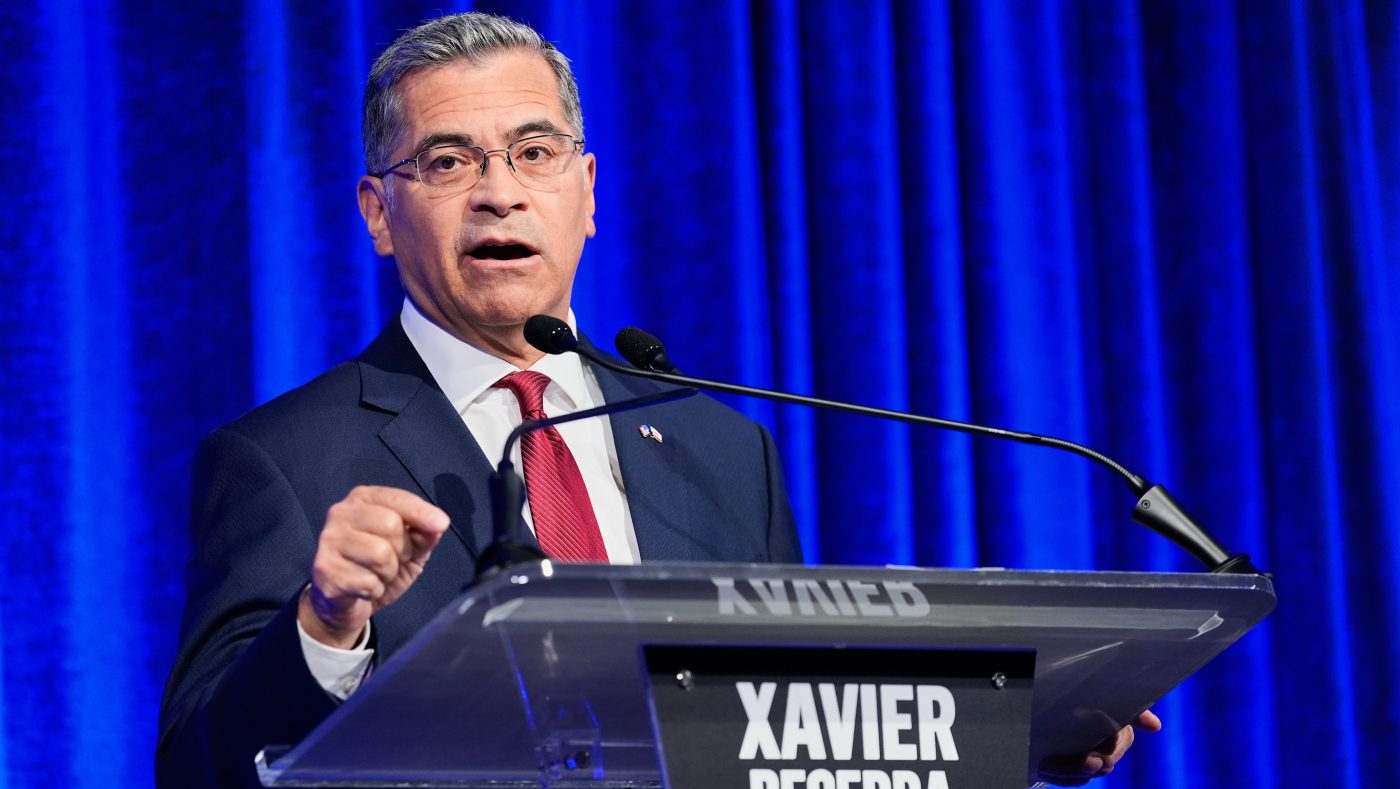
A fresh survey from the Public Policy Institute of California (PPIC) released Wednesday indicates that former Health and Human Services Secretary Xavier Becerra has expanded his lead among Democratic contenders for California governor, now commanding 23 percent support from likely voters.
The poll places Becerra ahead of the bipartisan field, with Republican strategist and former Fox News personality Steve Hilton close behind at 20 percent. Billionaire activist Tom Steyer sits at 15 percent, while former Representative Katie Porter (D-Calif.) trails at 12 percent. Riverside County Sheriff Chad Bianco, a Republican, polls at 13 percent. Fifteen percent of respondents said they would back another candidate, and 2 percent remain undecided.
Becerra’s rise comes after Representative Eric Swalwell (D-Calif.) exited the race earlier this year following allegations of past sexual misconduct, consolidating the Democratic lane. The former Biden administration official had previously polled at 19 percent in an Emerson College survey conducted before the final gubernatorial debate.
During that debate, Becerra faced sharp questioning from Steyer and Porter over his stance on single-payer healthcare—a popular progressive proposal to replace private insurance with a government-run system. Steyer pressed Becerra on his meeting with the California Medical Association, a powerful lobbying group that has opposed single-payer and subsequently endorsed Becerra with maximum campaign contributions. “The head of that group the next day said you very clearly indicated you were against single-payer,” Steyer said on stage. “So are they lying?”
Porter also challenged Becerra on fiscal policy, accusing him of lacking a detailed revenue plan for the state. Becerra dismissed the criticism, citing his experience on the House Ways and Means Committee, and proposed reforming the tax code to ensure “everyone pays their fair share.”
California’s gubernatorial primary is set for June 2, with the top two finishers advancing to the general election. The PPIC survey, conducted among 1,707 adult residents from May 14-18, carries a margin of error of plus or minus 3.2 percentage points.
The race reflects broader trends in voter engagement, as seen in a recent poll showing 57 percent of voters say they’ll definitely cast a ballot in the 2026 midterms. Meanwhile, the Democratic field continues to evolve, with some analysts pointing to the party’s internal divisions on healthcare and taxation as key fault lines.