During a recent trip to Kansas City, I met Jesse, an Uber driver who casually mentioned that his girlfriend's mother and a close friend had moved into their apartment. Rent and gas had simply become unaffordable. Jesse is one of roughly 1.6 million rideshare drivers in the United States.
The same week, PepsiCo announced the largest rollout of fully autonomous delivery trucks in American history—a $600 million partnership with Gatik AI. Since June 2025, medium-duty Isuzu trucks carrying Doritos and Frito-Lay products have operated without human drivers on fixed short-haul routes between distribution centers and stores like Walmart and Dollar General. The fleet has logged zero accidents and a 99 percent on-time delivery rate. Gatik, Isuzu, and Nvidia are now building a production facility in South Carolina to mass-produce Level 4 autonomous trucks by the second half of 2027. “The volumes that we’re looking at for this year are in the hundreds of trucks,” Gatik’s CEO said.

America employs 3.5 million truck drivers. Do the arithmetic.
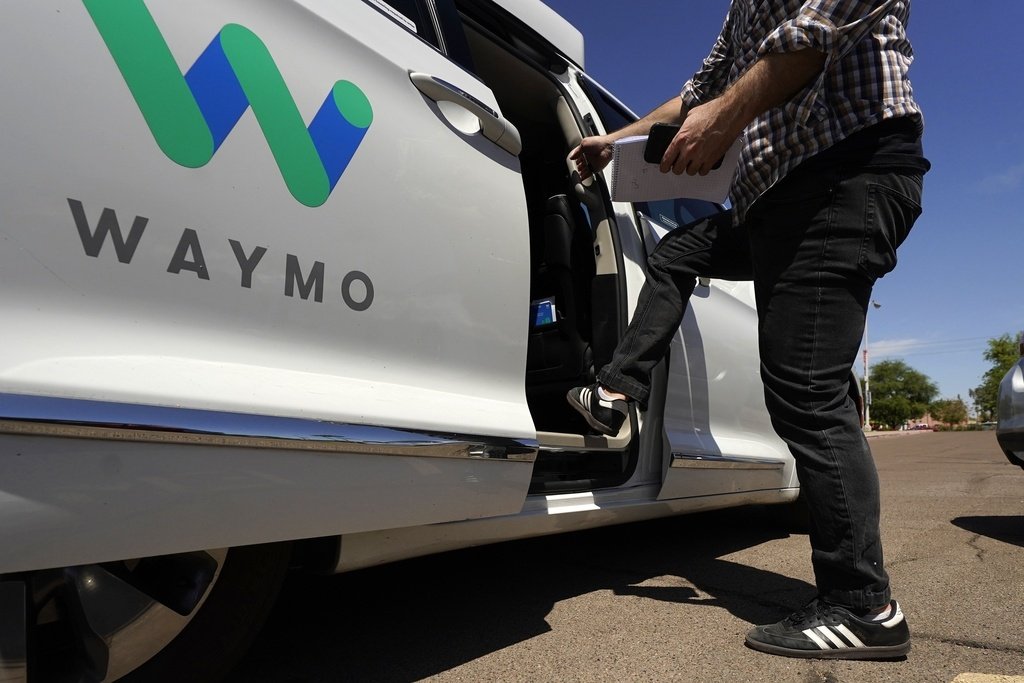
Now consider Jesse’s profession. Waymo operates nearly 3,800 robotaxis across the U.S. and plans to enter 20 new markets by the end of 2026. Tesla and Amazon’s Zoox are scaling fast. Robotaxis are no longer science fiction—they are a Tuesday morning in Phoenix, San Francisco, and Austin.
These disruptions are already here. And they collide with another statistic: 32 percent of U.S. adults own a gun—roughly 83 million people. Ownership is highest in rural areas, among men without college degrees, the same demographic most vulnerable to automation. Forty-seven percent of rural adults own a gun, compared to just 20 percent in urban areas.
The compound risk is one Washington has not connected: millions of working-class Americans—truckers, drivers, delivery workers—are losing their livelihoods to automation. They are doubling up in apartments to survive. And they live in a country with more guns than people, where many states have effectively decriminalized retail theft below certain thresholds. Between 2019 and 2023, 69 percent of retailers increased use of locking cages; in 2024, 20 percent closed stores due to theft. You ring a bell to get toothpaste.
California’s Proposition 47, passed in 2014, downgraded theft under $950 from a felony to a misdemeanor. Critics say it gave organized theft rings legal cover. While the law has since been amended, a decade of brazen shoplifting has left scars. When institutions fail to protect the social contract, people find their own enforcement mechanisms.
This is not alarm—it is pattern recognition. Every society that has experienced rapid technological displacement without investing in retraining, safety nets, and civic trust has paid a price. Sometimes at the ballot box. Sometimes in ways harder to reverse. America's political class is debating candidates' dietary choices while Jesse in Kansas City fits two extra people into his apartment and hopes the algorithm keeps sending rides—before the algorithm decides it no longer needs him.
The real question is not whether automation will displace millions of blue-collar workers. That is happening. The question is the plan for Jesse and those like him. As America marks its 250th anniversary, the nation's broken institutions are fueling a despair that could reshape the political landscape. Meanwhile, Muslim Americans and other communities are redefining their political identities amid these shifts. And global leaders send mixed messages about a nation divided over its founding ideals.