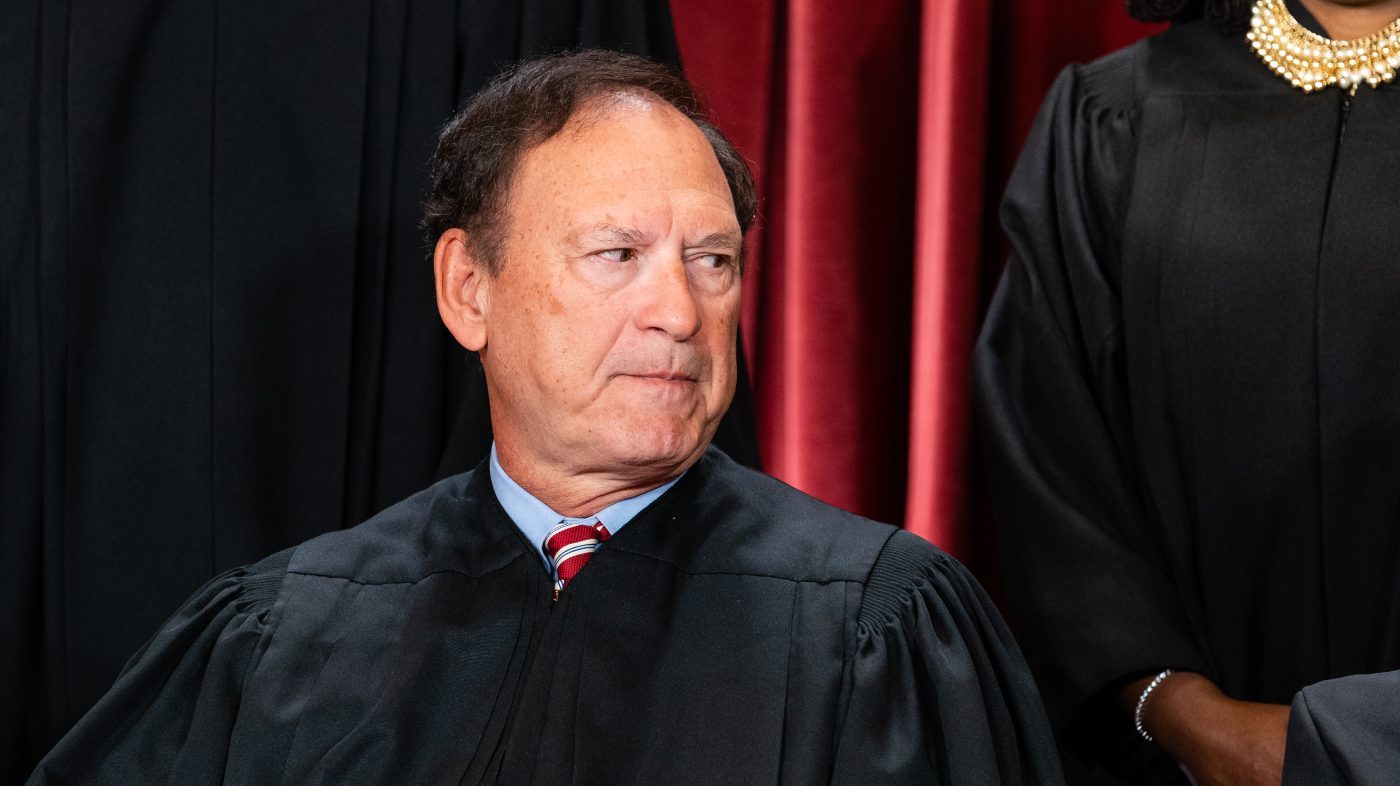
Justice Samuel Alito has made it clear he is not going anywhere. In an interview with the Wall Street Journal, the 76-year-old jurist said, “Obviously, I’m here for another term.” The statement comes roughly a month after NPR’s Nina Totenberg erroneously reported that Alito would be stepping down—a story the network later retracted.
Looking at the Court’s upcoming docket, it’s easy to see why Alito is staying put. Even after his landmark opinions overturning Roe v. Wade and expanding Second Amendment protections, there is unfinished business. The Court has agreed to hear challenges to state bans on semiautomatic rifles like the AR-15, a move that could reshape gun policy nationwide.
For years, gun-rights advocates have been frustrated by the Court’s reluctance to take up such cases. Just last year, the justices declined to review a Maryland law restricting AR-15s, with Alito, Clarence Thomas, and Neil Gorsuch indicating they wanted to hear the case. They were one vote short. But now, with the addition of cases from Illinois and Connecticut, the Court is stepping in.
Justice Brett Kavanaugh, who provided the key fourth vote in the earlier denial, had hinted that the Court would eventually address the issue. In a concurring opinion, he called the Fourth Circuit’s ruling in Snope v. Brown “questionable” and said the Court “should and presumably will address the AR-15 issue soon, in the next Term or two.” That time has come.
The cases now before the Court challenge bans on semiautomatic rifles and handguns, including the popular Glock 9mm pistols. Democrats in several states have moved to restrict these firearms, arguing they are unusually dangerous and not protected by the Second Amendment. But the Court’s precedents, particularly Heller (2008) and Bruen (2022), have established that gun ownership is an individual right and that restrictions must be consistent with the nation’s historical tradition of firearm regulation.
In Heller, the Court noted that handguns are “the most popular weapon chosen by Americans for self-defense in the home, and a complete prohibition of their use is invalid.” The bans at issue, which target the most common rifles and handguns, are seen by many as an attempt to circumvent that ruling.
In Virginia, Gov. Abigail Spanberger (D) signed a law banning new sales of AR-15s and other semiautomatic rifles. Ironically, her election spurred a surge in gun purchases, and her administration has been a lead plaintiff in defending the law. Spanberger has admitted that the law would ban commonly used hunting guns.
The lower courts have been divided. In Viramontes v. Cook County, the Seventh Circuit upheld a ban, ruling that the firearms in question “materially differed from machine guns and military-grade weaponry,” which the Supreme Court has allowed to be regulated. In Grant v. Higgins, the Second Circuit similarly upheld a ban, citing historical precedents for regulating unusually dangerous weapons.
But gun-rights advocates argue that these bans are overbroad. The AR-15 is the most popular rifle in America, with an estimated 25 million owners. Glock pistols are similarly widespread, with roughly 40 million Americans possessing the weapons that Democrats are trying to ban. Cook County’s argument that there is “not even a single instance in which assault weapons were ever used in lawful self-defense” has been met with skepticism, given the sheer number of these firearms in circulation.
The Court’s decision to hear these cases is a significant development. It could clarify the scope of the Second Amendment in the modern era and determine the fate of similar laws across the country. With this docket, it’s clear why Alito is staying on the bench.
Beyond the gun cases, the Court will also hear Suncor Energy v. Commissioners of Boulder County, a challenge to state laws seeking damages from fossil fuel companies for climate change. That case, along with the Second Amendment disputes, ensures a consequential term ahead.