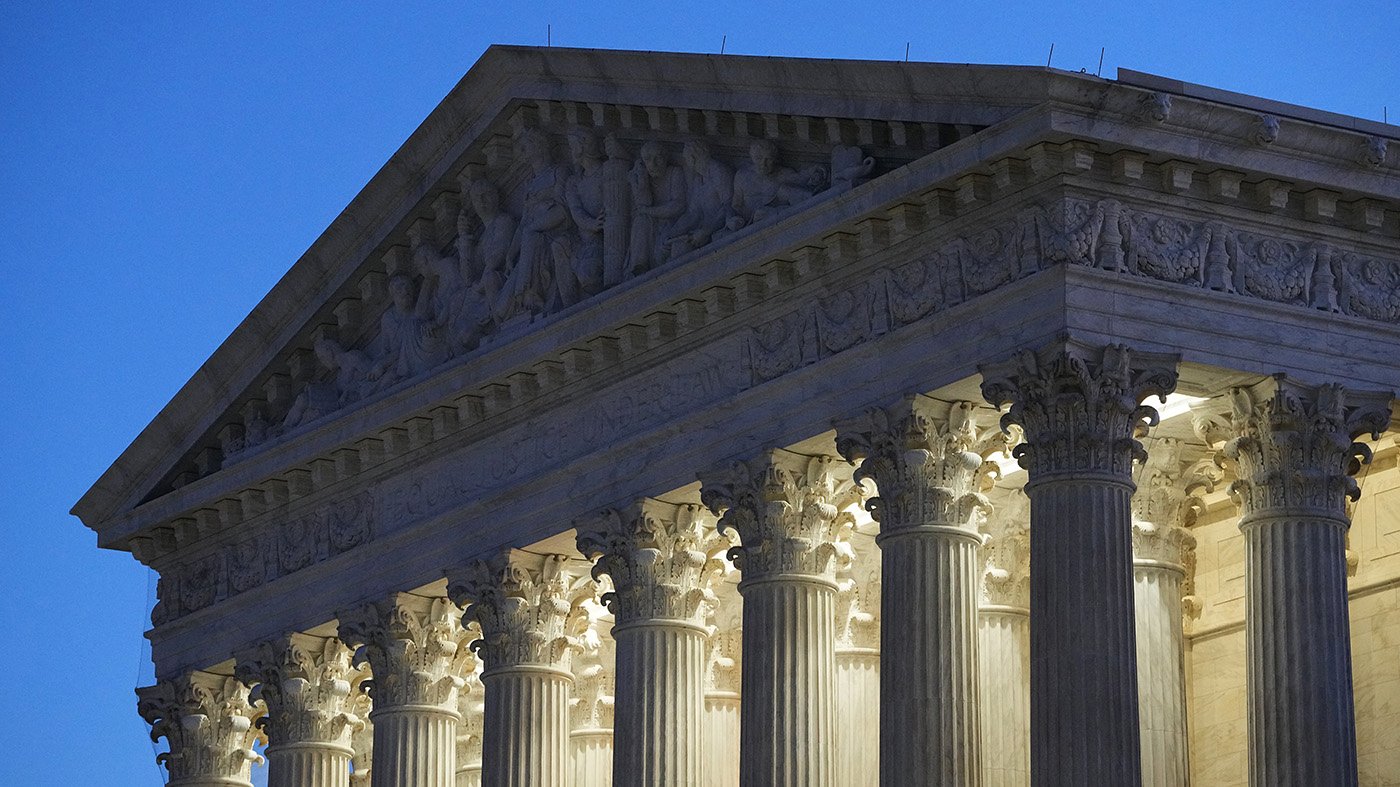
The Supreme Court's emergency docket has roared back to life after a quiet period, with urgent requests on redistricting, abortion, and Big Tech landing on the justices' desks just as decision season for the regular docket approaches. This flurry of activity is dominating the agenda during a time when the justices typically focus on drafting opinions for pending cases.
Last week's blockbuster ruling from the high court, which weakened a key provision of the Voting Rights Act, struck down Louisiana's congressional map and left the state scrambling to redraw boundaries before the midterms. The decision immediately ignited a massive emergency docket battle, pitting Justice Samuel Alito against Justice Ketanji Brown Jackson in a rare and sharp exchange.
On Monday night, Alito, joined by Justices Clarence Thomas and Neil Gorsuch, agreed to bypass the Supreme Court's standard 32-day waiting period before formally releasing a case—a step known in legal terms as 'sending down the judgment.' Normally, this wait is routine, giving the losing side time to request a rehearing (a procedure that hasn't succeeded since 1965, as far as the court is aware). But in Louisiana, time was critical: overseas ballots were already being mailed out for the primary, and state Republicans wanted to redistrict immediately.
Jackson issued a fiery solo dissent, accusing the majority of 'unshackling itself' so that its 'principles give way to power.' She wrote, 'To avoid the appearance of partiality here, we could, as per usual, opt to stay on the sidelines and take no position by applying our default procedures.' No other justice joined her.
Alito fired back in remarkable terms, calling Jackson's argument 'groundless and utterly irresponsible' and 'baseless and insulting.' The conservative justices' order clears a potential roadblock for Louisiana Republicans, who now have a clearer path to redraw the map and potentially gain a seat in the midterms. Separate lawsuits challenging the primary delay remain in lower courts, but civil rights groups acknowledge the Supreme Court's outsized influence. Sarah Brannon of the ACLU's Voting Rights Project noted, 'How the Supreme Court behaves is definitely relevant in this circumstance,' adding, 'I don't think this is a confidential or sophisticated legal opinion, that the Supreme Court has made a mess and let a mess run amok.'
Louisiana's big Monday didn't end with redistricting. Hours earlier, Alito intervened in a new emergency case over the state's lawsuit targeting mifepristone, one of two drugs used in medication abortion. This fight has become a central front in the post-Roe v. Wade landscape, sparked by a Friday ruling from the 5th Circuit that backed Louisiana's bid to block a Biden-era regulation allowing mifepristone to be prescribed via telehealth, mail, and pharmacies. Over the weekend, drug manufacturers Danco Laboratories and GenBioPro rushed to the Supreme Court to defend the rule, which has been a key battleground in the broader abortion debate. For more on the broader implications, see our analysis of the quiet phase in nationwide abortion ban strategy.
The emergency docket also includes a major Big Tech dispute, with Apple rushing to the Supreme Court to halt a contempt ruling in its ongoing feud with Epic Games. That case, along with the Louisiana map and abortion pill fights, underscores how the court's emergency calendar is increasingly shaping policy on hot-button issues, even as the justices prepare to release decisions on their regular docket. The clash between Alito and Jackson over the Louisiana timeline has drawn particular attention, with some Democrats accusing the conservative majority of partisan maneuvering—a charge that Alito dismissed as 'baseless.' For context on the broader political fallout, see our piece on Alito and Jackson's clash over fast-tracked redistricting.
As the court barrels toward its summer recess, the emergency docket's resurgence is forcing justices to juggle high-stakes rulings with the usual end-of-term opinion drafting. The outcome of these cases—from Louisiana's map to abortion access to tech antitrust battles—will have lasting implications for voting rights, reproductive freedom, and corporate regulation. With the midterms looming and public trust in the court under strain, each emergency order carries outsized weight.