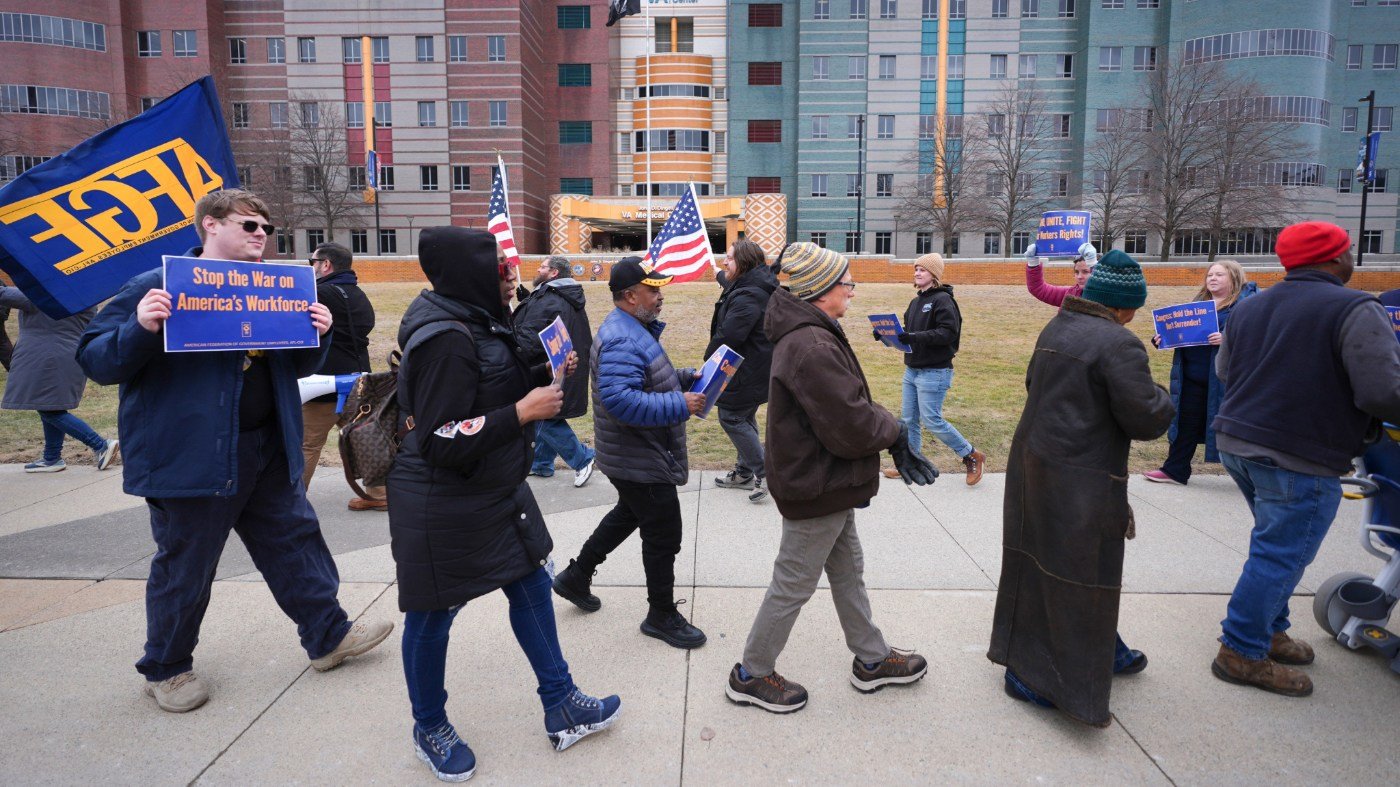
The American Federation of Government Employees is pressing Congress to restore collective bargaining rights stripped by executive order, but lawmakers are being urged to scrutinize the union's own democratic legitimacy. AFGE, the largest federal-employee union, says it represents more than 820,000 federal and D.C. workers, yet its 2025 financial disclosures reveal only about 225,000 dues-paying members—just 27.5% of those it claims to represent.
This gap between representation and membership is not typical across the labor movement. An analysis of labor-management reports shows the Service Employees International Union converts nearly 97% of represented workers into members, the Teamsters about 90%, and the National Treasury Employees Union—another all-federal union—more than 70%. While represented-worker counts are self-reported and unverified, the disparity is too large to be dismissed as a sector quirk.

The stakes are significant. Only members elect the officers who negotiate contracts and speak to Congress. Turnout in AFGE elections typically runs 30–35% of members, sometimes lower. That means in many workplaces, fewer than one in ten covered employees actually chooses who represents them and how dues are spent. A thin slice of engaged members often selects delegates who then pick national officers, further distancing leadership from the rank and file.
Low turnout is not inherently sinister—apathy is common in membership organizations. But when it persists for years under the same leadership, it signals a failure to give most workers a reason to join. An organization that cannot persuade a majority of those it claims to represent to become members is not demonstrating strength; it is revealing a legitimacy deficit.
This is not an argument against unions or against AFGE's case to Congress. Much of what AFGE seeks—like restoring bargaining rights for Defense civilians through the National Defense Authorization Act—deserves support. The problem is unaccountable institutional power. A labor movement that can point to high, verified participation and transparent elections carries more weight when arguing that stripping bargaining rights is illegitimate. A movement with murky accountability numbers hands opponents an easy rebuttal.
Congress can help fix this. The Labor Department has already approved remote electronic voting standards, allowing members to vote directly on important matters regardless of location. No new technology is needed—only the will to use existing tools. Lawmakers should also require unions to disclose both the total number of workers they claim to represent and the actual number of dues-paying members, as well as election turnout data at all levels—eligible voters, ballots sent, and ballots returned—similar to shareholder-vote disclosures.
Delegate-based election systems can insulate national incumbents from direct member voting. Congress should mandate that challengers have equal access to membership contact lists and sufficient time to campaign, with direct member voting as the preferred standard. Major national officer elections and financial decisions should go directly to the membership, not through layers of delegates chosen by a thin slice of members.
The Federal Labor Relations Authority should also be empowered to permit recertification or affiliation change votes at individual workplaces when dues-paying membership remains a distinct minority for a sustained period. This is a federal workplace, financed in part by taxpayer-paid official time, not a private-sector profit operation. Federal employees deserve a direct voice in choosing their representatives and in how their dues—drawn from public service—are used.
The answer is not to weaken employee rights, but to strengthen them. A union officer is an elected representative, not the permanent custodian of an institution. Federal employees deserve protection from arbitrary government action, but a labor movement strong enough to demand it must also have the legitimacy to speak for its members. That legitimacy begins with leaders who are meaningfully and transparently chosen by the people they represent. Congress has a say in this for the federal workforce—it's time to update labor law.
Javier Soto spent 10 years representing federal employees and unions, including five years as a Legal Rights Attorney at AFGE District 14.