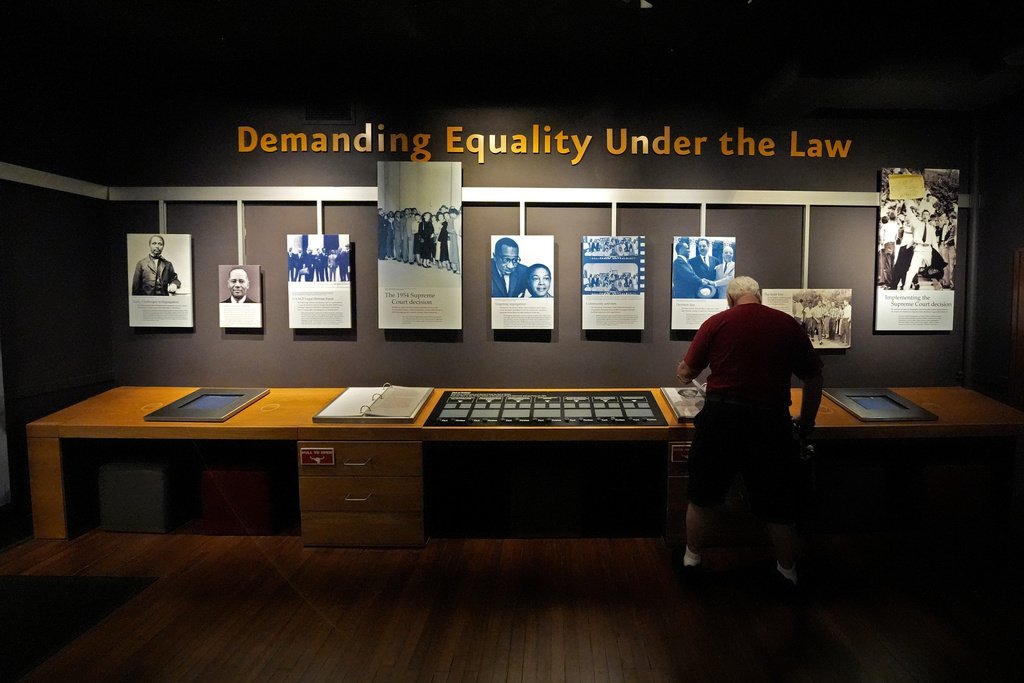
Seventy-two years after the Supreme Court's landmark Brown v. Board of Education ruling struck down “separate but equal,” the fight for equal justice under law remains unfinished. Representative Troy Carter of Louisiana’s 2nd District warns that hard-won gains from generations of struggle are now being rolled back, and the response must be relentless organizing, mobilizing, and voting.
In a stark assessment, Carter notes that African Americans make up roughly one-third of Louisiana’s population, yet the state’s six congressional districts yield only two that reflect that share. “That is not political rhetoric. That is simple math,” he said, framing the issue as one of fair treatment, not special favors. He stressed that compact communities with shared histories, economic ties, and cultural bonds deserve meaningful representation—from Baton Rouge to New Orleans and across north Louisiana.

The same Supreme Court that once championed equality in Brown is now, in Carter’s view, moving in the opposite direction. Recent rulings have weakened Section 2 of the Voting Rights Act, putting at risk the representation that earlier generations fought and died to secure. “Once rights begin to be rolled back, the question becomes: what’s next? Who’s next?” he asked, drawing a direct parallel between past and present threats to democracy.
Carter pointed to a broader pattern: injustice rarely stops with one group. As protections erode, the foundation of democracy itself cracks. He called on citizens to act before injustice reaches their own doorstep. The remedy, he said, is not passive hope but active participation—especially at the ballot box.
Recent local elections in Louisiana offered proof that voting still matters, Carter argued. “We proved that participation matters. We proved that voices can still be heard,” he said, but added that turnout must climb much higher—to 80, 90, even 100 percent in affected communities. When people vote, democracy works; when they don’t, communities can be ignored, erased, or divided.
The congressman invoked the sacrifices of those who marched, bled, and died for the franchise. Brown v. Board taught that equality delayed is justice denied, and that the Constitution belongs to all. Progress, he insisted, comes only when ordinary people stand up against systems designed to silence them. That same courage is needed now, across every election level, not just during high-profile presidential races.
Carter’s call to action comes amid broader political battles over voting access and district maps. He urged voters to see their ballots as both voice and power—the ultimate tool to protect the legacy of the civil rights movement. “If we truly want to save our democracy and right the wrongs of those who seek to deny rights, civil liberties, fairness, and justice for all,” he said, “the answer is clear: We must show up and we must vote in numbers too large to ignore.”
The stakes extend beyond Louisiana. As 25 states sue the Education Department over graduate loan caps, and amid debates about a potential landslide restoring democracy in 2028, Carter’s message resonates nationally. He concluded with a vow: “As long as we continue to stand together, speak together, organize together, and vote together, no court and no politician can permanently turn back the clock on justice.”